AICAR: the compound WADA banned, and the very short human file
AICAR raised exercise capacity in untrained mice in 2008, and that result is the reason the World Anti-Doping Agency lists AMPK activators as forbidden. The human record is far thinner than the rodent one: two small exercise studies, and a mechanism that runs against the muscle you are trying to build.
1 November 2026 · 4 min read
 AICAR 50 mg
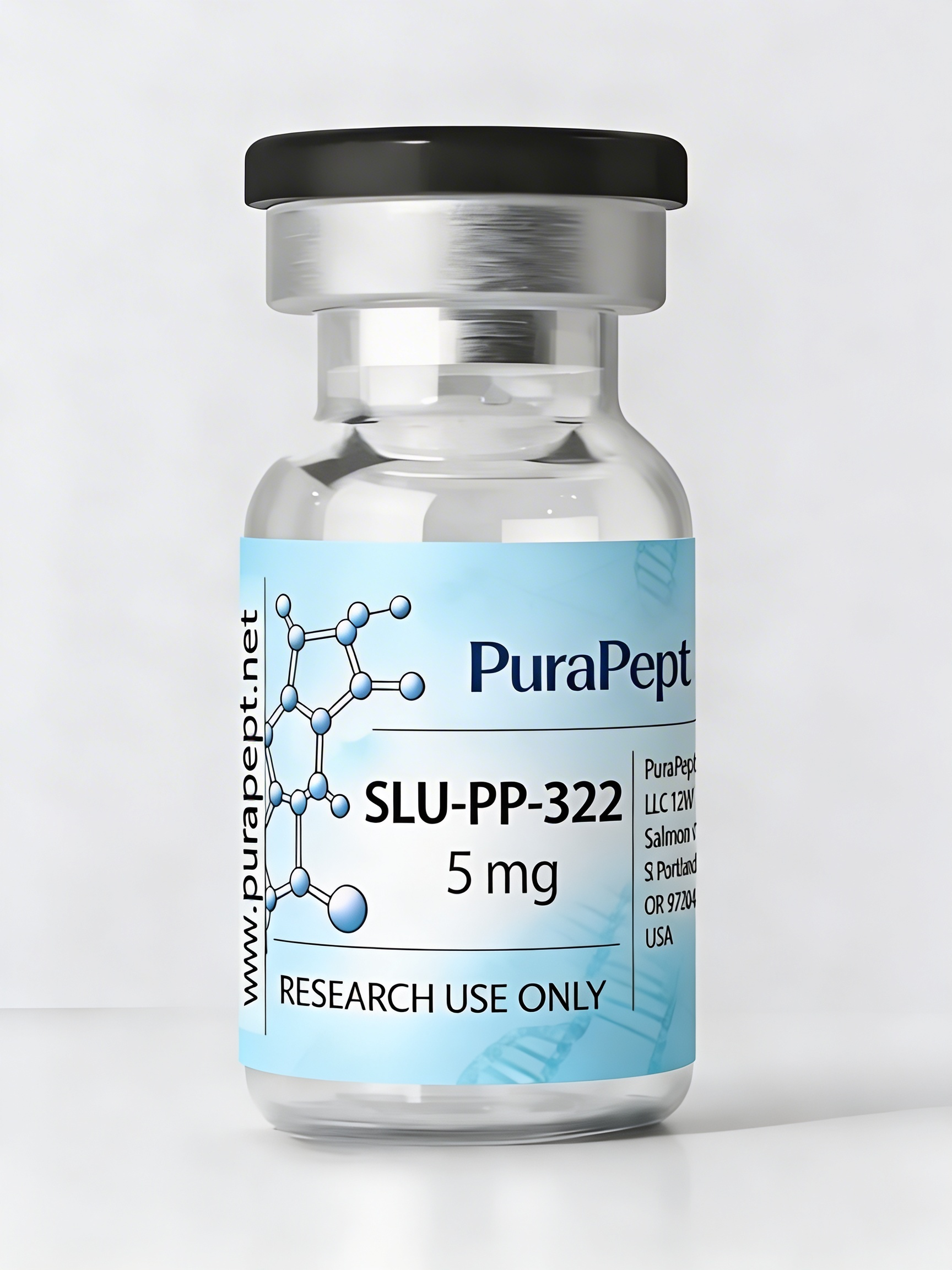
AICAR is the clearest case in the exercise-mimetic literature where the animal result and the human record tell different stories, and where the second story includes a warning that the marketing never mentions. The compound here is AICAR 50 mg; its structural relative SLU-PP-322 shares the AMPK activation pathway and is covered at the end.
Where the compound comes from
AICAR is 5-aminoimidazole-4-carboxamide-1-β-d-ribofuranoside, and it is an AMP analogue — it enters the cell and is phosphorylated to AMP, which is what switches on AMP-activated protein kinase. AMPK is the energy sensor: when a cell’s ATP falls relative to AMP, AMPK goes up, glucose uptake increases, fatty acid oxidation increases, and protein synthesis is throttled.
That last clause is the entire problem, and it is worth holding in mind through the rest of this page.
The result that got it banned
The 2015 review in Sports Medicine describes how the field arrived here, and it is unusually direct about the sequence. A study published in 2008, the review notes, showed that the AMPK activator AICAR increased the exercise capacity of mice without any training, and that this prompted the World Anti-Doping Agency to include certain AMPK activators on the list of forbidden drugs.
Two things follow. The performance effect was real enough in that model to trigger a regulatory response. And the review immediately poses the question that the rest of the literature mostly avoids: should all AMPK activators be restricted, or is the performance increase specific to particular compounds?
The mechanism runs the wrong way for muscle
This is the part that separates AICAR from caffeine in the honest reading, and it comes from a 2008 paper in the Journal of Applied Physiology. In rats, electrically stimulated lengthening contractions of the extensor digitorum longus were preceded by AICAR. The drug raised post-stimulation AMPK and acetyl-CoA carboxylase phosphorylation — the activation worked — and simultaneously inhibited post-stimulation S6K1 and 4E-BP1 phosphorylation, while elevating eEF2 phosphorylation.
In plain terms: AICAR switched off the two translation-initiation signals that carry the load-bearing response to mechanical loading. The authors’ conclusion is that translational signalling downstream of Akt/mTOR can be inhibited after lengthening contractions when preceded by AMPK activation, and that energetic stress may be antagonistic to the hypertrophic translational signalling response to loaded muscle contractions.
So the compound that raises endurance works, in the rodent model, partly by dampening the pathway that builds muscle. That is not a contradiction in the literature; it is a coherent trade-off. Anyone presenting AICAR as a training substitute is presenting one half of it.
The combination data are animal-only, and specific
A 2012 PLoS One study gives the most-cited positive framing, and it is worth reading precisely. Thirty-four male mdx mice — a muscular dystrophy model — were randomised to four groups: vehicle; EM, a combination of AICAR at 50 mg/kg/day intraperitoneally plus the PPARδ agonist GW1516 at 2.5 mg/kg/day by gavage; exercise training; and both together. Treatments ran one month from age two months.
Functional improvement was significant (p<0.05) in the animals that received both exercise training and the drug combination. Creatine kinase fell and oxidative-metabolism protein expression rose in that group. Knockout logic was not used; the mechanism was inferred from expression changes and from CK.
Two limits are structural. The model is dystrophic mice, not athletes. The intervention is a two-drug combination, so the AICAR-alone contribution cannot be read off the result. And the group that improved was the group that also ran — which is the honest shape of the finding, not a footnote to it.
What the human file contains
Very little, and this should be said plainly rather than implied by omission. The published human evidence for AICAR as a performance agent consists of small exercise studies, not trials with body composition, strength or injury endpoints. There is no human analogue of the 6,659-man sildenafil dataset, and there is no approved indication anywhere.
The regulatory status is also worth stating exactly: WADA lists certain AMPK activators as forbidden in competition. That is a statement about elite competition, not a safety finding, and it does not convert into a claim about harm at research doses. Neither direction is supportable.
The SLU-PP-322 question
SLU-PP-322 is the compound most often proposed as the alternative with a cleaner profile: same AMPK pathway, a structure that reaches tissue differently. It shares the honest limitation. The mechanism is shared, so the translational-suppression trade-off above is shared, and its human performance record is not larger than AICAR’s. A different molecule on the same pathway is a different set of studies, not automatically a different set of answers.
What this record does not show
Not a proven human performance gain. The strong result is in mice.
Not a substitute for training. In the one combination study, the improved group was the group that also exercised.
Not a muscle-building aid. The mechanism runs against hypertrophy, in the same species where the endurance effect was shown.
Not a safety case in either direction. The WADA listing is a competition rule; it is not evidence of harm, and its absence elsewhere would not be evidence of safety.
What we supply
AICAR 50 mg and SLU-PP-322 5 mg, as supplied by the manufacturer, tracked, from inside the EU. Batch documentation for every product that carries any is explained in the COA guide linked from the product page.
Research use only. This page summarises published AMPK pharmacology and animal performance studies for research reference. It is not medical advice, not a doping strategy and not a suggestion for human use. Competition eligibility rules are set by the World Anti-Doping Agency and by each sport’s governing body, not by this page. Nothing we supply is for human or veterinary use.
References.
- Niederberger E, King TS, Russe OQ, Geisslinger G. Activation of AMPK and its Impact on Exercise Capacity. Sports Med 2015;45(11):1497-1509 (PMID 26186961).
- Thomson DM, Fick CA, Gordon SE. AMPK activation attenuates S6K1, 4E-BP1, and eEF2 signaling responses to high-frequency electrically stimulated skeletal muscle contractions. J Appl Physiol 2008;104(3):625-632 (PMID 18187610).
- Bueno Júnior CR, Pantaleão LC, Voltarelli VA, Bozi LH, Brum PC, Zatz M. Combined effect of AMPK/PPAR agonists and exercise training in mdx mice functional performance. PLoS One 2012;7(9):e45699 (PMID 23029189).