
Research.
What the published literature reports on the compounds in our catalog — the trial, the number, the source. Every claim is attributed; nothing here is medical advice or a protocol for use in people.
Not sure what to check? Start with the buyer guides.Buyer guides
 Pharma
Semax and the stroke file: one study, a lot of rat brain
Semax is an ACTH(4-10) analogue whose human ischaemia record rests substantially on a 1997 study of 30 patients against 80 historical controls. Alongside it sits a set of clean cell-culture and rodent experiments. Both halves are here, and the design of the human half is named explicitly.
15 November 2026 · 4 min read Aging
Buffered NAD+: three trials that raised the metabolite
Nicotinamide riboside reliably raises NAD-related metabolites in blood. In skeletal muscle it has now been measured directly, three times, and found to change nothing. This page is about the difference between a biomarker moving and an outcome moving.
14 November 2026 · 5 min read GLP-1
Retatrutide and the triple-agonist idea: what the preclinical work claims
Retatrutide is the third receptor in the incretin story: GLP-1 plus GIP plus glucagon. The mechanistic argument is that glucagon adds energy expenditure to satiety, and the 2022 preclinical paper says exactly that — in DIO mice. This page is about the idea and where the human file stops.
13 November 2026 · 4 min read Cardiovascular
SS-31 and the anthracycline cardiotoxicity trials: the other half of the file
Elamipretide is the best-studied mitochondria-targeted peptide in clinical trials, and most of those trials are in inherited mitochondrial disease. The other file — protection against doxorubicin cardiotoxicity — is entirely animal and cellular, and it is the half the supplement marketing borrows.
12 November 2026 · 4 min read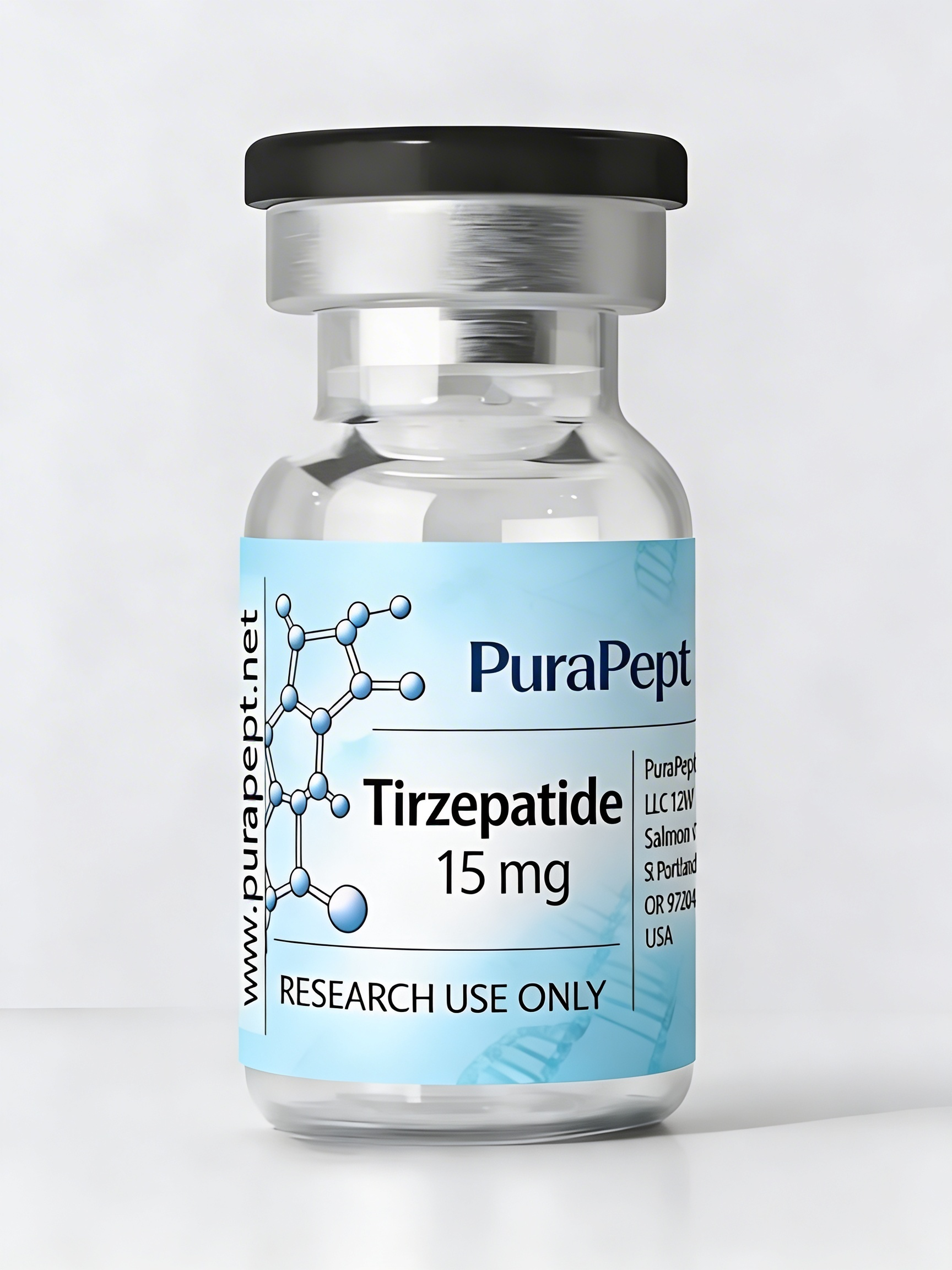 GLP-1
Tirzepatide and the 20 % line: what 72 weeks separated
SURMOUNT-1 randomised 2,539 adults to three weekly strengths or placebo for 72 weeks. The lowest and highest differ by six percentage points of mean weight change — and by 18 points on the proportion losing a fifth of body weight. The trial also reports the discontinuation rate for each arm, and that is where the strengths diverge most.
11 November 2026 · 6 min read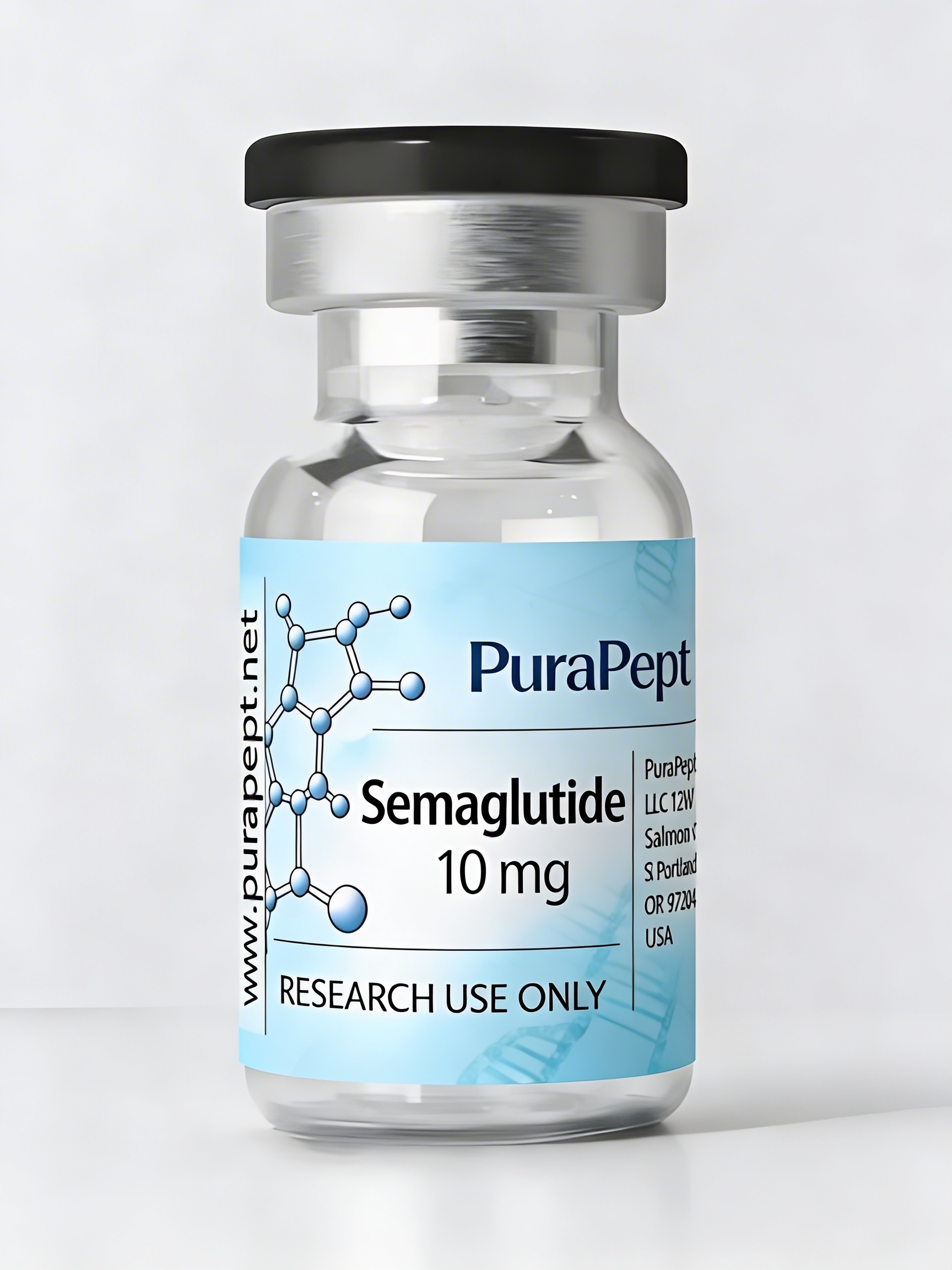 GLP-1
Semaglutide and SELECT: the trial that changed the drug
17,604 adults with overweight or obesity, established cardiovascular disease and no diabetes, and a 20% relative reduction in cardiovascular death, myocardial infarction or stroke over a mean 39.8 months. The same trial's own numbers also carry the caveat: permanent discontinuation was twice as frequent on the drug as on placebo.
10 November 2026 · 4 min read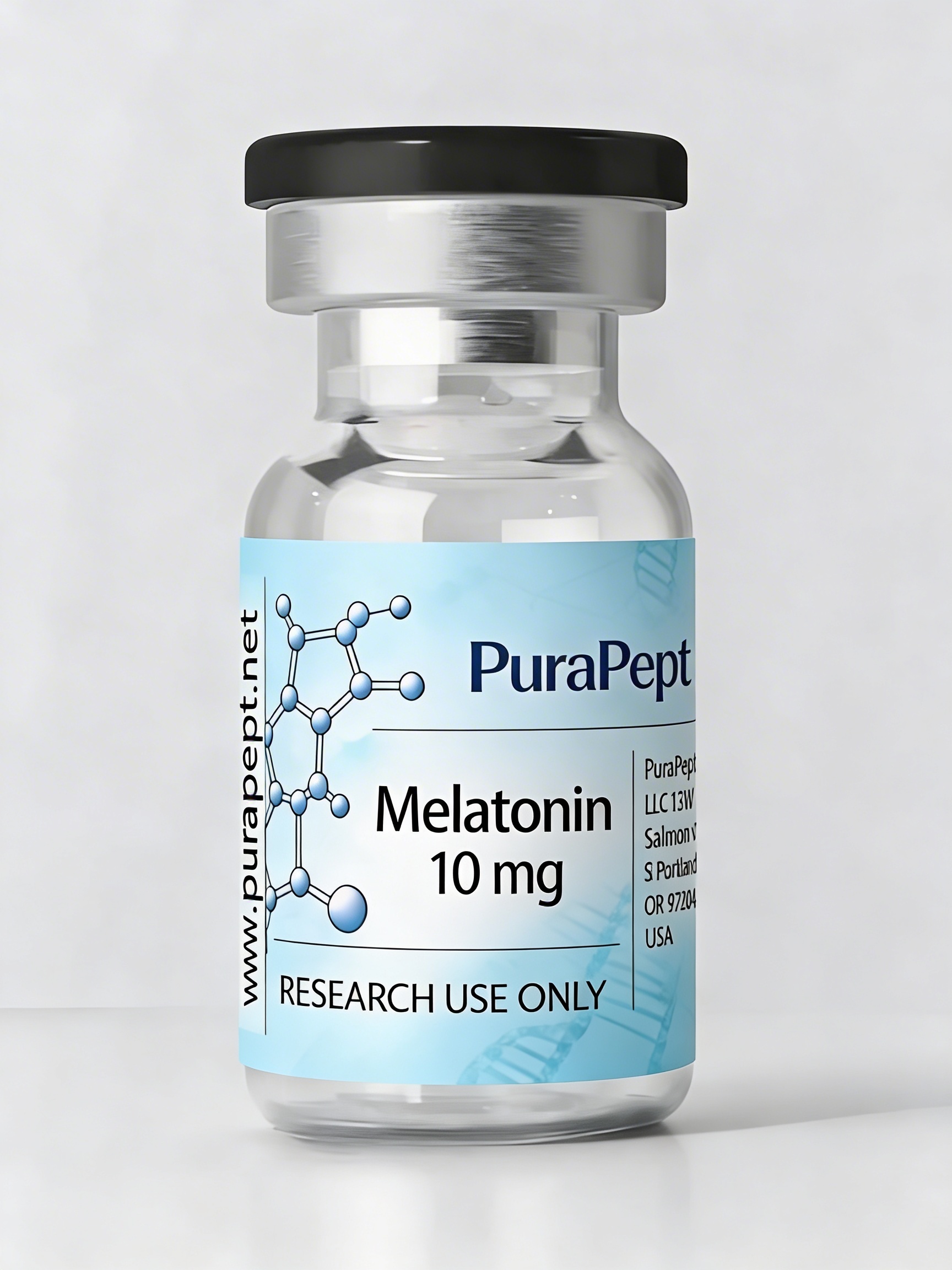 Sleep
Melatonin and sleep: the trials, in minutes
Nineteen randomised trials and 1,683 people put a number on the melatonin effect, and the number is minutes: 7.06 minutes off sleep onset and 8.25 minutes more total sleep against placebo. The 2017 AASM guideline suggests clinicians not use it for chronic insomnia in adults. Both facts are true at once, and the timing turns out to matter more than the amount.
9 November 2026 · 7 min read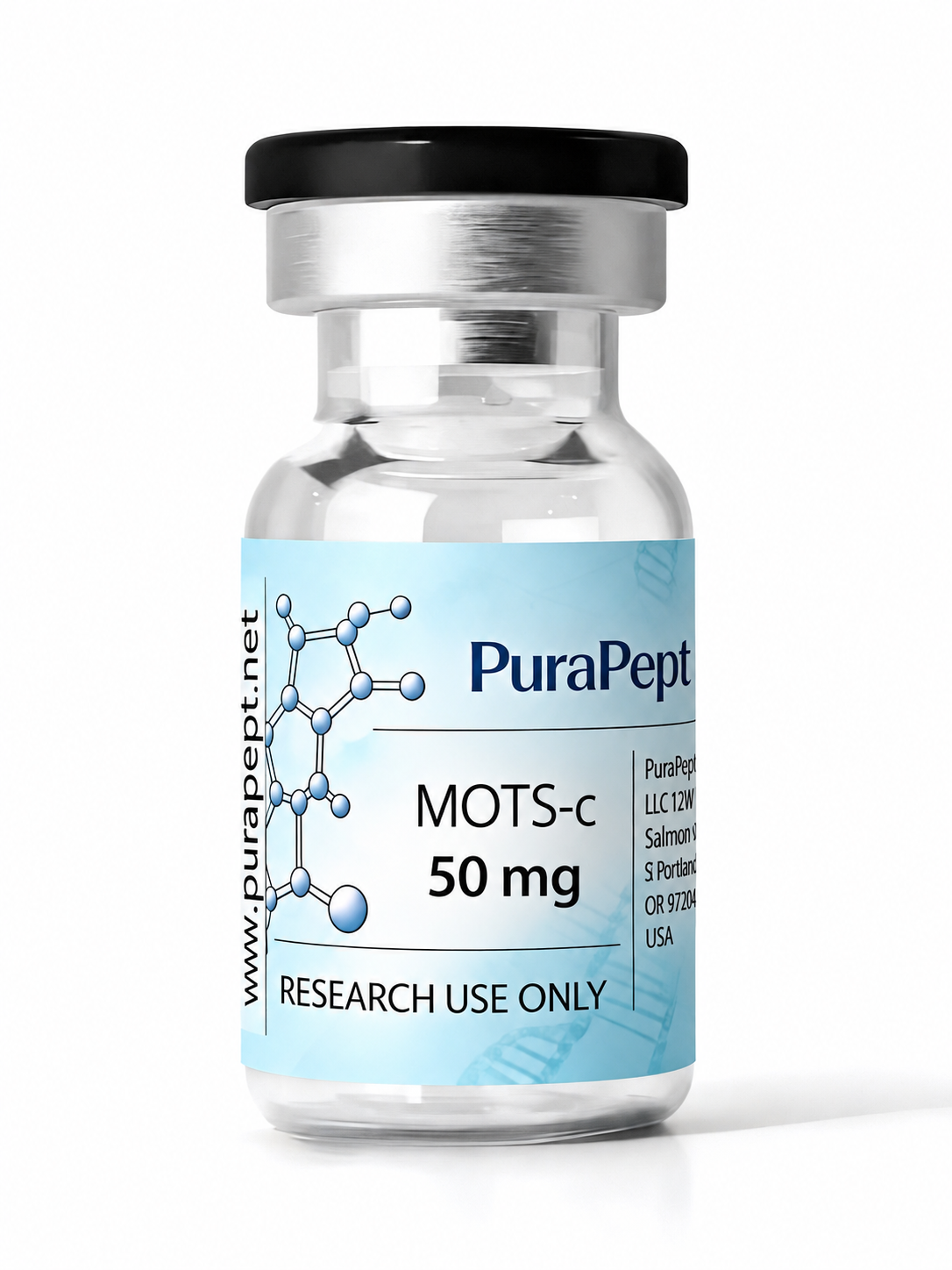 Aging
MOTS-c in people: what was measured, and what it did not show
MOTS-c was found as a short open reading frame in mitochondrial DNA in 2015, and it has been measured in human blood in cancer cohorts. None of those human studies administered it. The peptide here is MOTS-c in the 50 mg and 10 mg presentations.
8 November 2026 · 3 min read Hormonal
IGF-1 LR3 and insulin: what the diabetes trials measured
Recombinant IGF-I is structurally close to insulin and was developed to lower HbA1c — which is the most useful thing to know about it as a research compound. The trials show a real glucose-lowering effect and a real risk of hypoglycaemia, and nothing about lean mass.
7 November 2026 · 4 min readCognitiveSemax: what the human studies measured, and where they stop
The human file for Semax is small, mostly Russian, and built on non-randomised designs: a 30-patient stroke study against a historical control, a 187-patient cerebrovascular insufficiency study, and an fMRI connectivity study in 52 healthy volunteers. Here is each one with its denominators.
6 November 2026 · 3 min read Handling
Endotoxin and the solvent: what the assay measures
Purity testing tells you what is in a vial; it does not tell you whether the vial is pyrogen-free. Endotoxin is detected by a horseshoe-crab cascade or its recombinant replacement, and it is the one quality parameter that can make a pure peptide unusable. Here is how the test works and what it cannot see.
5 November 2026 · 4 min read Hormonal
CJC-1295 with DAC plus ipamorelin: what each half's trials measured
Two growth-hormone secretagogues in one vial: one with randomised pharmacokinetic trials in healthy adults, one with a clean selectivity profile in animals and eight healthy volunteers, and no trial of the combination. The 2026 scoping review of this exact peptide class found 67% of the literature preclinical.
4 November 2026 · 4 min readSleepMelatonin: the dose-response meta-analysis, and where it stops
Across 26 randomised trials and 1,689 observations, melatonin's effect on sleep-onset latency peaks at 4 mg/day and at three hours before bed — not at the doses usually sold. In adults with chronic insomnia, a separate meta-analysis found no significant effect on latency, total sleep time or efficiency at all.
3 November 2026 · 4 min readLongevityOral NAD+ itself: what the blood-level studies actually measured
The only randomised trial of an oral NAD+ product ran five days in 50 analysed adults and raised whole-blood intracellular NAD by 53% while plasma NAD did not move at all. That compartment split is the honest headline — and every clinical benefit in the field belongs to the precursors, not to the molecule.
2 November 2026 · 4 min read Exercise
AICAR: the compound WADA banned, and the very short human file
AICAR raised exercise capacity in untrained mice in 2008, and that result is the reason the World Anti-Doping Agency lists AMPK activators as forbidden. The human record is far thinner than the rodent one: two small exercise studies, and a mechanism that runs against the muscle you are trying to build.
1 November 2026 · 4 min read Performance
GHRP-2 and GHRP-6: the two hexapeptides, and what the human studies actually measured
Both are synthetic hexapeptides that release growth hormone, and the two papers here separate them sharply. In normal men, intravenous GHRP-6 raised GH, ACTH and cortisol and increased stage 2 sleep without changing slow-wave sleep. In hypercortisolism, GHRP-6 and GHRH respond differently: endogenous hypercortisolism blunted both pathways, exogenous hypercortisolism blunted GHRH but left the GHRP-6 pathway apparently preserved. Neither paper measures lean mass, strength or any outcome beyond hormones and sleep EEG.
31 October 2026 · 3 min read Performance
Somatropin: the randomised GH-replacement endpoints, read carefully
The best randomised body-composition dataset in growth hormone is the REAL 1 trial, and it is easy to misread: it tested somapacitan, a once-weekly albumin-binding derivative, against placebo and against daily GH — not somatropin against placebo. The primary endpoint was truncal fat percentage, reduced by 1.53 percentage points against placebo at 34 weeks. The one-step-upstream GH-axis trial, GHRH in 31 men with HIV lipodystrophy, moved lean mass by 0.9 kg.
30 October 2026 · 3 min read Performance
MGF and PEG-MGF: the satellite-cell mechanism, and the absence of a human trial
MGF is the exercise-inducible splice variant of the IGF-I gene, and the C-terminal peptide it produces is a different molecule from systemic IGF-I. The mechanism is well described: it activates muscle satellite cells, its expression declines in ageing and fails in dystrophic muscle. The record cited here contains no human administration of PEG-MGF, and this page does not imply one.
29 October 2026 · 3 min read Metabolic
HGH fragment 176-191: does not bind the GH receptor
The growth hormone C-terminal lipolytic fragment is the premise behind two claims — that you can get growth hormone's fat-loss effect without its growth effect, and without insulin resistance. The rodent papers that support both print the same thing: the fragment does not compete for the hGH receptor and does not induce cell proliferation, unlike hGH. The best-numbered study is obese Zucker rats. There is no human fat-loss trial of the fragment in the record cited here.
28 October 2026 · 3 min read GH axis
CJC-1295 with DAC: the half-life is the whole story
The acylated CJC-1295 is GHRH(1-29) with a maleimido group at the C-terminus that covalently binds albumin, and that conjugation is the entire pharmacological difference from the non-acylated form. The 2006 ascending-dose trials in healthy adults report an estimated half-life of 5.8-8.1 days, GH up 2-10-fold for 6 days or more and IGF-I up 1.5-3-fold for 9-11 days. There is a dedicated younglab page on the non-acylated form; this one is the other molecule.
27 October 2026 · 3 min read Hormonal
hCG as an ovulation trigger: the Cochrane answer, and the number behind it
The 2014 Cochrane review of ovulation triggers in anovulatory women on clomiphene found exactly two randomised trials, 305 participants, and a live-birth odds ratio of 0.97 with a confidence interval from 0.52 to 1.83 — graded low-quality evidence, with very serious imprecision. Secondary outcomes moved nowhere either. That is the whole randomised record, and it is thin enough that the authors refuse to recommend or refute.
26 October 2026 · 3 min readPerformanceAICAR and the exercise claim: what humans measured
AICAR is an AMPK activator. The exercise-mimetic framing comes from a cell-culture and rodent literature. The human record is small: one ten-man intravenous infusion study in type 2 diabetes that reported no increase in muscle AMPK phosphorylation, and a 223-patient urine study that found no difference in endogenous AICAR between controls and diabetes. This page reports both.
25 October 2026 · 4 min read Aging
Oral glutathione: two randomised trials that disagree, and what each measured
A 2015 six-month RCT in 54 adults found body glutathione stores rose 30-35% in erythrocytes, plasma and lymphocytes and 260% in buccal cells at 1,000 mg per day. A 2011 four-week RCT in 40 adults at 500 mg twice daily found no change in glutathione status or in two oxidative-stress biomarkers. Both are printed here, side by side, because the difference between them is the useful part.
24 October 2026 · 5 min readRepairSS-31 (elamipretide): the phase 3 trial that missed
Elamipretide is the only mitochondria-targeting peptide with a completed phase 3 trial in primary mitochondrial myopathy. MMPOWER-3 randomised 218 people for 24 weeks and met neither primary endpoint: the 6-minute walk test difference was -3.2 metres against placebo. A post hoc genotype analysis found a signal in a mtDNA replisome subgroup. This page reports both.
23 October 2026 · 4 min read GLP-1
Cagrilintide on its own: what the monotherapy trials found
As a single agent, cagrilintide's randomised record is one dose-finding trial in 706 adults without diabetes and one 30-person arm in a type 2 diabetes study. Weight loss ran 6.0% to 10.8% across 0.3-4.5 mg weekly against 3.0% on placebo, and every phase 3 readout on this molecule is the combination with semaglutide, not the single agent. This page reports the monotherapy numbers and says which results belong to the pair.
22 October 2026 · 6 min read Aging
Epithalon: the human record counted, and where it actually stops
Eight indexed papers. The telomerase and telomere findings are human fetal fibroblasts in a dish, not people. The lifespan findings are mice and fruit flies. The one human observation on this page is improved visual function in patients with pigmental retinal degeneration, reported inside a 2002 review. A 2026 orthopaedics review lists epithalon among recovery-enhancing peptides and states in the same breath that there is a current lack of clinical trials.
21 October 2026 · 5 min read Claims we checked
DSIP: the one controlled human trial ended in a negative result
Sixteen chronic insomniacs received 25 nmol/kg of DSIP intravenously in a double-blind matched-pairs design across three nights, and the authors concluded it is not likely to be of major therapeutic benefit because the significant effects were weak. The recent pharmacology is mice. This page reports both.
20 October 2026 · 3 min read Claims we checked
Thymulin: a mechanism literature and almost no clinical trial
Thymulin has been isolated, sequenced and characterised for over fifty years, and the 2010 reviews that describe its anti-inflammatory activity conclude in the same breath that it is a candidate for future clinical trials. The 2026 immunology paper identifying it as an age-associated regulator is done in mice, parabiosis and bone-marrow chimeras. This page counts the human record.
19 October 2026 · 3 min read Claims we checked
Melanotan I and II: three volunteers, one pigmented outcome, and the analogue that has the trials
The only human trial of melanotan II is a 1996 phase I pilot in three volunteers, where two developed increased pigmentation after five subcutaneous injections. The synthetic alpha-MSH analogue afamelanotide has two randomised trials in 168 patients and an FDA approval — but that is a different molecule. This page separates the two.
18 October 2026 · 4 min read Claims we checked
Selank: three small clinical studies, one fMRI crossover
A heptapeptide analogue of tuftsin, sold for anxiety, with 62, 60 and 70-patient studies published in one Russian journal and one 52-participant fMRI crossover in healthy volunteers. The controlled trials do not use placebo, do not report blinding, and do not print an amount in the abstract. This page counts what exists rather than asserting what it means.
17 October 2026 · 4 min read Hormonal
Kisspeptin: every IVF trial used the 54-amino-acid form
Kisspeptin is the signal the reproductive axis runs on, and its clinical programme as an egg-maturation trigger has a clean record: 60 women, no moderate or severe OHSS, live birth 45 per transfer. Every one of those trials used kisspeptin-54. This page reads the numbers and states plainly what they do not cover.
16 October 2026 · 5 min readImmuneThymulin: mostly a laboratory marker
Thymulin shows up in the literature more often as the thing being *measured* than as the thing being given. The one human pilot on this page used it as an endpoint for zinc-fortified milk in very old people, and a randomised HIV study shows what does move thymic output.
15 October 2026 · 5 min read Metabolic
CJC-1295 without DAC: which molecule the studies describe
Two catalogue entries, one name in the literature. The pharmacokinetic study everyone quotes characterises a long-acting analogue with a five-to-eight day half-life; the 2026 reviews list the DAC and no-DAC forms as separate agents. This page is about telling them apart.
14 October 2026 · 4 min read Hormone
Gonadorelin: the pulse, not the level
GnRH is the signal the reproductive axis runs on, and continuous exposure turns it off while pulsatile exposure turns it on. Four papers on the down-regulation mechanism, the flare-up, the antagonist comparison, and what a native decapeptide in a vial can and cannot tell you.
13 October 2026 · 4 min read Immune
LL-37 and cathelicidin: what the human studies measured
Human LL-37 is measurable in blood and in tissue, tracks with infection severity in some cohorts, and has never been given to a human as a therapy in a trial that printed a result. This page reads four papers, three of them in people and one in mice.
12 October 2026 · 5 min read Repair
ACE-031: what the human myostatin trial measured
The class has one human myostatin-inhibition trial in Duchenne muscular dystrophy. It was stopped after the second dose regimen because of epistaxis and telangiectasias, and every efficacy result in it was a non-significant trend.
11 October 2026 · 4 min readRepairDSIP: the peptide named for sleep, and what it was measured doing
Isolated from rabbit blood in 1977 and named for slow-wave sleep, DSIP reduced slow-wave sleep in cats when it was actually tested. The sleep hypothesis has been described in the peer-reviewed literature as extremely poorly documented and still weak.
10 October 2026 · 4 min read Metabolic
AOD-9604 and fat loss: what has actually been measured
The compound was patented as a fat-loss candidate on the strength of mouse data, reached phase IIa, and no human trial has ever printed a fat number. The whole measured record is rodents, plus one anti-doping assay paper.
9 October 2026 · 5 min read Metabolic
Retatrutide: what the phase 3 trials measured
A triple GIP/GLP-1/glucagon agonist that produced 24.2% weight loss at 48 weeks in phase 2 and a printed 40-week phase 3 HbA1c result in type 2 diabetes. Also the reason this page exists: the highest strength we list is 30 mg, and no published trial goes past 12 mg.
8 October 2026 · 6 min readMetabolicCagrilintide with semaglutide: what the phase 3 trials measured
Two 68-week trials in 4,623 people: 20.4% mean weight change without diabetes, 13.7% with. Both used 2.4 mg of each, weekly.
7 October 2026 · 5 min readAgingEpithalon and NAD+: what the aging research claims
The two are sold as a pair. PubMed holds no record that links them, the human supplementation record for NAD+ and its precursors is ten trials and 489 people, and the epithalon side of the story is cultured fetal fibroblasts and mice.
6 October 2026 · 5 min readMetabolicSemaglutide and lean mass: what was measured
The one muscle measurement in obesity sits on 55 people, 6 on placebo. Everything else is a range: 20% to 40% fat-free mass.
6 October 2026 · 7 min read Recovery
BPC-157 in humans: the whole corpus, counted
Three pilot studies: twelve women with bladder pain, sixteen knee patients surveyed by phone, and two people having an infusion. The rest is rat.
5 October 2026 · 7 min read Hormonal
GHRP-6 and ipamorelin: the human record counted
Counting the human records for these two growth-hormone secretagogues gives one retrospective chart review of GHRP-6 in men on testosterone and one phase 2 trial of ipamorelin that missed its primary endpoint.
5 October 2026 · 6 min readHormonalSleep loss and the growth hormone axis
Cutting sleep measurably suppresses growth hormone output in people, and none of the three sleep peptides in this catalogue has been shown in a human trial to change it.
4 October 2026 · 6 min read Immune
Thymosin alpha-1 outside oncology: what the trials measured
A 2026 Cochrane review of 10 randomised hepatitis B trials, 1349 participants, graded every thymosin alpha-1 benefit as very low certainty.
4 October 2026 · 7 min readMK-677 (ibutamoren): what the trials measured
Appetite went up, fat-free mass up about a kilogram, fat mass flat, strength flat. What the ibutamoren trials actually recorded, trial by trial.
3 October 2026 · 9 min read Recovery
TB-500 and thymosin beta-4: the tendon evidence
TB-500 is sold as a tendon-recovery peptide; the tendon studies are in rats and in cells, the human trials are in the heart and in leg ulcers, and none of them measured a tendon.
3 October 2026 · 6 min readSkinGLP-1 drugs and the skin: what was measured
Semaglutide has been measured on skin scores, on facial scans and in adverse-event databases. Tirzepatide has been measured far less, and retatrutide not at all.
2 October 2026 · 6 min read Hormonal
PT-141 and the RECONNECT trials: what the effect size actually is
Two randomised phase 3 trials, 1267 women, 24 weeks. Desire scores rose 0.35 points against placebo, and the programme's responder work defines what counts as a meaningful change per endpoint without publishing the thresholds. Nausea reached 40.4% in the open-label extension. Four papers, including the one that keeps the rest in proportion.
2 October 2026 · 4 min readAgingGrowth hormone and muscle in older adults: the trials
The GH axis declines with age, and the trials that raised it in older adults moved body composition more reliably than strength or function.
1 October 2026 · 6 min read Secretagogues
Ipamorelin vs older secretagogues: what selectivity means
In rats and swine, ipamorelin released as much growth hormone as GHRP-6 but left ACTH and cortisol alone, which its predecessors did not. The human file is one pharmacokinetic study in healthy men and one small randomised trial in patients that found no significant difference. Four papers, read in order.
1 October 2026 · 4 min readCompoundsBPC-157 vs TB-500: two peptides, one shelf
They are not two versions of one thing. BPC-157 is a fifteen-residue gastric peptide; TB-500 is a trade name the literature uses inconsistently for thymosin beta-4 or a fragment of it. Here is what the naming means and what the comparative evidence actually contains.
30 September 2026 · 4 min read Quality
How peptide purity is measured: HPLC-UV and mass spectrometry
Purity is not a number a machine prints. It is the output of a specific method with specific limits — and the same vial can give different answers depending on which one you ask. Here is the method-by-method picture, from the analytical literature.
30 September 2026 · 6 min readQualityHow to read a peptide certificate of analysis
A certificate of analysis is a claim about one lot made by one method. Here is what the chromatogram establishes, and the four things it cannot see.
30 September 2026 · 6 min read Hormonal
Sermorelin: the approved GHRH analog that left the market
Sermorelin reached FDA approval in 1997 as a growth-hormone-releasing hormone fragment for GH deficiency, then vanished from the US label database. The trial record that remains includes a 60-child randomised comparison against growth hormone itself, with height velocities, antibody counts and an IGF-I curve that fell back to baseline.
30 September 2026 · 3 min readQualityLyophilised peptide storage and handling: what is measured
Freeze-dried peptide travels at room temperature and our own FAQ says so. Here is the published evidence behind that, and the three variables — temperature, humidity, water — that the papers measure when they look at a lyophilised vial.
30 September 2026 · 6 min readQualityThird-party testing: what the phrase actually proves
The phrase 'third-party lab tested' is a marketing phrase, not a regulated term. Here is what it has to mean to be worth anything, how to get a sample tested yourself, and the four questions that separate a real report from a sticker.
30 September 2026 · 5 min read Metabolic
Tesamorelin: the one GHRH analog with phase 3 data
Two phase 3 trials, 806 patients, one consistent finding: daily tesamorelin trimmed visceral fat in HIV patients on antiretroviral therapy while leaving subcutaneous fat alone. The indication never widened beyond that population, and the fat came back when the drug stopped.
29 September 2026 · 2 min readSkinGHK-Cu and dermal fibroblasts: in vitro collagen findings
The most-cited GHK-Cu finding is nearly forty years old and comes from cells in dishes, not people. That does not make it worthless. It makes it specific, and worth reading precisely.
28 September 2026 · 2 min read Aging
MOTS-c and getting older: what the age-related work found
MOTS-c levels fall with age, and in old mice restoring them improved physical capacity. The aging angle is the most human-relevant part of the MOTS-c story, and also the part most often oversold.
28 September 2026 · 2 min read