GHRP-2 and GHRP-6: the two hexapeptides, and what the human studies actually measured
Both are synthetic hexapeptides that release growth hormone, and the two papers here separate them sharply. In normal men, intravenous GHRP-6 raised GH, ACTH and cortisol and increased stage 2 sleep without changing slow-wave sleep. In hypercortisolism, GHRP-6 and GHRH respond differently: endogenous hypercortisolism blunted both pathways, exogenous hypercortisolism blunted GHRH but left the GHRP-6 pathway apparently preserved. Neither paper measures lean mass, strength or any outcome beyond hormones and sleep EEG.
31 October 2026 · 3 min read
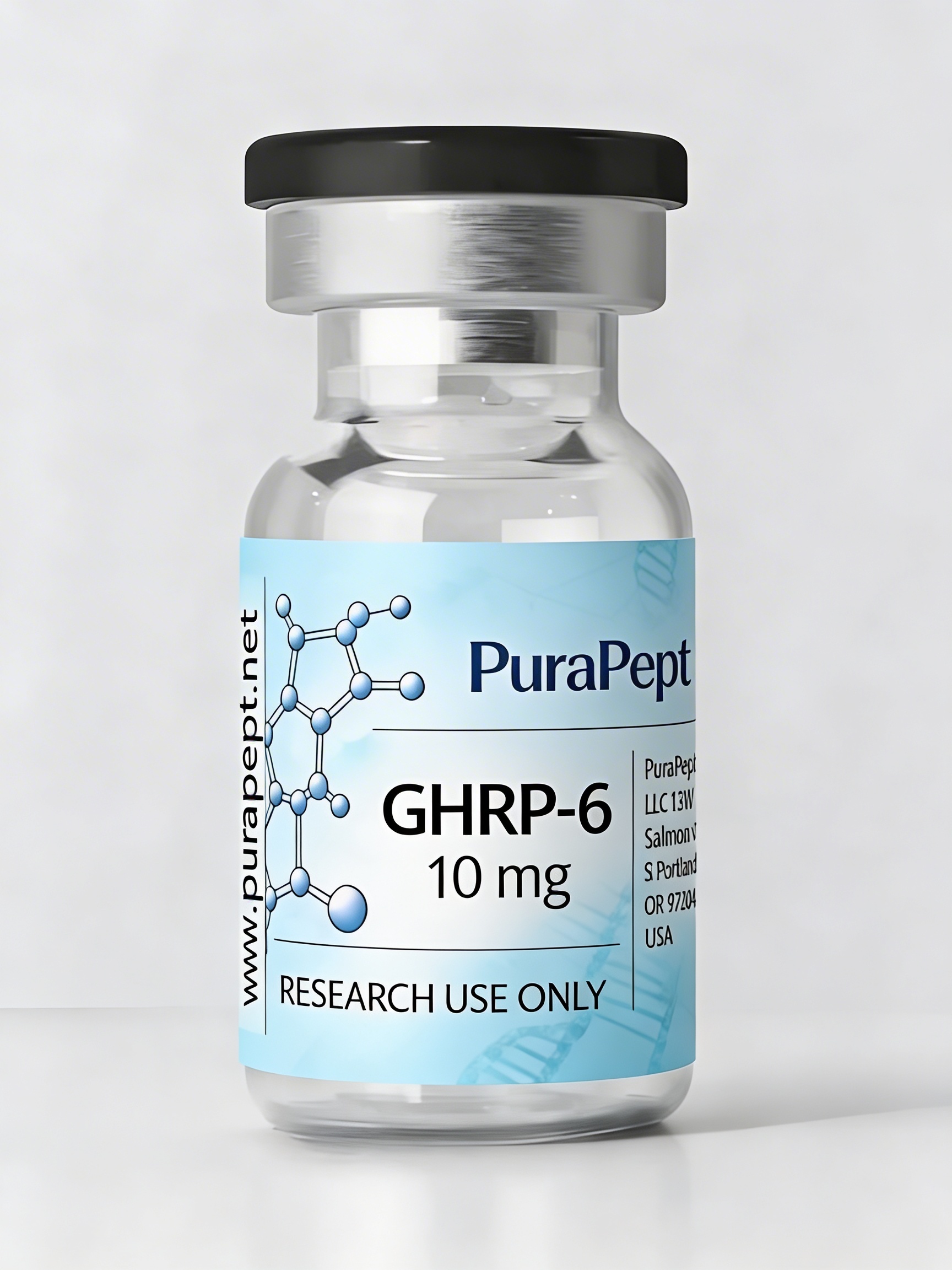
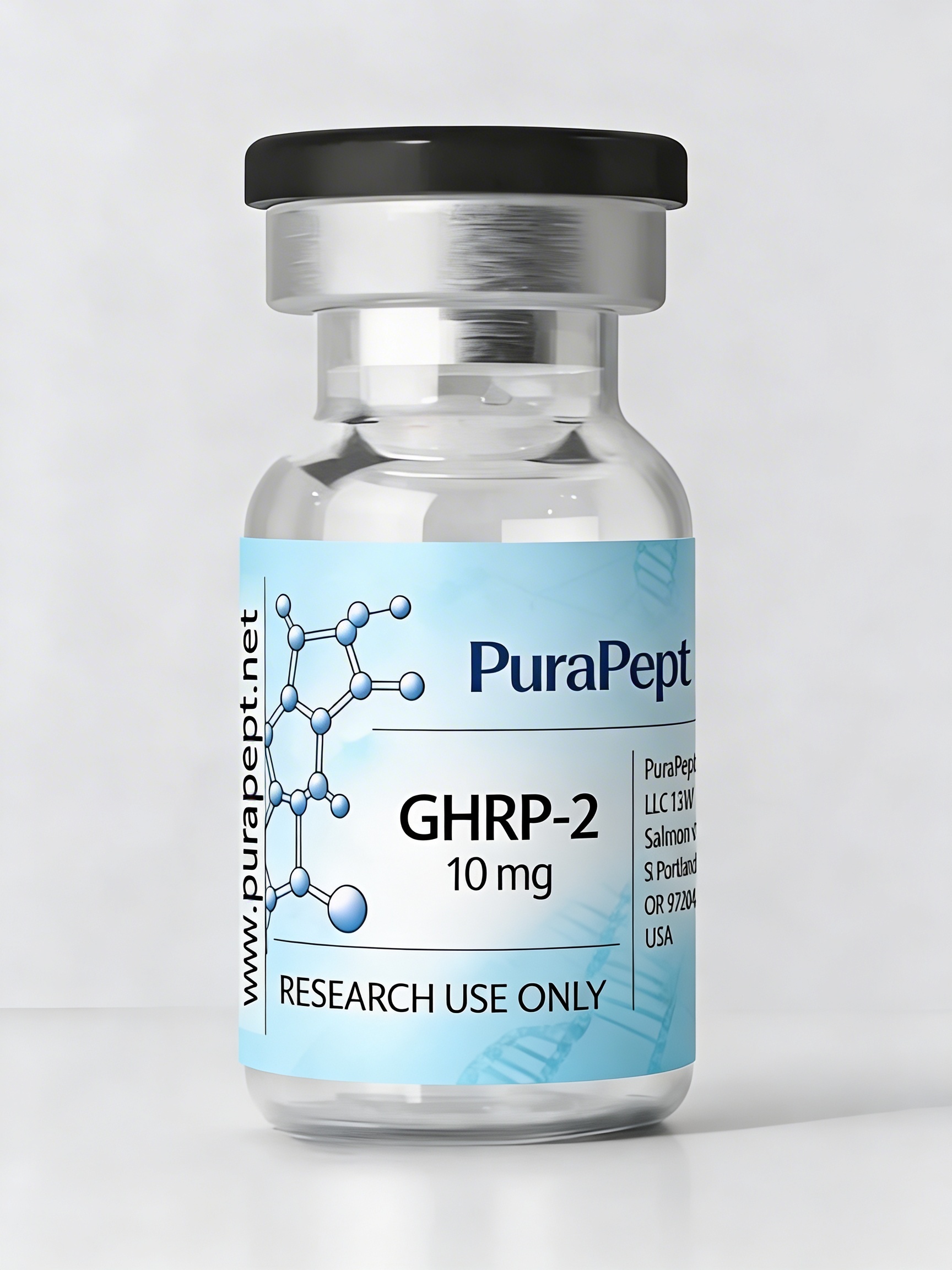 GHRP-2 10 mg
GHRP-2 and GHRP-6 are both synthetic hexapeptides that release growth hormone. The two papers here do not compare them head to head — one studies GHRP-6 in normal men, the other uses GHRP-6 to probe a clinical question about hypercortisolism. What they establish is what the molecule does to the axis it acts on, and the limits of that.
In normal men: GH, ACTH, cortisol, and stage 2 sleep
The 1995 Neuroendocrinology paper compared repetitive intravenous boluses of 4 × 50 µg GHRP against placebo on the sleep EEG from 23:00 to 07:00 and on secretion profiles of GH, ACTH and cortisol from 20:00 to 07:00 in normal male controls. The framing matters: GHRH has the same GH effect, and pulsatile GHRH in normal men increases slow-wave sleep and blunts cortisol — so the study was asking whether GHRP behaves the same way. It does not.
- GH concentration from 22:00 to 03:00 was 15.4 ± 9.6 ng/ml after GHRP versus 5.5 ± 4.0 ng/ml after placebo, p < 0.02.
- ACTH from 22:00 to 02:00 was 21.0 ± 5.3 pg/ml versus 16.6 ± 3.1 pg/ml, p < 0.02.
- Cortisol from 22:00 to 03:00 was 56.0 ± 31.0 ng/ml versus 25.2 ± 9.0 ng/ml, p < 0.02 — cortisol was enhanced, where GHRH blunts it.
- Stage 2 sleep increased, 270.1 ± 25.3 min after GHRP versus 245.4 ± 25.8 min after placebo, p < 0.02, while slow-wave sleep and the other sleep-EEG variables remained unchanged.
The paper’s own conclusion is the honest summary: GHRP stimulates not only GH release but also hypothalamic-pituitary-adrenocortical hormone secretion, an effect opposite to the cortisol blunting after GHRH. Both promote sleep, but GHRP enhances stage 2 sleep and does not affect slow-wave sleep. That cortisol difference is the single most consequential fact on this page, and it is a 30-year-old observation about an acute intravenous bolus in normal men.
In hypercortisolism: the two pathways fall apart differently
The 1997 Clinical Endocrinology paper asks whether GHRP-6 and GHRH work by different mechanisms — they appear to — by testing six patients with endogenous hypercortisolism, nine with exogenous glucocorticoid excess and 10 normal controls, given GHRH 100 µg, GHRP-6 1 µg/kg, or both, intravenously on separate days in random order.
Peak GH after GHRH was blunted in both hypercortisolaemic groups: 2.0 ± 0.7 µg/l in endogenous and 3.6 ± 1.2 µg/l in exogenous, against 24.9 ± 6.1 µg/l in controls. The GHRP-6 response diverged. The endogenous group had lower peak GH after GHRP-6 alone (7.7 ± 1.9) or with GHRH (18.8 ± 5.8) than controls (22.1 ± 3.6; GHRH + GHRP-6 77.4 ± 15.0) and than the exogenous group (27.4 ± 6.2; 78.1 ± 19.9). There were no differences between controls and the exogenous group on either GHRP-6 test. No changes in plasma IGF-I and glucose levels were observed in any group.
The conclusion is specific: hypercortisolism affects the GHRH and GHRP-6 releasing mechanisms differently; in endogenous hypercortisolism both pathways are affected, while in the exogenous group the GHRP-6 mechanism is apparently preserved.
What the data do not show
They do not compare GHRP-2 with GHRP-6. Neither paper contains both compounds, and this page does not describe a difference between them.
They do not show lean body mass, muscle mass, strength or any body-composition endpoint in people. The 1995 paper measured hormones and a sleep EEG; the 1997 paper measured peak GH, IGF-I and glucose.
They do not show a growth or adult-height effect. Both populations were adults, and growth was not an endpoint.
They do not show an endocrine- or metabolic-disease indication. The 1997 study enrolled 25 people with hypercortisolism or control status as a probe of GH responsiveness, not as a treatment study.
They do not show a half-life, a subcutaneous route, or a once-daily schedule. Both studies used repeated intravenous boluses in small numbers of people, and neither abstract prints a subcutaneous pharmacokinetic figure.
One catalogue note, stated as a limit rather than as guidance: both preparations here are 10 mg vials. The printed figures on this page are 50 µg and 1 µg/kg intravenous boluses; the abstracts print no subcutaneous dose for either compound, so this page cannot map a 10 mg vial onto anything reported here.
Where this sits on the shelf
The compounds as supplied by the manufacturer: GHRP-2 · GHRP-6
What we supply
The two GHRP preparations above, as supplied by the manufacturer, tracked, from inside the EU.
Research use only. This page summarises published studies for research reference. It is not medical advice, not a protocol, and not a suggestion for human use. Nothing we supply is for human or veterinary use.
References.
- Frieboes RM, Murck H, Maier P, et al. Growth hormone-releasing peptide-6 stimulates sleep, growth hormone, ACTH and cortisol release in normal man. Neuroendocrinology. 1995 May;61(5):584-9.
- Borges MH, DiNinno FB, Lengyel AM. Different effects of growth hormone releasing peptide (GHRP-6) and GH-releasing hormone on GH release in endogenous and exogenous hypercortisolism. Clin Endocrinol (Oxf). 1997 Jun;46(6):713-8.