Buffered NAD+: three trials that raised the metabolite
Nicotinamide riboside reliably raises NAD-related metabolites in blood. In skeletal muscle it has now been measured directly, three times, and found to change nothing. This page is about the difference between a biomarker moving and an outcome moving.
14 November 2026 · 5 min read
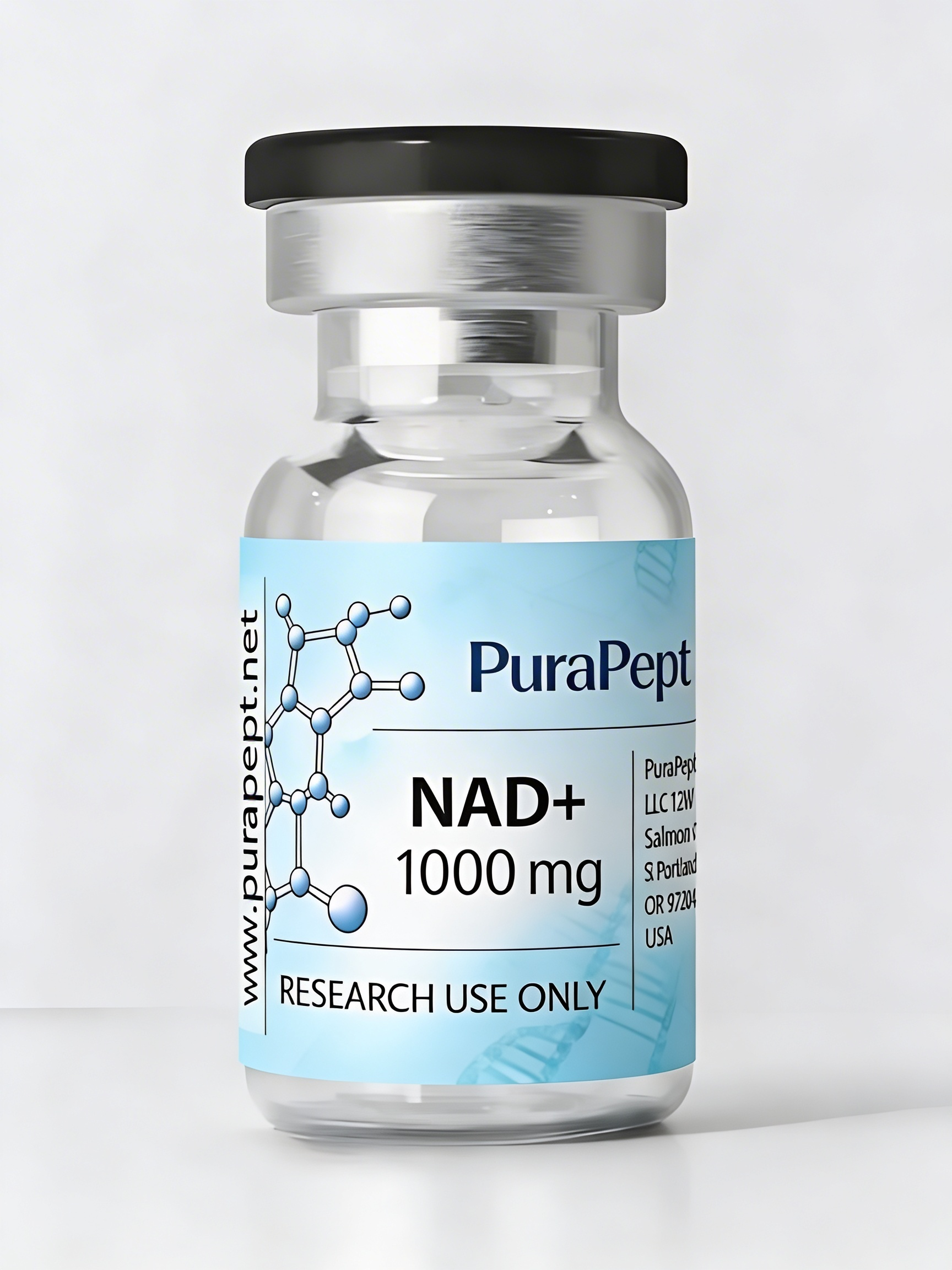 NAD+ (Buffered) 1000 mg
NAD+ (Buffered) belongs to a class with a genuinely strong biochemical story and, until recently, a weak outcome story. The last two years have made the picture much clearer, mostly by measuring the thing directly in muscle and finding it unchanged. This page is that measurement, and what it does and does not settle.
The mechanism is not in doubt
NAD+ is an essential enzymatic cofactor in energetic and signalling pathways, and the endogenous pool is lower in several chronic and degenerative diseases — cardiovascular disease, Alzheimer’s and Parkinson’s disease, muscular dystrophies — and in ageing. Exercise requires higher energy expenditure than a resting state, so a state of NAD+ insufficiency with reduced energy metabolism could result in an inadequate exercise response. That is the rationale, and it is a good one.
The 2020 review in Experimental Gerontology lays it out and then states the problem with precision. Recent preclinical evidence suggests that a reason for the variability in exercise-training responses may be the age-related dysregulation of the NAD+ metabolome. Nicotinamide riboside, a vitamin B3 derivative, has shown an ability to improve NAD+ metabolome homeostasis, restoring energy metabolism and cellular function in various organs in animals. It has also been tested in older humans and is considered safe — but the effects of NR supplementation alone on physical performance are unclear.
That sentence, written before the direct muscle biopsies existed, is what the next two studies answered.
The direct muscle measurement
The 2020 randomised trial in The Journal of Physiology is described by its authors as the first long-term human clinical trial to report on effects of nicotinamide riboside on skeletal muscle mitochondrial function, content and morphology. In a randomised, placebo-controlled trial, 40 participants received NR or placebo twice daily for 12 weeks, with skeletal muscle biopsies before and after. Mitochondrial respiratory capacity was determined by high-resolution respirometry on single muscle fibres; protein and mRNA measures by Western blot and quantitative PCR; and in a subset (placebo n = 8; NR n = 8) mitochondrial fractional area and morphology by laser scanning confocal microscopy.
The findings, in the authors’ own bullet structure:
- Protein levels of nicotinamide phosphoribosyltransferase, an essential NAD+ biosynthetic enzyme in skeletal muscle, decreased by 14 % with NR.
- Steady-state NAD+ levels as well as gene expression and protein abundance of other NAD+ biosynthetic enzymes remained unchanged.
- Neither respiratory capacity of skeletal muscle mitochondria nor abundance of mitochondrial-associated proteins were affected.
- No changes in mitochondrial fractional area or network morphology were observed.
Their conclusion is unambiguous: our data do not support the hypothesis that dietary NR supplementation has significant impact on skeletal muscle mitochondria in obese and insulin-resistant men.
The 14 % NAMPT decrease is the part most often left out, and it points the same way as everything else — the muscle did not accumulate NAD+.
The meta-analysis that covers the outcome
The 2025 systematic review and meta-analysis in the Journal of Cachexia, Sarcopenia and Muscle pooled randomised controlled trials comparing NR or NMN against placebo, with mean participant ages ranging from 60.9 to 83 years, using a random-effects model for skeletal muscle index, handgrip strength and gait speed, plus a narrative synthesis for chair-stand time, the short physical performance battery, timed-up-and-go, six-minute walk distance, leg and chest press and thigh muscle mass.
Every pooled estimate was null:
- NMN and skeletal muscle index: MD −0.42 (95 % CI −0.99 to 0.14), I² = 63 %, p = 0.14.
- Handgrip strength, left: MD 0.61 (−0.89 to 2.10), I² = 0 %, p = 0.42; right: MD 0.45 (−1.06 to 1.96), I² = 0 %, p = 0.56.
- Gait speed: MD −0.01 (−0.08 to 0.06), I² = 0 %, p = 0.79.
- Five-times chair stand: MD −0.21 (−0.70 to 0.29), I² = 11 %, p = 0.41.
Narrative synthesis added that NMN did not improve knee extension strength, SPPB, or thigh muscle mass. Two subgroup signals appeared and are worth naming precisely: NR was associated with a longer six-minute walk distance among individuals with peripheral artery disease, while lower SPPB scores and slower chair-stand times were observed in those with mild cognitive impairment. Those are subgroup observations in a meta-analysis of null results, not findings.
The authors’ conclusion: current evidence does not support NMN and NR supplementation for preserving muscle mass and function in adults with a mean age of over 60 years, and future research should explore amount, NAD+ baseline deficiency, and combined interventions.
Where the metabolite signal is strongest
NADPARK, the 2022 phase I trial in Cell Metabolism, is the proof that the compound does what the biochemistry says, in a place where it was measured directly. Thirty newly diagnosed, treatment-naive Parkinson’s disease patients received NR or placebo for 30 days. It was well tolerated and led to a significant but variable increase in cerebral NAD levels — measured by ³¹P magnetic resonance spectroscopy — and related metabolites in cerebrospinal fluid. NR recipients whose brain NAD rose showed altered cerebral metabolism on ¹⁸F-deoxyglucose PET, associated with mild clinical improvement. NR also augmented the NAD metabolome and induced transcriptional upregulation of processes related to mitochondrial, lysosomal and proteasomal function in blood cells and/or skeletal muscle, and decreased inflammatory cytokines in serum and cerebrospinal fluid. The authors nominate NR as a potential neuroprotective therapy warranting further investigation in larger trials.
So: the metabolite moves in brain, in blood, and in CSF. The authors said “variable” themselves. In muscle, where it has now been biopsied, it does not.
What this record does not show
Not a muscle result. Biopsy-based trials find unchanged steady-state NAD+ and unchanged mitochondrial function after 12 weeks.
Not a null mechanism. NADPARK shows a real central effect, and “safe and bioavailable” is a genuine finding, not a euphemism.
Not a conclusion about dosing or about deficient people. Both the meta-analysis and the muscle trial name baseline NAD+ status and amount as the open variables.
Not a general negative. The peripheral-artery-disease subgroup in the meta-analysis is a signal worth a trial, not a conclusion.
What we supply
NAD+ (Buffered), as supplied by the manufacturer, tracked, from inside the EU. Batch documentation for any product that carries it is explained in the COA guide linked from the product page.
A supplement that reliably raises the metabolite it is supposed to raise, and does not yet change the thing you bought it for, is the most honest kind of research finding there is. Research use only. This page summarises published randomised trials and meta-analyses for research reference. It is not medical advice and not a suggestion for human use. Nothing we supply is for human or veterinary use.
References.
- Prokopidis K, Moriarty F, Bahat G, McLean J, Church DD, Patel HP. The effect of nicotinamide mononucleotide and riboside on skeletal muscle mass and function: a systematic review and meta-analysis. J Cachexia Sarcopenia Muscle 2025;16(3):e13799 (PMID 40275690).
- Dollerup OL, Chubanava S, Agerholm M, Søndergård SD, Altıntaş A, Møller AB, et al. Nicotinamide riboside does not alter mitochondrial respiration, content or morphology in skeletal muscle from obese and insulin-resistant men. J Physiol 2020;598(4):731-754 (PMID 31710095).
- Brakedal B, Dölle C, Riemer F, Ma Y, Nido GS, Skeie GO, et al. The NADPARK study: a randomized phase I trial of nicotinamide riboside supplementation in Parkinson's disease. Cell Metab 2022;34(3):396-407.e6 (PMID 35235774).
- Custodero C, Saini SK, Shin MJ, Jeon YK, Christou DD, McDermott MM, et al. Nicotinamide riboside - a missing piece in the puzzle of exercise therapy for older adults? Exp Gerontol 2020;137:110972 (PMID 32450270).