Retatrutide and the triple-agonist idea: what the preclinical work claims
Retatrutide is the third receptor in the incretin story: GLP-1 plus GIP plus glucagon. The mechanistic argument is that glucagon adds energy expenditure to satiety, and the 2022 preclinical paper says exactly that — in DIO mice. This page is about the idea and where the human file stops.
13 November 2026 · 4 min read
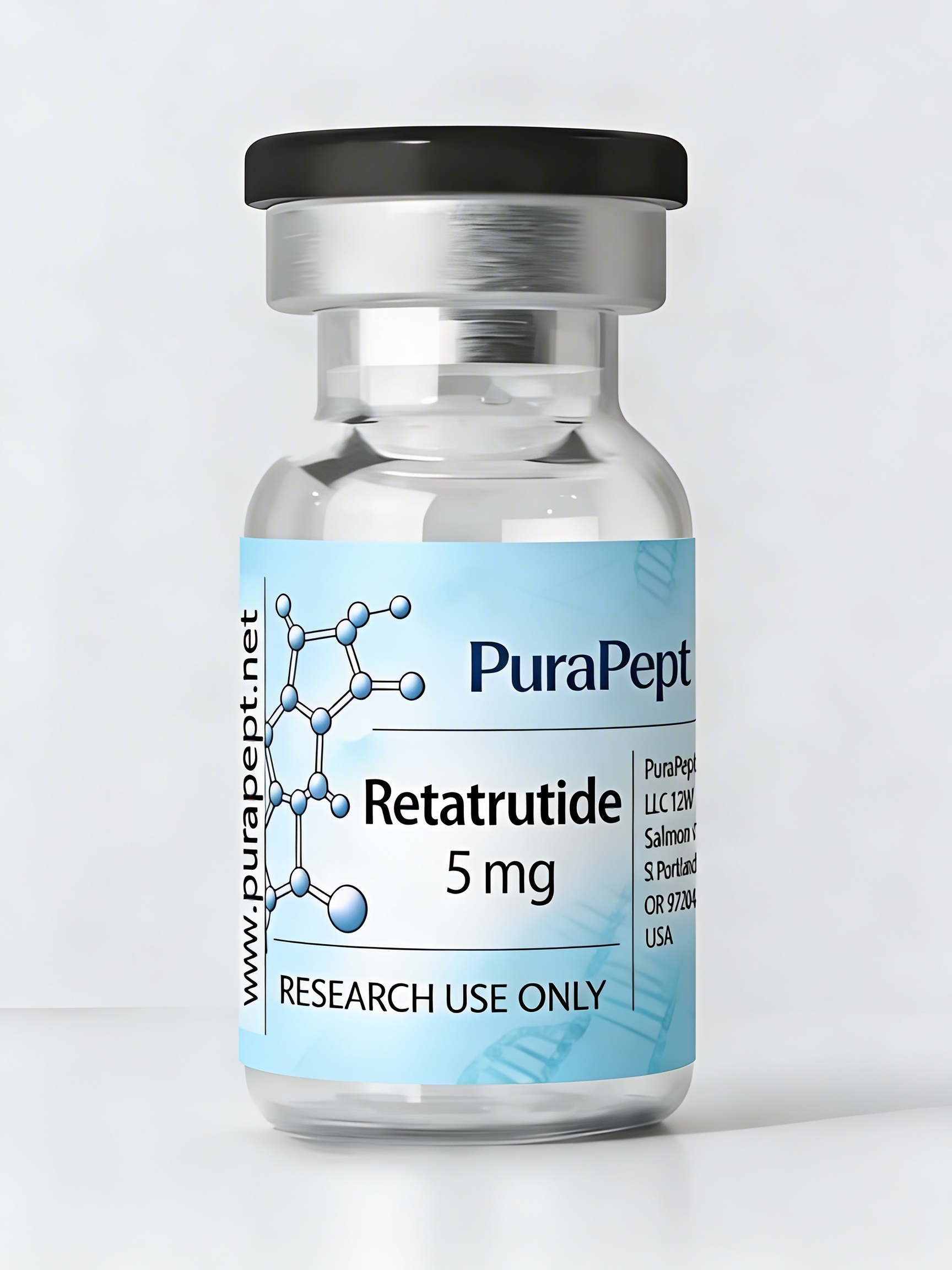 Retatrutide 5 mg
Retatrutide is the compound in the incretin family that adds a third receptor. It is also the one where the interesting scientific content is the design argument rather than the outcome data, and this page is about that argument, stated as its authors state it.
The idea, from the 2022 preclinical paper
The Molecular Metabolism paper is explicit about the hypothesis. Pharmacological strategies that engage multiple mechanisms of action have shown synergistic benefits for metabolic disease in preclinical models, and one approach — concurrent activation of the glucagon-like peptide-1 (GLP-1), glucose-dependent insulinotropic peptide (GIP), and glucagon (Gcg) receptors, i.e. triagonism — combines the anorectic and insulinotropic activities of GLP-1 and GIP with the energy expenditure effect of glucagon.
That last clause is the whole novelty. GLP-1 and GIP produce satiety and insulin effects; glucagon has historically been understood as raising energy expenditure. A triagonist is therefore not simply “more of the same”, and the paper sets out to test the specific question that had been unassessed: the relative contribution of glucagon-receptor activation.
What the authors built: unimolecular peptide triagonists with an empirically optimized receptor potency ratio, using a protraction strategy permitting once-weekly human dosing. Where they were tested: an established diet-induced obesity mouse model, benchmarked against semaglutide as a GLP-1 receptor mono-agonist and tirzepatide as a GLP-1R/GIPR co-agonist.
The result: the optimized triagonists normalized body weight in DIO mice and enhanced energy expenditure in a manner superior to that of GLP-1R mono-agonists and GLP-1R/GIPR co-agonists. Their conclusion is that unimolecular polypharmacology is an effective means to target multiple mechanisms contributing to obesity, and that glucagon-receptor activation is the differentiating factor between mono- or dual-agonists and triagonists.
Note the exact claim. It is superiority in a mouse model of diet-induced obesity, on a weight and energy-expenditure endpoint. It is not a clinical outcome and the paper does not present one.
Where retatrutide sits in the current pipeline
The 2025 pipeline review places the compound precisely. It sets out the progression of the field: liraglutide as the first GLP-1 receptor agonist approved for overweight, inducing weight loss of 6–8 %; semaglutide once weekly improving that to about 12–15 %; and the dual GIP/GLP-1 receptor agonist tirzepatide once weekly inducing weight loss of about 20 % in obese people without diabetes. Against that backdrop it describes results from GLP-1 mono-agonists, GLP-1/GIP dual agonists, GLP-1/glucagon co-agonists, and the triple agonist retatrutide (GIP/GLP-1/glucagon), which have shown beneficial effects on both body weight and steatotic liver disease.
The same review is explicit about the two constraints that apply to everything in this family. The adverse events with GLP-1-based therapies are primarily gastrointestinal and include nausea, vomiting, obstipation or diarrhoea, which often can be mitigated by slow up-titration. And the outstanding question it names is maintenance of the weight loss, possibly pharmacological treatment needs to be life-long — which is the question the withdrawal trials on this site were designed to answer, and which none of these compounds has answered permanently.
The two 2026 reviews
Two recent broad reviews bracket the compound in context rather than testing it. The GH-IGF-1 axis review sorts performance-enhancing peptides into evidence tiers from regulatory-grade randomised trial data to a complete absence of human studies, and states that the absence of regulatory approval for physique- or performance-related indications, together with uncertainty about product composition, dose and stacking in unregulated supply chains, is what forces clinicians to build pragmatic frameworks rather than rely on trial data.
The 2026 review covering aesthetic, metabolic and endocrine peptides reviewed 106 articles, prioritising systematic reviews, meta-analyses and randomised trials. Its conclusion is balanced in a way the marketing is not: therapeutic peptides are a promising tool for type 2 diabetes and obesity, skin rejuvenation and hormone analogues, but further studies are needed before most new peptides can be used safely in humans.
What this record does not show
Not a human result. The superiority claim is in diet-induced-obesity mice.
Not a durability result. The pipeline review names maintenance as the outstanding question for the whole class.
Not a tolerability finding for retatrutide specifically. The gastrointestinal profile quoted is class-level.
Not a body-composition result. Weight and energy expenditure in mice are the endpoints studied.
What we supply
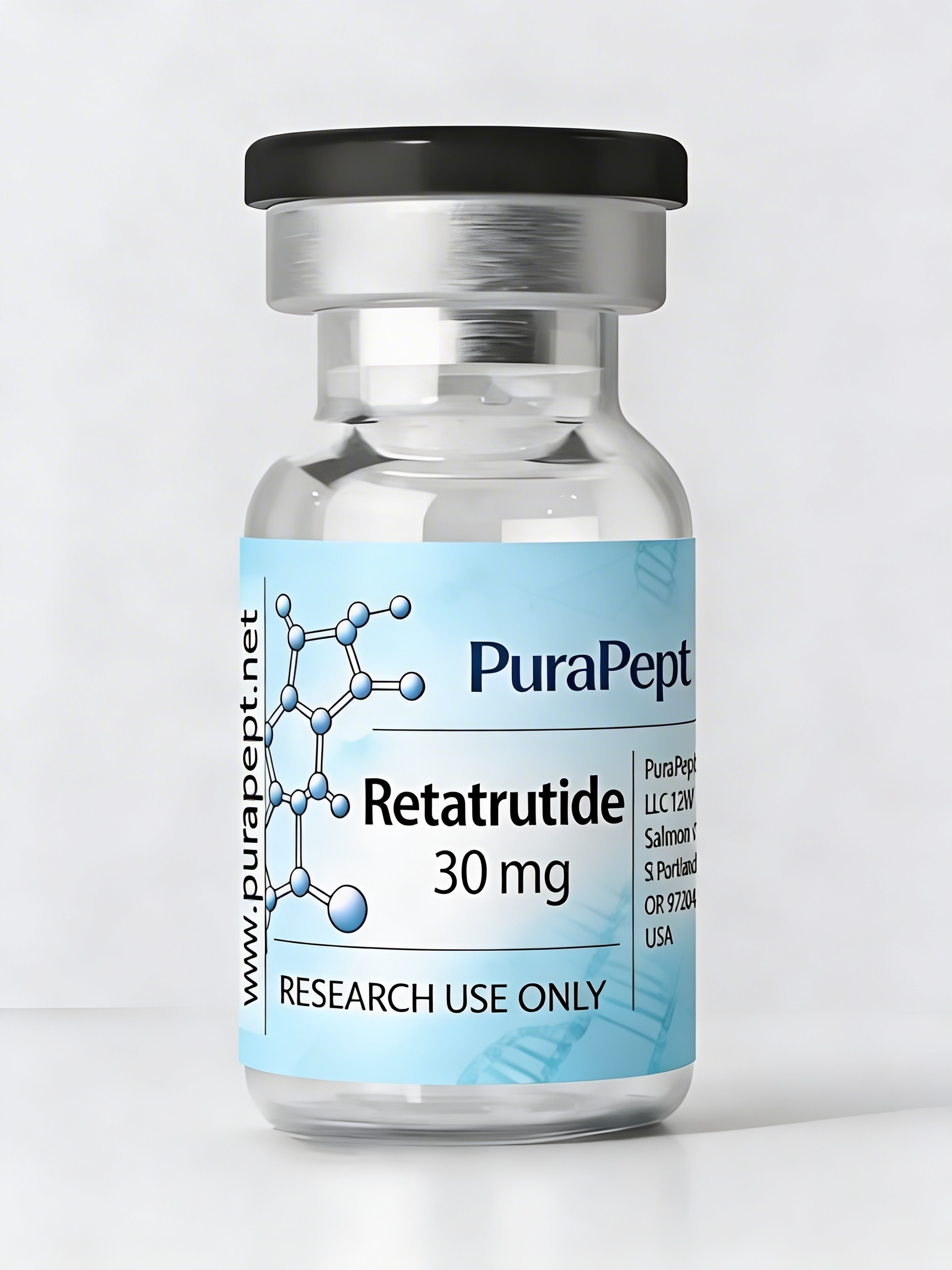
Retatrutide 5 mg and Retatrutide 30 mg, as supplied by the manufacturer, tracked, from inside the EU. Batch documentation for any product that carries them is explained in the COA guide linked from the product page.
Adding a third receptor is a real idea with a real preclinical result and a named open question. Those three things are usually collapsed into one on a product page. Research use only. This page summarises published preclinical and pipeline literature for research reference. It is not medical advice and not a suggestion for human use. Nothing we supply is for human or veterinary use.
References.
- Madsbad S, Holst JJ. The promise of glucagon-like peptide 1 receptor agonists (GLP-1RA) for the treatment of obesity: a look at phase 2 and 3 pipelines. Expert Opin Investig Drugs 2025;34(3):197-215 (PMID 40022548).
- Knerr PJ, Mowery SA, Douros JD, Premdjee B, Hjøllund KR, He Y, et al. Next generation GLP-1/GIP/glucagon triple agonists normalize body weight in obese mice. Mol Metab 2022;63:101533 (PMID 35809773).
- Dominikowski A, Rękoś Z, Olejarz M, Szczepanek-Parulska E, Domin R, Ruchała M. The emerging landscape of performance-enhancing peptides modulating GH-IGF1 axis: bridging the gap between clinical evidence and patient self-administration. Front Endocrinol (Lausanne) 2026;17:1822475 (PMID 42395176).
- Renke G, Chinellato L. Therapeutic peptides in aesthetic, metabolic and endocrine conditions: effects, safety, clinical applications, and future perspectives. Int J Mol Sci 2026;27(9):3890 (PMID 42123471).