DSIP: the one controlled human trial ended in a negative result
Sixteen chronic insomniacs received 25 nmol/kg of DSIP intravenously in a double-blind matched-pairs design across three nights, and the authors concluded it is not likely to be of major therapeutic benefit because the significant effects were weak. The recent pharmacology is mice. This page reports both.
20 October 2026 · 3 min read
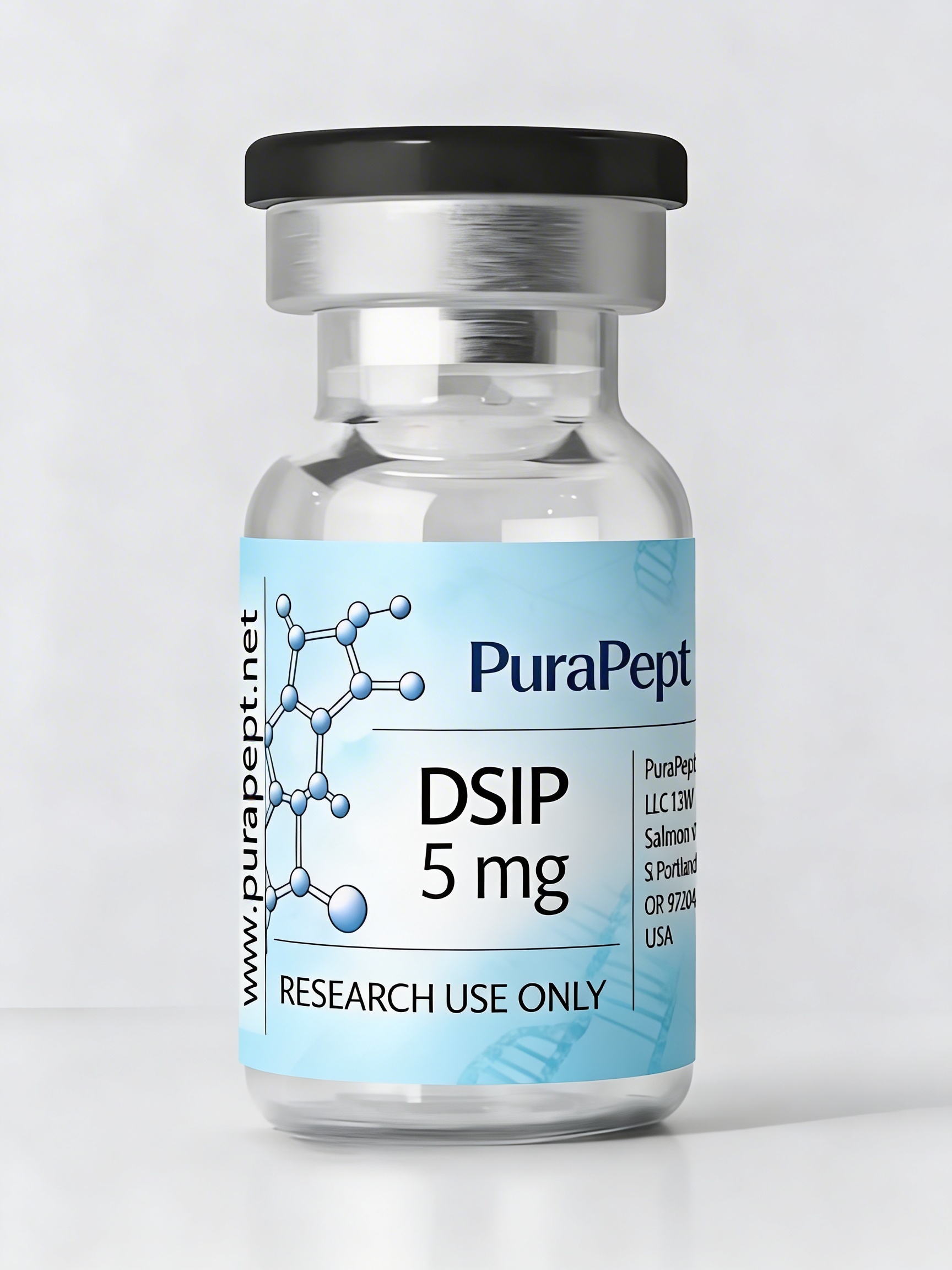 DSIP 5 mg
Delta sleep-inducing peptide is a nonapeptide whose name promises more than its evidence does. It is worth reading precisely because the name is aspirational and the trial literature is small, dated and largely negative.
The controlled human trial, and its conclusion
The best available human efficacy study is from 1992. Sixteen chronic insomniac patients were studied in a double-blind matched-pairs parallel-groups design. Subjects slept for 5 consecutive nights in a laboratory: night 1 for adaptation, night 2 for baseline measurements. In the afternoon before the 3rd, 4th and 5th night, half received intravenously 25 nmol/kg body weight of DSIP and half received a glucose solution as placebo.
The objective measures pointed in a favourable direction — higher sleep efficiency and shorter sleep latency with DSIP compared with placebo, and one measure of subjectively estimated tiredness decreased within the DSIP group.
And then the authors’ own reading of those results: data analysis suggested the statistically significant effects were weak and in part could be due to an incidental change in the placebo group, and since none of the other measures, including subjective sleep quality, showed any change, the conclusion was that short-term treatment of chronic insomnia with DSIP is not likely to be of major therapeutic benefit.
That is the whole of the controlled human efficacy evidence cited on this page: sixteen people, intravenous administration, three nights, a conclusion of no major benefit.
The biomarker study, in people who were not measured for benefit
The other 1992 paper, in Sleep, studied cerebrospinal fluid DSIP-like immunoreactivity in 15 drug-free male subjects with a DSM-IIIR diagnosis of schizophrenia. Subjects underwent lumbar puncture and three nights of polysomnography.
CSF DSIP-LI was significantly correlated with polysomnography from the night before the puncture: with stage 3 sleep (p = 0.05), with stage 3 and delta sleep during the first non-REM period (p = 0.02 and p = 0.05 respectively), with the ratio of the first and second NREM period (p < 0.05), and negatively with stage 2% sleep (p < 0.05).
The framing sentence matters: DSIP has been reported to increase sleep in subjects with insomnia — and this paper is about a correlation in cerebrospinal fluid, in a psychiatric population, with no drug administered. The authors’ own closing line is that whether this first report of a potential relationship between CSF DSIP-LI and slow-wave sleep in man might be generalised to sleep in non-psychiatric subjects awaits further study. It is a hypothesis about a relationship, in 15 men, with a p-value of 0.05 on the first comparison.
The modern work is mice
The most recent study cited here is a 2017 protein-engineering paper, and its methods tell the story. The authors built a fusion protein containing an N-terminal TAT-based transduction domain followed by human serum albumin and DSIP, expressed it in Pichia pastoris and purified it. Mice received single subcutaneous injections of 0.5, 1 and 2 mg/kg, and the pharmacological activity was assessed with the classic pentobarbital-induced sleep test.
The results: increasing concentrations reduced sleep latency and prolonged sleep duration (P<0.05), and higher doses (1.0 and 2.0 mg/kg) significantly increased the rate of sleep re-onset compared with vehicle (P<0.05). The stated aim was to analyse the pharmacological effect of DSIP on insomnia, and the stated gap is that little is known about it.
Two features of that design limit what it can carry. It is a pentobarbital-potentiating assay — animals were sedated by a barbiturate, which is not insomnia — and the intervention was a fusion protein with a cell-penetrating domain and albumin scaffold, not DSIP alone.
What the data do not show
They do not show that DSIP improves sleep in people. The single controlled human trial concluded the opposite, and said so explicitly.
They do not show a durable effect. Three nights of intravenous administration, five nights in a laboratory, sixteen people.
They do not show that the name describes the pharmacology in humans. The 2017 work is a barbiturate sleep assay in mice with a delivery scaffold attached.
They do not show a relationship between DSIP levels and sleep quality in general sleepers. The biomarker study is a correlation in 15 men with schizophrenia, and its authors flag the need for further study.
Where this sits on the shelf
The compound as supplied by the manufacturer: DSIP 5 mg
What we supply
The DSIP preparation above, as supplied by the manufacturer, tracked, from inside the EU.
Research use only. This page summarises published studies for research reference. It is not medical advice, not a treatment, and not a suggestion for human use. Nothing we supply is for human or veterinary use.
References.
- Bes F, et al. Effects of delta sleep-inducing peptide on sleep of chronic insomniac patients. A double-blind study. Neuropsychobiology 1992;26(4):193-197.
- van Kammen DP, et al. Delta sleep-inducing-peptide-like immunoreactivity (DSIP-LI) and delta sleep in schizophrenic volunteers. Sleep 1992;15(6):519-525.
- Zhang XG, et al. Expression and Purification of Delta Sleep-Inducing Peptide Fused with Protein Transduction Domain and Human Serum Albumin in Pichia pastoris. Protein Pept Lett 2017;24(7):668-675.