Oral glutathione: two randomised trials that disagree, and what each measured
A 2015 six-month RCT in 54 adults found body glutathione stores rose 30-35% in erythrocytes, plasma and lymphocytes and 260% in buccal cells at 1,000 mg per day. A 2011 four-week RCT in 40 adults at 500 mg twice daily found no change in glutathione status or in two oxidative-stress biomarkers. Both are printed here, side by side, because the difference between them is the useful part.
24 October 2026 · 5 min read
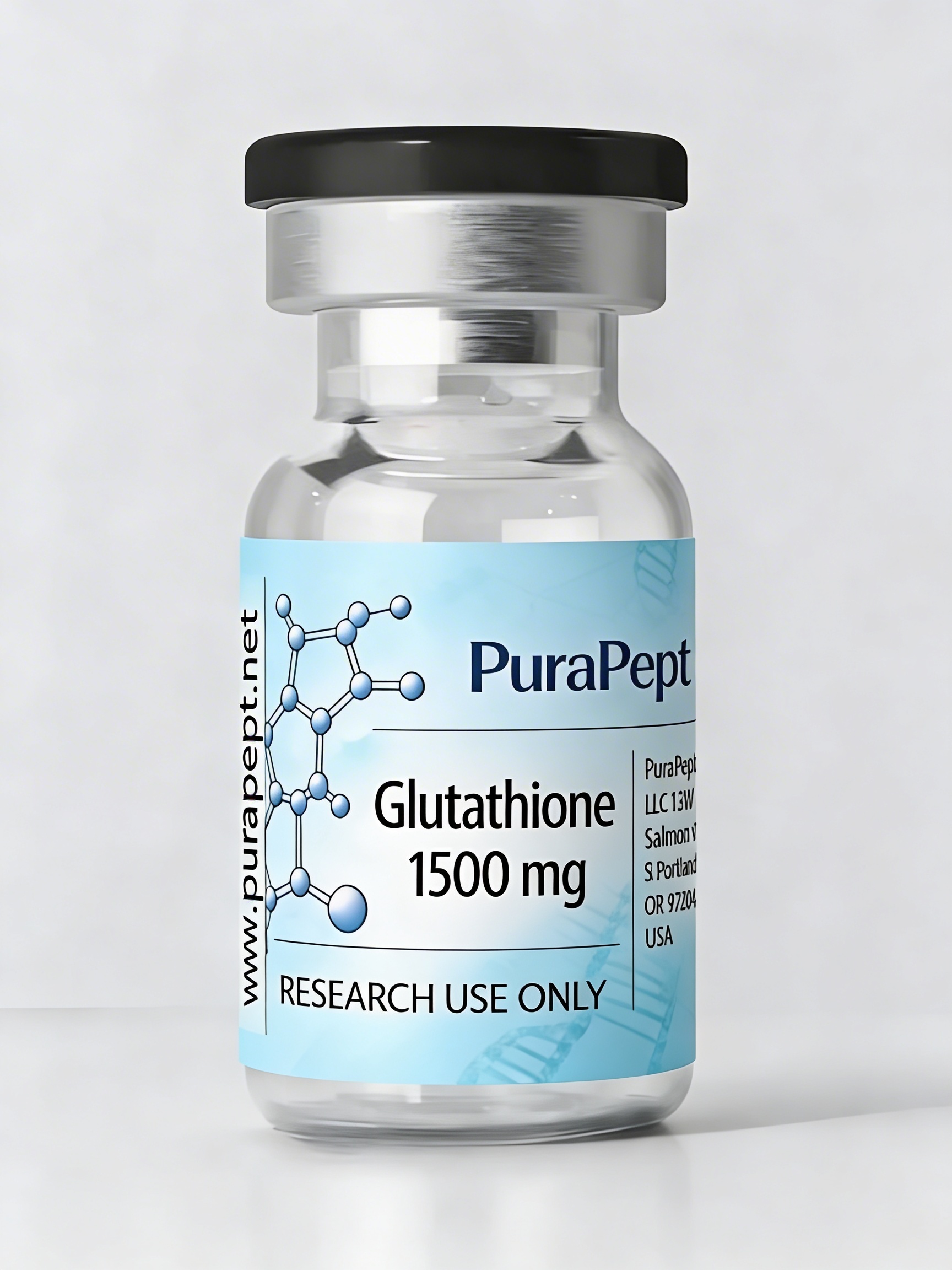 Glutathione 1500 mg
Glutathione is a tripeptide and the most abundant free radical scavenger synthesised endogenously in humans. The problem with putting it in a capsule is not stability, it is delivery: glutathione is digested in the gut, so the question is whether an oral dose changes the body’s own stores. The 2011 paper states the gap in one sentence — “Despite ease of delivery, little controlled clinical research data exist evaluating the effects of oral GSH supplementation.”
Two trials on this page answer that question in opposite directions. Both are randomised, double-blind and placebo-controlled. Here they are side by side.
The trial that found a rise in stores
The 2015 European Journal of Nutrition paper is a 6-month randomised, double-blinded, placebo-controlled trial of oral glutathione at 250 or 1,000 mg per day in 54 non-smoking adults. Glutathione levels were measured in blood, erythrocytes, plasma, lymphocytes and exfoliated buccal mucosal cells. Secondary outcomes on a subset included a battery of immune markers.
Levels in blood increased after 1, 3 and 6 months against baseline at both doses. At 6 months, mean glutathione levels had increased 30-35% in erythrocytes, plasma and lymphocytes and 260% in buccal cells in the high-dose group (P < 0.05). In the low-dose group levels increased 17% in blood and 29% in erythrocytes (P < 0.05). In most cases the increases were dose and time dependent, and levels returned to baseline after a one-month washout.
Two secondary findings are printed. A reduction in oxidative stress in both dose groups was indicated by decreases in the oxidised-to-reduced glutathione ratio in whole blood after 6 months. And natural killer cytotoxicity increased more than twofold in the high-dose group against placebo (P < 0.05) at 3 months.
The 260% figure is in buccal cells, not in blood compartments. Those are different tissues and the abstract does not present the buccal result as a systemic one.
The trial that found nothing
The 2011 Journal of Alternative and Complementary Medicine paper randomised 40 adult volunteers without acute or chronic disease to oral glutathione at 500 mg twice daily for 4 weeks. The primary outcomes were creatinine-standardised urinary F2-isoprostanes and urinary 8-hydroxy-2’-deoxyguanosine. Erythrocyte total reduced glutathione, oxidised glutathione and their ratio were measured by tandem liquid chromatography/mass spectrometry.
Thirty-nine participants completed the study per protocol. There were no differences in oxidative stress biomarkers between groups at baseline. At week 4 the between-group changes were nonsignificant on both primary outcomes: F2-isoprostane 0.0 ± 0.1 against 0.0 ± 0.1 ng/mg creatinine (p = 0.38), and 8-OHdG -0.2 ± 3.3 against 1.0 ± 3.2 μg/g creatinine (p = 0.27). Total reduced, oxidised and ratio measures of glutathione status were also unchanged.
The authors’ conclusion is that no significant changes were observed in biomarkers of oxidative stress, including glutathione status.
Reconciling them honestly
The two trials differ in duration, in dose per day and in what they measured. The 2015 trial ran 6 months at 250 or 1,000 mg per day and reported compartment stores going up, with a dose-dependence and a washout back to baseline. The 2011 trial ran 4 weeks at 1,000 mg per day and reported stores and oxidative-stress markers unchanged.
Neither abstract explains the disagreement, and this page does not resolve it. What can be said without exceeding the abstracts is that a 4-week readout and a 6-month readout of body stores gave opposite answers in healthy adults, and that the 2015 result is explicitly described by its own authors as the first demonstration of oral glutathione increasing body compartment stores.
Skin endpoints, in the trials that measured skin
A 2017 three-arm study randomised healthy female subjects to reduced glutathione 250 mg per day, oxidised glutathione 250 mg per day, or placebo for 12 weeks, measuring melanin index, wrinkles and biophysical properties. Melanin index and ultraviolet spots at all sites including face and arm tended to be lower than placebo in both glutathione groups. At some sites, subjects who received glutathione showed a significant reduction in wrinkles against placebo, and a tendency toward increased skin elasticity was observed. There were no serious adverse effects throughout.
A 2022 trial randomised 124 Asian female subjects into four equal groups — 500 mg L-cystine plus 250 mg L-glutathione, 250 mg reduced L-glutathione alone, 500 mg L-cystine alone, or placebo — daily for 12 weeks, with skin colour by spectrophotometry and dark-spot size and colour from digital photographs. Significant skin lightening was observed at 12 weeks with the combination, and a significant reduction in dark-spot size at 6 and 12 weeks. The authors report the combination’s effects were not only significantly better than placebo but also better than L-cystine alone or L-glutathione alone.
The precursors, not the glutathione
A 2023 randomised trial tested the precursors rather than the tripeptide. Twenty-four older adults were randomised to GlyNAC — a combination of glycine and N-acetylcysteine — at N = 12, or an isonitrogenous alanine placebo at N = 12, for 16 weeks, with 12 young adults receiving GlyNAC for 2 weeks as a comparator. The older adults were reported to have glutathione deficiency, oxidative stress, mitochondrial dysfunction with defective molecular regulation, inflammation, endothelial dysfunction, insulin resistance, multiple aging hallmarks, impaired physical function, increased waist circumference and systolic blood pressure compared with the young group, and GlyNAC rather than placebo improved or corrected these defects.
Read that carefully. The intervention is glycine plus N-acetylcysteine, described by the authors as combining the benefits of glycine, NAC and GSH. It is not an oral glutathione trial, and nothing in it should be read as a result for glutathione capsules.
What the data do not show
They do not show a consistent effect of oral glutathione on oxidative-stress biomarkers. The 2011 trial is a null result on glutathione status and on two biomarkers.
They do not show a clinical outcome. Both trials measured laboratory stores and biomarkers; the 2015 trial’s immune marker was natural killer cytotoxicity in a subset.
They do not show that a raised store is a health benefit. A higher blood glutathione level is not, by itself, an outcome.
They do not resolve the disagreement between a 4-week and a 6-month trial, because neither abstract addresses the other’s design.
They do not show a glutathione result from the GlyNAC trial, which tested two different compounds.
One catalogue note, stated as a limit rather than as guidance: the preparation on this site is 1500 mg. The figures printed in the abstracts above are 250, 500 and 1,000 mg per day, and 500 mg twice daily. No abstract cited here reports a dose-response above 1,000 mg per day.
Where this sits on the shelf
The compound as supplied by the manufacturer: Glutathione
What we supply
The glutathione preparation above, as supplied by the manufacturer, tracked, from inside the EU.
Research use only. This page summarises published studies for research reference. It is not medical advice, not a protocol, and not a suggestion for human use. Nothing we supply is for human or veterinary use.
References.
- Richie JP Jr, Nichenametla S, Neidig W, et al. Randomized controlled trial of oral glutathione supplementation on body stores of glutathione. Eur J Nutr 2015;54(2):251-63.
- Allen J, Bradley RD. Effects of oral glutathione supplementation on systemic oxidative stress biomarkers in human volunteers. J Altern Complement Med 2011;17(9):827-33.
- Weschawalit S, Thongthip S, Phutrakool P, Asawanonda P. Glutathione and its antiaging and antimelanogenic effects. Clin Cosmet Investig Dermatol 2017;10:147-153.
- Duperray J, Sergheraert R, Chalothorn K, Tachalerdmanee P, Perin F. The effects of the oral supplementation of L-Cystine associated with reduced L-Glutathione-GSH on human skin pigmentation: a randomized, double-blinded, benchmark- and placebo-controlled clinical trial. J Cosmet Dermatol 2022;21(2):802-813.
- Kumar P, Liu C, Suliburk J, et al. Supplementing Glycine and N-Acetylcysteine (GlyNAC) in Older Adults Improves Glutathione Deficiency, Oxidative Stress, Mitochondrial Dysfunction, Inflammation, Physical Function, and Aging Hallmarks: A Randomized Clinical Trial. J Gerontol A Biol Sci Med Sci 2023;78(1):75-89.