Growth hormone and muscle in older adults: the trials
The GH axis declines with age, and the trials that raised it in older adults moved body composition more reliably than strength or function.
1 October 2026 · 6 min read
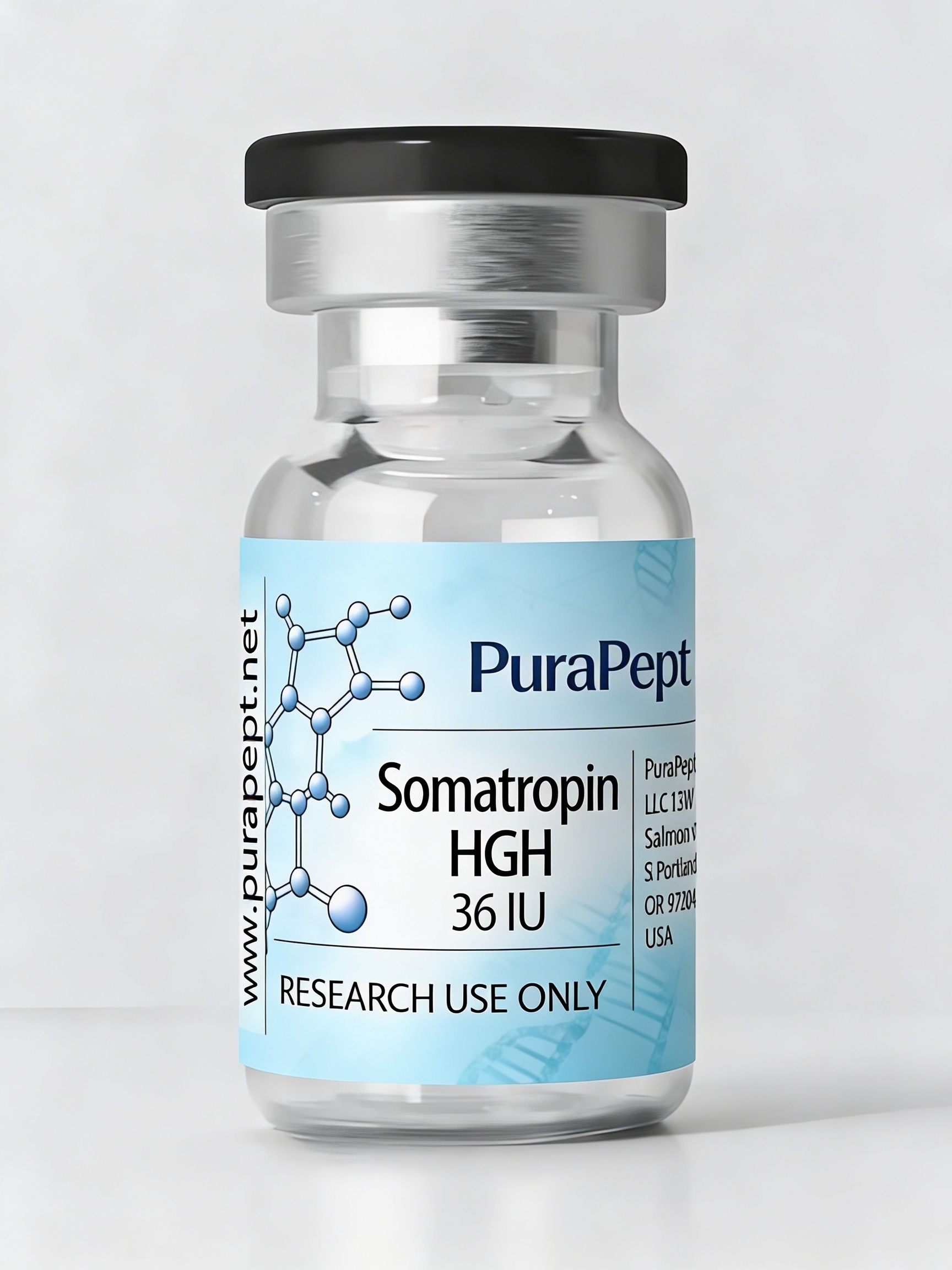 Somatropin 36 IU
Growth hormone is the most quoted explanation for getting smaller with age: GH secretion falls, so give it back, so the muscle returns. The trials testing that sentence are few, small, and mostly about body composition rather than strength. This page walks them in order and says which were randomised and what was measured.
The premise: an axis that declines
Toogood’s review of GH status in ageing puts a number on the premise: spontaneous GH secretion falls by around 14 % per decade, producing what he calls a functional GH insufficiency. Younger and older adults both keep normal pituitary reserve; what declines is the spontaneous output. If the axis is functionally reduced rather than absent, restoring it to youthful levels is a physiological experiment, not the treatment of a disease.
Toogood also separates ageing from GH deficiency in adults with hypothalamic-pituitary disease. The metabolic pattern looks alike, but the deficiency in those patients is larger than the normal age-related decline, and they are a different population. An elderly person with a pituitary tumour is not the person in any trial on this page.
The 1990 study that everything quotes
Rudman and colleagues tested the hypothesis in 21 healthy men aged 61 to 81 with low plasma IGF-I, over a six-month baseline and a six-month treatment period. In group 1, twelve men received biosynthetic human GH three times weekly; in group 2, nine men received no treatment. Mean IGF-I in group 1 rose into what the paper calls the youthful range of 500 to 1500 U per litre. Lean body mass rose 8.8 %, adipose tissue mass fell 14.4 %, and average lumbar vertebral bone density rose 1.6 % — each significant at P below 0.05. Skin thickness rose 7.1 % at P = 0.07, which is not significant, and bone density of the radius and proximal femur did not change. Group 2 changed on nothing.
Two things about that study matter more than its percentages. It was not randomised — twelve men treated, nine untreated. And it measured composition, not function: no strength, gait or fracture endpoint appears in it. Its conclusion is that diminished GH secretion is responsible in part for the age-related loss of lean mass — a statement about a cause of a change in tissue, not about what an older adult can do.
The randomised trials
The double-blind work came later and it is where the picture changes. Taaffe and colleagues enrolled 18 healthy men aged 65 to 82 who all completed 14 weeks of progressive weight training first, then randomised them to recombinant human GH or placebo alongside 10 further weeks of training. Strength rose in both groups during the first 14 weeks — 24 % to 62 % depending on the muscle group — and then barely moved. IGF-I rose in the GH group from 106 to 255 micrograms per litre. Lean mass rose and fat mass fell in the GH group at P below 0.05. GH had no effect on muscle strength at any point, with no systematic difference between groups. Their conclusion is explicit: the results provide no support for the popular view of GH as an ergogenic aid, and the age-related deficit in GH secretion does not appear to explain why strength gains plateau.
Yarasheski, Campbell and Kohrt ran a similar design for bone. Eighteen men around 67 completed 16 weeks of heavy resistance training after double-blind random assignment to GH at 12.5 or 18 micrograms per kilogram per day, or to placebo. Bone mineral density at the proximal femur rose — in the placebo group. Training plus GH did not increase whole-body, spine or hip density more than placebo, even though serum IGF-I and osteocalcin both rose. GH may increase bone turnover without increasing bone mineral accumulation.
The largest of the randomised studies does not administer GH at all. Nass and colleagues tested oral MK-677, a ghrelin mimetic, in 65 healthy adults aged 60 to 81 over two years, double-blind, randomised and placebo-controlled in a modified crossover. Fat-free mass fell 0.5 kg in the placebo arm and rose 1.1 kg in the active arm, P below 0.001. Visceral fat did not differ, limb fat rose more in the active arm, body weight rose 2.7 kg against 0.8 kg, fasting glucose rose by an average of 0.3 mmol per litre, insulin sensitivity decreased, and cortisol rose 47 nmol per litre. The abstract’s last result is the one that matters here: increased fat-free mass did not result in changes in strength or function.
Fracture, surgery, and what survives stopping
The setting where the logic seems most attractive is hip fracture. Yeo and colleagues randomised 31 women with a mean age of 86 to fourteen nightly injections of recombinant human GH at one of two amounts, or to placebo, from the fourth postoperative day. Their endpoints were biochemical: serum IGF-I and IGFBP-3, both GH groups responding significantly above placebo, and the wide inter-individual variation in IGF-I response inversely correlated with pre-treatment frailty. Several serious clinical events occurred, with no excess count in the GH groups.
Sattler and colleagues reported the durability data from the HORMA trial, 108 men aged 65 to 90 who received testosterone gel with rhGH at 0, 3 or 5 micrograms per kilogram per day. Three months after stopping, benefits were uneven: participants whose treatment-period gains exceeded the median retained 45 % of the lean-mass change and 39 % to 43 % of the strength change, and the others did not. Adverse events largely resolved. Harman and Blackman, from the same cohort, note beneficial effects alongside a high percentage of adverse effects after 26 weeks in healthy elderly people — the safety line is not a footnote to the efficacy line.
What is actually on this page
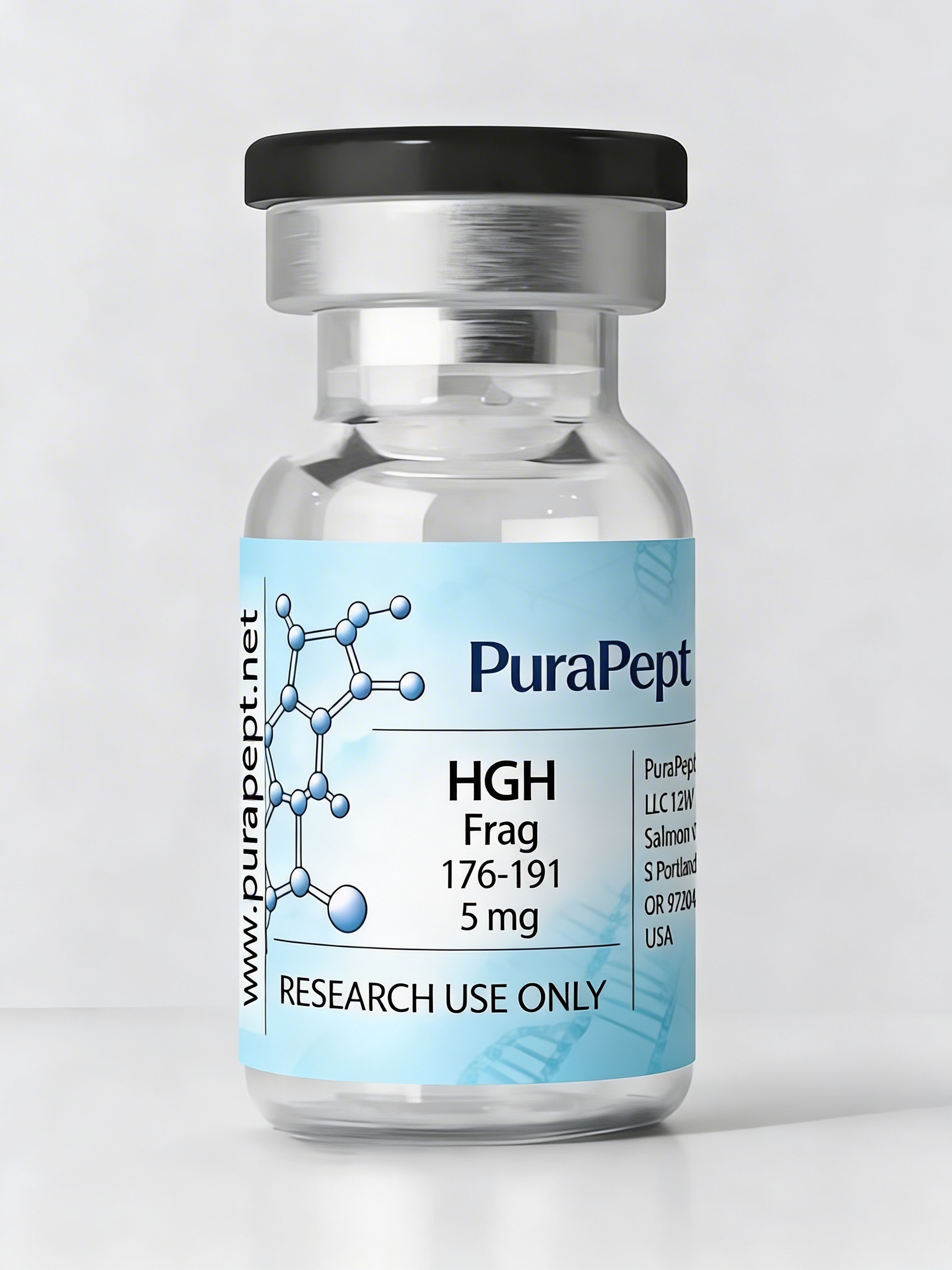
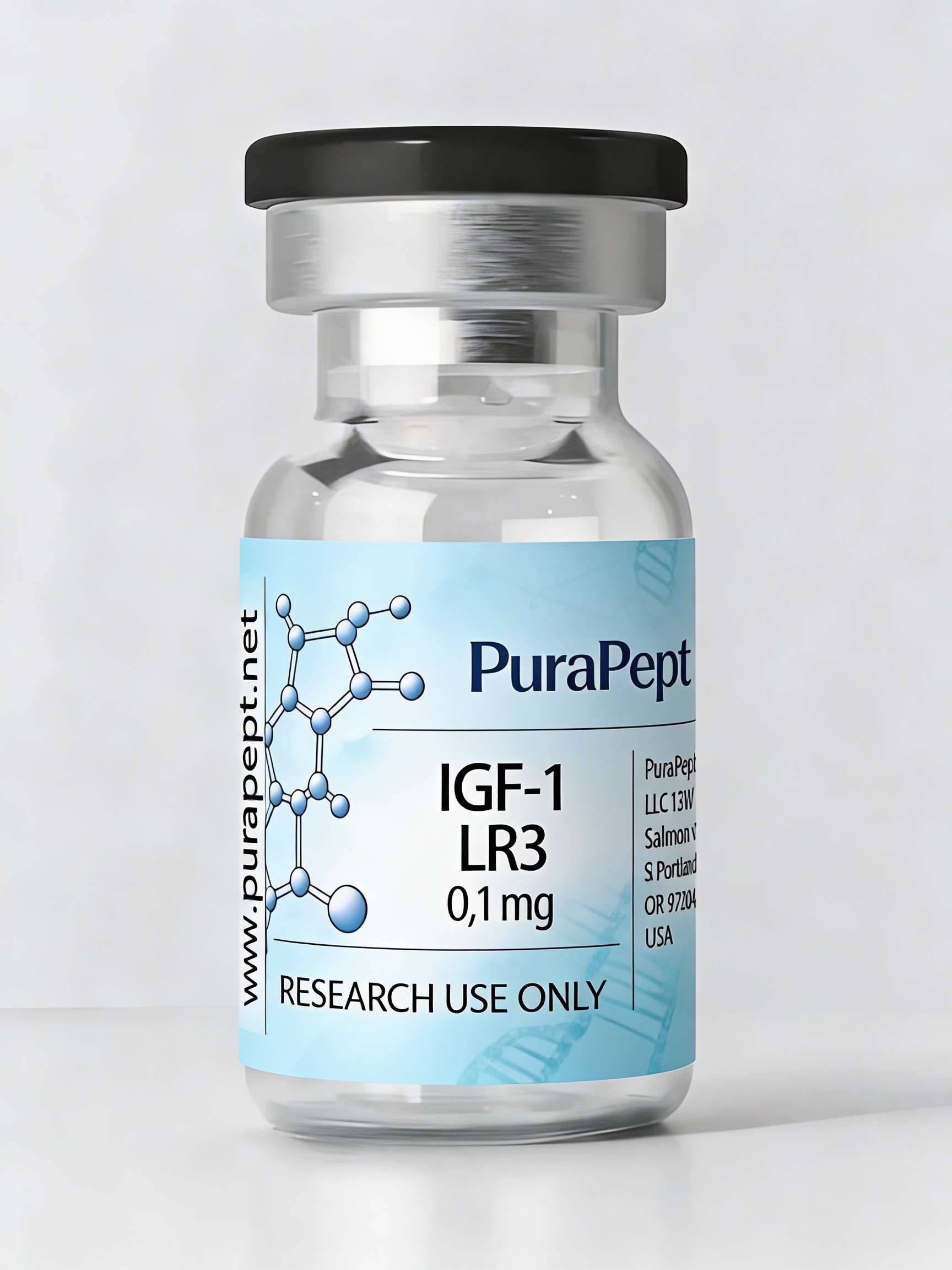
The catalogue carries three compounds from this axis. Somatropin 36 IU is recombinant human GH, the substance used in every trial above. HGH Frag 5 mg is the C-terminal fragment hGH 176-191, also known as AOD9604. IGF-1 LR3 0,1 mg is the long-acting arginine-3 analogue of IGF-1. What the indexed literature holds for the second and third is thin, and worth stating precisely.
For hGH 176-191 the two searches, run on 30 September 2026 with every term tagged to title and abstract, return 4 and 22. The narrow "growth hormone"[tiab] AND "176-191"[tiab] is four records: two 2026 reviews of performance-enhancing peptides, a 2022 study of the fragment against MCF-7 breast cancer cells in culture, and a 1978 study of synthetic C-terminal fragments. The most substantive recent record is a 2023 study of the 14 kDa hGH N-terminal fragment in B16-F10 murine melanoma. A tumour model is not a muscle model, and no human administration study appears in either set.
For IGF-1 LR3 the bounds are clearer. The narrow search — "LR3" or "LR3-IGF-1" in title or abstract, with IGF-1 or growth hormone, and with patients, volunteers, subjects, the humans mesh, or a clinical-trial publication type — returns 12 records: one 2026 narrative review, two studies in mice, and nine laboratory studies on cultured human cells, animal tissue and one recombinant-expression paper in yeast. The closest gave long R3 IGF-1 intranasally to male 5XFAD mice for seven months, improving some features of amyloid plaque remodeling and failing to preserve cognitive function. The wide search, across seven spellings of the analogue’s name, returns 34. Where the long-acting form’s potency was established, it was in animals: Tomas and colleagues reported that IGF-I and more potent variants restored growth in diabetic rats without inducing all the characteristic insulin effects.
What the data do not show
They do not show that raising the GH axis in an older adult makes that adult stronger. Of the randomised trials above, the two that measured strength found no effect from GH and none from a ghrelin mimetic that did move fat-free mass. They do not show that a change in lean mass is a change in function, which is the inference most often made and the one the Nass trial explicitly declines to make. And they do not show that any of the three compounds on this page has been tested in people for physique or performance: the 2026 review lists the fragment and the long-acting analogue among unregulated peptides sold as research compounds and places them below drugs with regulatory-grade randomised data. It is a narrative review, not a trial.
Research use only. This page describes published analytical methods and published product-quality studies for research reference. It is not medical advice and not a suggestion for human use. Nothing we supply is for human or veterinary use.
References.
- Toogood AA. Growth hormone (GH) status and body composition in normal ageing and in elderly adults with GH deficiency. Horm Res 2004;60 Suppl 1:105-111. PubMed record (PMID 12955026).
- Rudman D, Feller AG, Nagraj HS, Gergans GA, et al. Effects of human growth hormone in men over 60 years old. N Engl J Med 1990;323(1):1-6. PubMed record (PMID 2355952).
- Taaffe DR, Pruitt L, Reim J, Hintz RL, et al. Effect of recombinant human growth hormone on the muscle strength response to resistance exercise in elderly men. J Clin Endocrinol Metab 1994;79(5):1361-1366. PubMed record (PMID 7525633).
- Yarasheski KE, Campbell JA, Kohrt WM. Effect of resistance exercise and growth hormone on bone density in older men. Clin Endocrinol (Oxf) 1997;47(2):223-229. PubMed record (PMID 9302398).
- Nass R, Pezzoli SS, Oliveri MC, Patrie JT, et al. Effects of an oral ghrelin mimetic on body composition and clinical outcomes in healthy older adults: a randomized trial. Ann Intern Med 2008;149(9):601-611. PubMed record (PMID 18981485).
- Yeo AL, Levy D, Martin FC, Sonksen P, et al. Frailty and the biochemical effects of recombinant human growth hormone in women after surgery for hip fracture. Growth Horm IGF Res 2004;13(6):361-370. PubMed record (PMID 14624771).
- Sattler FR, Bhasin S, He J, Yarasheski KE, et al. Durability of the effects of testosterone and growth hormone supplementation in older community-dwelling men: the HORMA Trial. Clin Endocrinol (Oxf) 2015;75(1):103-111. PubMed record (PMID 21521283).
- Harman SM, Blackman MR. The effects of growth hormone and sex steroid on lean body mass, fat mass, muscle strength, cardiovascular endurance and adverse events in healthy elderly women and men. Horm Res 2004;60 Suppl 1:121-124. PubMed record (PMID 12955028).
- Dominikowski A, Rekos Z, Olejarz M, Szczepanek-Parulska E, et al. The emerging landscape of performance-enhancing peptides modulating GH-IGF1 axis: bridging the gap between clinical evidence and patient self-administration. Front Endocrinol (Lausanne) 2026;17:1822475. PubMed record (PMID 42395176).
- Tomas FM, Knowles SE, Owens PC, Chandler CS, et al. Insulin-like growth factor-I and more potent variants restore growth of diabetic rats without inducing all characteristic insulin effects. Biochem J 1993;291(Pt 3):781-786. PubMed record (PMID 7683875).
- Shaker BT, Ismail AA, Salih R, Hadj Kacem H, et al. The 14-Kilodalton Human Growth Hormone Fragment a Potent Inhibitor of Angiogenesis and Tumor Metastasis. Int J Mol Sci 2023;24(10):8877. PubMed record (PMID 37240223).
- Habibullah MM, Mohan S, Syed NK, Makeen HA, et al. Human Growth Hormone Fragment 176-191 Peptide Enhances the Toxicity of Doxorubicin-Loaded Chitosan Nanoparticles Against MCF-7 Breast Cancer Cells. Drug Des Devel Ther 2022;16:1963-1974. PubMed record (PMID 35783198).
- Engel MG, Narayan S, Cui MH, Branch CA, et al. Intranasal long R3 insulin-like growth factor-1 treatment promotes amyloid plaque remodeling in cerebral cortex but fails to preserve cognitive function in male 5XFAD mice. J Alzheimers Dis 2025;103(1):113-126. PubMed record (PMID 39610283).