Melatonin and sleep: the trials, in minutes
Nineteen randomised trials and 1,683 people put a number on the melatonin effect, and the number is minutes: 7.06 minutes off sleep onset and 8.25 minutes more total sleep against placebo. The 2017 AASM guideline suggests clinicians not use it for chronic insomnia in adults. Both facts are true at once, and the timing turns out to matter more than the amount.
9 November 2026 · 7 min read
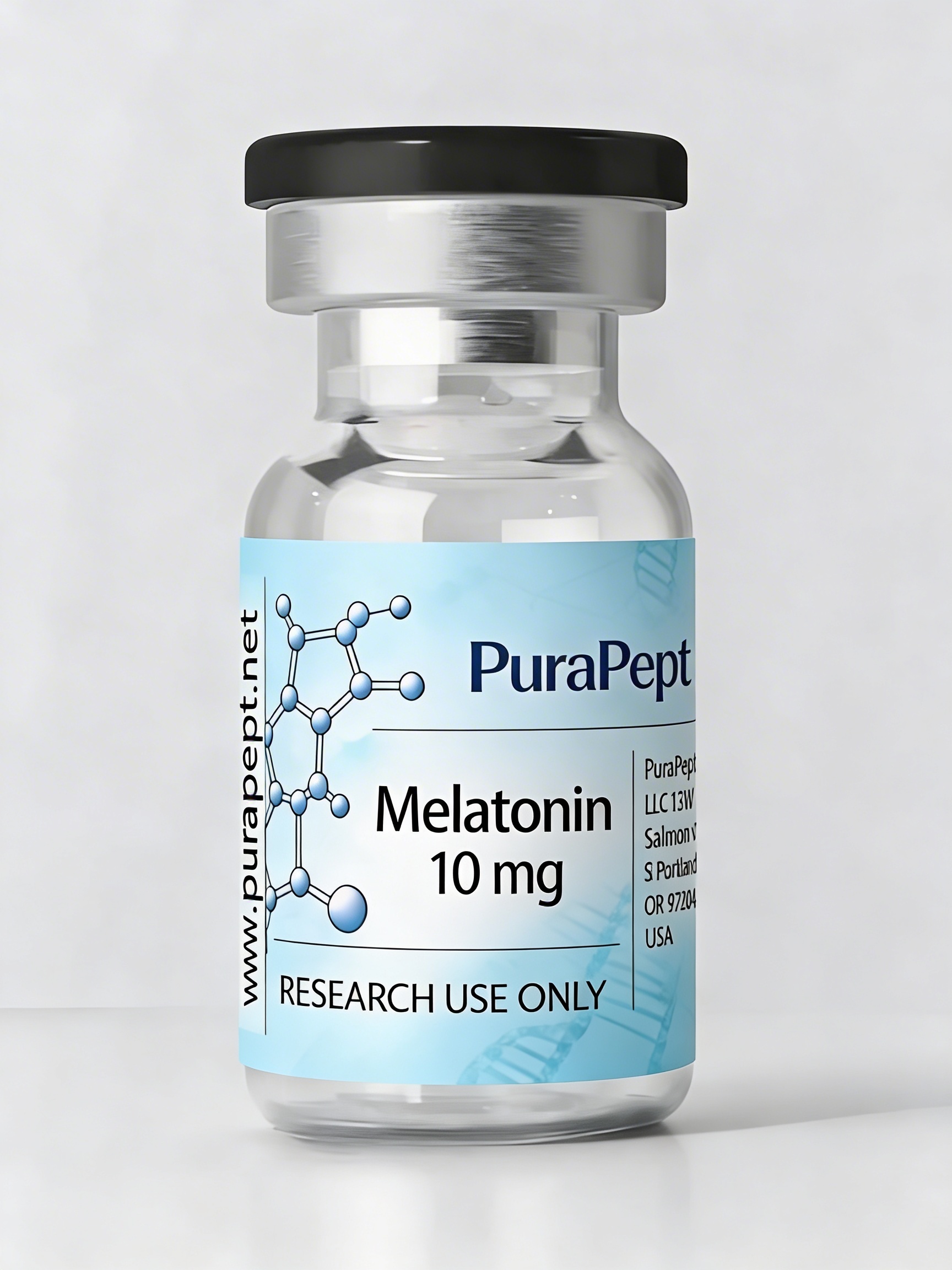 Melatonin 10 mg
Melatonin is the least pharmaceutical and the most widely bought sleep product in this catalogue, Melatonin 10 mg among it. It is also the clearest case in the whole file where a modest, well-measured effect and a negative guideline recommendation are both exactly what the evidence says. Neither cancels the other, and the most useful thing this page can do is put the two on the same page.
What the pooled trials actually measured
The 2013 meta-analysis in PLoS One is the cleanest quantitative statement of the melatonin effect in primary sleep disorders. It pooled nineteen randomised, placebo-controlled studies involving 1,683 subjects, and it examined three outcomes: sleep latency, sleep quality and total sleep time.
- Sleep latency: weighted mean difference 7.06 minutes (95 % CI 4.37 to 9.75), Z = 5.15, p < 0.001.
- Total sleep time: weighted mean difference 8.25 minutes (95 % CI 1.74 to 14.75), Z = 2.48, p = 0.013.
- Overall sleep quality: standardised mean difference 0.22 (95 % CI 0.12 to 0.32), Z = 4.52, p < 0.001.
Those are the numbers. Seven minutes earlier to sleep and eight minutes more of it. A quality effect of 0.22 standard deviations is real and is not nothing, but it is small by any conventional reading.
The authors’ own summary is the sentence that should travel with those figures: the effects of melatonin on sleep are modest but do not appear to dissipate with continued use, and although the absolute benefit compared with placebo is smaller than other pharmacological treatments for insomnia, melatonin may have a role given its relatively benign side-effect profile compared with those agents. That is a claim about tolerability and a small benefit, not a claim about efficacy that rivals a hypnotic.
Timing turns out to be the variable people argue about least
A 2024 dose-response meta-analysis in the Journal of Pineal Research proposed a reason the literature is inconsistent — heterogeneity in when the melatonin was given and how much. It covered 26 double-blind randomised controlled trials published between 1987 and 2020, for 1,689 observations, in people with insomnia and healthy volunteers.
The dose-response curve was not flat. It peaked, and the peak was at a larger daily amount taken several hours before the intended bedtime than the schedule most people actually use — a low amount taken shortly before bed. The meta-regression identifies which variables carry the effect: insomnia status (β = 0.50, p < 0.001) and the time between administration and the sleep episode (β = −0.16, p = 0.023) were significant predictors of sleep onset latency, while time of day (β = −0.086, p < 0.01) was the only significant predictor of total sleep time.
This is the most practically useful result in the file, and it inverts the popular mental model. The variable that moves sleep onset latency most is when you take it relative to when you intend to sleep — which is what a chronobiological signal should do, and is not what a knockout pill does.
Where the effect is much larger, and where it is honestly uncertain
Melatonin is not a uniform small effect across all populations. In people with autism the pooled effects are an order of magnitude larger. A 2023 systematic review and meta-analysis identified 595 references, of which 15 were eligible, and found on global analysis:
- Total sleep time: SMD 0.78 (95 % CI 0.35 to 1.21), I² = 91 %.
- Sleep latency: SMD 1.23 (95 % CI 0.35 to 2.11), I² = 94 %.
- Sleep efficiency: SMD −0.70 (95 % CI −1.23 to −0.16), I² = 91 %.
The heterogeneity is the story here, and it has to be read alongside the effect sizes rather than after them. I² of 91 % to 94 % means the trials are measuring materially different things in materially different ways. A pooled estimate computed from studies that disagree with each other this much describes the spread; it is not a number to plan a night around. The same review reports that wake after sleep onset and night awakening were not statistically significant — the effects were on falling asleep and total sleep, not on staying asleep.
The guideline, and how to read a weak recommendation
The 2017 American Academy of Sleep Medicine clinical practice guideline on the pharmacologic treatment of chronic insomnia in adults lists a great many drugs, one sentence each, and among them: “We suggest that clinicians not use melatonin as a treatment for sleep onset or sleep maintenance insomnia (versus no treatment) in adults.” The strength is WEAK.
The guideline itself explains what a weak recommendation does and does not mean — a lower degree of certainty about the outcome and the appropriateness of the strategy for all patients, and it should not be construed as an indication of ineffectiveness. It also gives the reasons the evidence was downgraded, and they are the ones that matter for reading any insomnia literature: the funding source for most pharmacological trials and the attendant risk of publication bias, the relatively small number of eligible trials for each individual agent, and observed heterogeneity in the data.
Read alongside the 2013 meta-analysis, the picture is coherent rather than contradictory. The effect on sleep onset latency is measurable and small; the evidence base for that measurement is funded in ways that raise publication bias, is small per agent, and is heterogeneous. A panel applying GRADE to that concludes clinicians should not reach for this first. The meta-analysis, looking at the same trials without the downgrade machinery, concludes the effect is modest but real and well tolerated.
The disorder where timing is the whole treatment
One more distinction is worth making, because it is the one most often collapsed into “melatonin for sleep”. A review of delayed sleep-wake phase disorder describes it as the most commonly encountered of the circadian rhythm sleep-wake disorders, and often confused with sleep initiation insomnia. It typically emerges in teenage years and persists into adulthood: the major sleep episode is abnormally delayed relative to the dark phase, producing great difficulty initiating sleep at an appropriately early time and, as a knock-on effect, difficulty waking at a desirable time in the morning.
The key sentence is the last one. When released from such schedule constraints, sleep duration and quality is normal; it is just delayed. That is not insomnia. It is a clock problem, and an intervention aimed at the clock — which is what the timing data above describe — is a different thing from one aimed at arousal.
The bottle is a separate question from the molecule
One study in this file is about the product rather than the biology, and it decides whether any of the above reaches the person taking it. Erland and Saxena quantified melatonin in commercial supplements across brands and forms, analysing 31 of them by ultraperformance liquid chromatography and screening for serotonin.
The results are not a rounding story. Melatonin content ranged from −83 % to +478 % of the labelled content. Lot-to-lot variation within a single product varied by as much as 465 %, and the authors state that this variability did not appear to be correlated with manufacturer or product type. Content did not meet the label within a ten-percent margin in more than 71 % of supplements. Serotonin, described as a controlled substance in their paper, was identified in eight of the supplements — 26 % of the set.
That is a study of over-the-counter supplements, and this catalogue is not one. But it establishes the general point: a compound’s trial data and a product’s contents are two separate questions, and the second is settled by batch documentation, not by the pharmacology literature.
What this record does not show
Not an eight-hour effect. The pooled effect on total sleep time is 8.25 minutes. Anyone selling melatonin on hours is not quoting these trials.
Not a statement about anyone with insomnia. The AASM’s recommendation applies to chronic insomnia in adults. Delayed sleep-wake phase disorder is a different diagnosis with a different rationale, and this page does not merge them.
Not an endorsement of a schedule. The 2024 analysis found timing to be a significant predictor; that is a description of the trial data, not an instruction.
Not a general safety clearance. A benign side-effect profile relative to other hypnotics is a comparison, not an absence of risk, and none of the trials summarised here was designed to answer safety in long-term use.
What we supply
Melatonin 10 mg, as supplied by the manufacturer, tracked, from inside the EU. Batch documentation for any product that carries it is explained in the COA guide linked from the product page.
The most defensible reading of the whole file is a small, real, timing-sensitive effect that guidelines do not put first. That is a more interesting finding than a large one would have been, and it is the one the papers support. Research use only. This page summarises published trials, meta-analyses and clinical guidelines for research reference. It is not medical advice, not a treatment recommendation and not a suggestion for human use. Nothing we supply is for human or veterinary use.
References.
- Ferracioli-Oda E, Qawasmi A, Bloch MH. Meta-analysis: melatonin for the treatment of primary sleep disorders. PLoS One 2013;8(5):e63773 (PMID 23691095).
- Cruz-Sanabria F, Bruno S, Crippa A, Frumento P, Scarselli M, Skene DJ, et al. Optimizing the time and dose of melatonin as a sleep-promoting drug: a systematic review of randomized controlled trials and dose-response meta-analysis. J Pineal Res 2024;76(5):e12985 (PMID 38888087).
- Nogueira HA, de Castro CT, da Silva DCG, Pereira M. Melatonin for sleep disorders in people with autism: systematic review and meta-analysis. Prog Neuropsychopharmacol Biol Psychiatry 2023;123:110695 (PMID 36584862).
- Sateia MJ, Buysse DJ, Krystal AD, Neubauer DN, Heald JL. Clinical Practice Guideline for the Pharmacologic Treatment of Chronic Insomnia in Adults: an American Academy of Sleep Medicine Clinical Practice Guideline. J Clin Sleep Med 2017;13(2):307-349 (PMID 27998379).
- Nesbitt AD. Delayed sleep-wake phase disorder. J Thorac Dis 2018;10(Suppl 1):S103-S111 (PMID 29445534).
- Erland LA, Saxena PK. Melatonin natural health products and supplements: presence of serotonin and significant variability of melatonin content. J Clin Sleep Med 2017;13(2):275-281 (PMID 27855744).