MK-677 (ibutamoren): what the trials measured
Appetite went up, fat-free mass up about a kilogram, fat mass flat, strength flat. What the ibutamoren trials actually recorded, trial by trial.
3 October 2026 · 8 min read
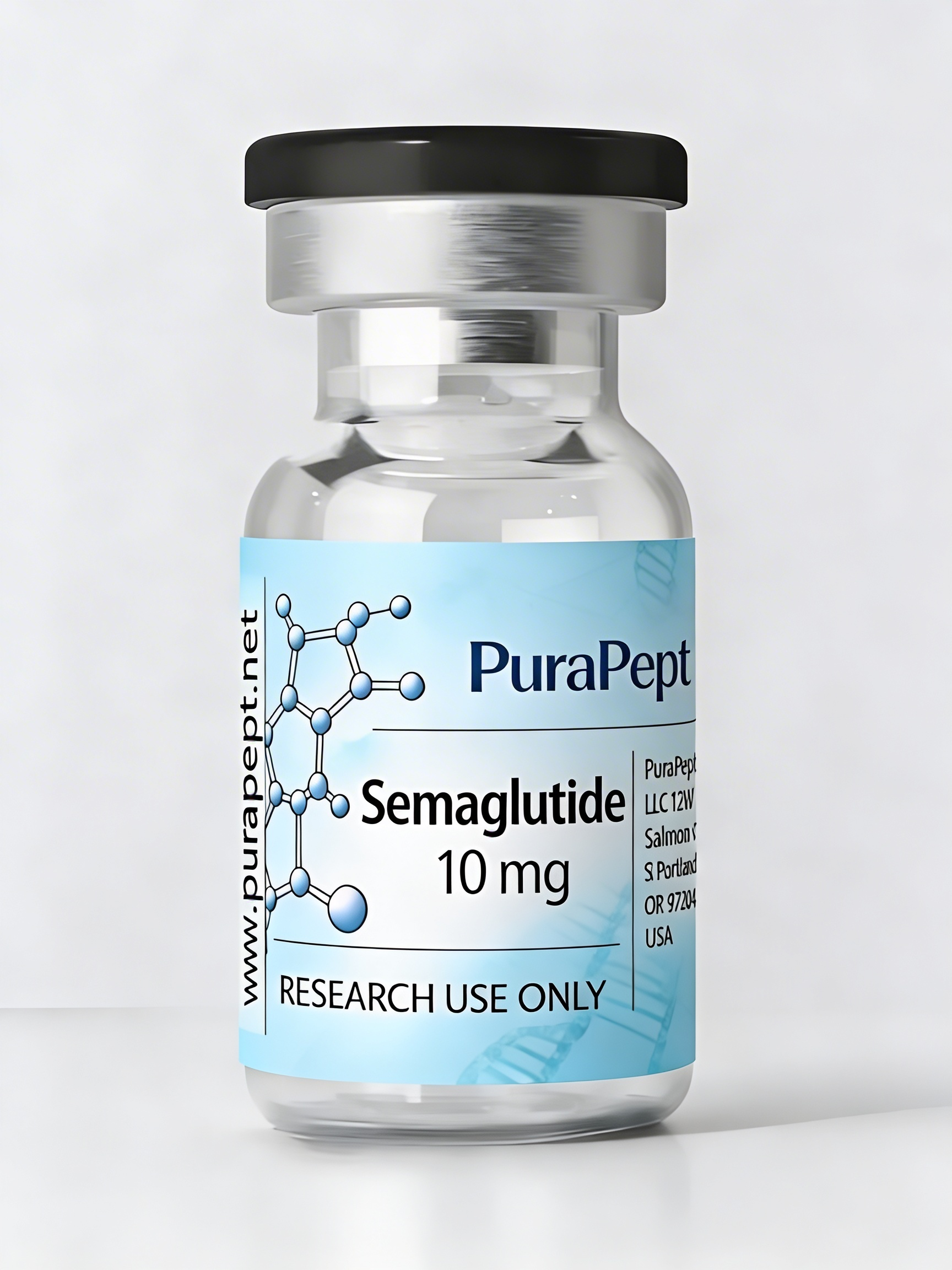
Ibutamoren gets sold with a sentence that does not survive contact with its own literature. The sentence is that it burns fat. The trials do not say that. What the trials say is that it reliably raises growth hormone and IGF-1, moves fat-free mass up by around a kilogram, reliably increases appetite, and leaves fat mass and physical function where they were.
Here is the read-out, trial by trial, of what was actually recorded and what was concluded.
The receptor, in one sentence
The structural work published in Nature Communications in 2021 puts it plainly: the hunger hormone ghrelin activates the ghrelin receptor to stimulate food intake and growth hormone secretion. Ibutamoren is a synthetic agonist of that same receptor, and the cryo-EM work in that paper solves the structure with ghrelin and with ibutamoren, identifying a salt bridge and an aromatic cluster near the agonist-binding pocket as the motifs that matter for switching the receptor on.
That one sentence is the source of both the appeal and the side-effect profile. A receptor that raises food intake and raises growth hormone at the same time is not going to give you one without the other. The trials consistently show exactly that pair of effects appearing together, which is the opposite of the fat-loss story.
The main body-composition trial: 65 adults, two years
The 2008 Annals of Internal Medicine paper is the study everyone in this niche should read, and it is not the one that gets quoted. Sixty-five healthy adults aged 60 to 81, men, women on hormone replacement therapy and women not on it, in a two-year double-blind randomised modified-crossover design. Daily oral ibutamoren at a single tested level or placebo. Fat-free mass and abdominal visceral fat were the primary endpoints after one year, and everything was measured at baseline and every six months.
The results, in the order the paper reports them:
- Growth hormone and IGF-1 rose into the range of healthy young adults, without serious adverse effects.
- Fat-free mass fell in the placebo group and rose on the active arm: minus 0.5 kg against plus 1.1 kg, confidence interval 0.7 to 1.5 on the active side, P below 0.001.
- Body cell mass moved the same way, as reflected by intracellular water.
- Abdominal visceral fat and total fat mass: no significant difference between groups.
- Limb fat rose more on the active arm, 1.1 kg against 0.24 kg, P = 0.001.
- Body weight rose 2.7 kg on active against 0.8 kg on placebo, P = 0.003.
- Fasting blood glucose rose by an average of 0.3 mmol/L on the active arm, P = 0.015, and insulin sensitivity decreased.
- LDL cholesterol fell modestly, P = 0.026, with no difference in total or HDL cholesterol.
- Cortisol rose by 47 nmol/L, P = 0.020.
- Bone mineral density changed in a pattern the authors read as increased bone remodelling.
- The most frequent side effect was an increase in appetite that subsided within a few months, plus transient mild lower-extremity oedema and muscle pain.
- And the sentence that matters most: the increase in fat-free mass did not produce any change in strength or function.
That last one, together with the authors’ own statement that the study was underpowered for functional endpoints, is the honest ceiling of the whole drug. The body composition moved. The thing people actually wanted, function, did not follow, and the trial is not big enough to say whether it ever would.
The appetite line is usually skipped and it is the one that explains the rest. An increase in appetite that resolves over months, in a study of older adults, is a behavioural variable sitting quietly underneath the body-weight numbers. Total fat mass did not drop. Weight went up. The most-reported experience of taking the drug in this trial was feeling hungrier.
The hip-fracture trial: where it was stopped
The 2011 phase IIb study in 123 elderly hip fracture patients is the trial that should end the appetite argument, because the drug was stopped early.
Twenty-four weeks, randomised and double-blind, primary outcomes a rank analysis of change in objective functional performance measures and blood IGF-1. The IGF-1 result was unambiguous: levels rose by an average of 51.4 ng/ml against placebo, 95% confidence interval 34.42 to 68.44, P below 0.001. Target engagement, complete.
Functional results were not: stair-climbing power rose by an average of 12.5 watts against placebo with a confidence interval running from minus 10.95 to plus 35.88, P = 0.292, which is the same as saying the result could have been nothing. Gait speed showed a difference of 0.7 score units, P = 0.011. Several other functional measures showed no improvement. Fewer falls was reported but did not reach significance at P = 0.096.
And the trial was terminated early because of a safety signal of congestive heart failure in a limited number of patients. The authors’ conclusion is blunt: the increase in IGF-1 was not paralleled by improvement in most functional performance measures, and the compound has an unfavourable safety profile in this population.
Put those two trials next to each other. In 65 healthy older adults, fat-free mass up, fat mass flat, function flat, appetite up. In 123 elderly hip fracture patients, IGF-1 up, function mostly flat, and a heart failure signal serious enough to end the study.
The 563-patient trial that measured Alzheimer progression
A third trial is worth knowing about because of what it demonstrates about the ceiling. In 2008, 563 patients with mild to moderate Alzheimer disease were randomised to a year of daily oral ibutamoren or placebo, with 416 completing treatment and assessments. IGF-1 rose by 60.1% at six weeks and 72.9% at twelve months.
None of the four efficacy measures moved: the Clinician’s Interview Based Impression of Change with caregiver input, the cognitive subscale of the Alzheimer’s Disease Assessment Scale, the Activities of Daily Living scale and the Clinical Dementia Rating sum of boxes all showed no significant differences between groups over twelve months. The paper’s conclusion is that the drug was ineffective at slowing the rate of progression, despite clear target engagement.
It is a large, well-powered, negative trial of a drug that was demonstrably doing what it is designed to do biochemically. The lesson generalises to the whole class: a compound that reliably moves a laboratory marker has not thereby been shown to change anything a person would notice.
What a recreational-use report looks like
Because the registered trials cover specific populations, the published evidence for what happens in recreational use is thin, and what exists is a single case report from 2022 in Experimental Physiology.
One 25-year-old man, five weeks of co-administration of ligandrol and MK-677, with body composition, blood markers and strength measured before, during and after. On-cycle changes: body mass up 6.0%, total lean body mass up 3.1%, trunk lean mass up 6.6%, appendicular lean mass up 4.3%, and total fat mass up 15.4% with appendicular fat up 14.8%. Bone mineral density down 2.1%. Cholesterol up 14.8%, triglycerides up 39.2%, LDL up 40.0%, HDL down 36.4%. Liver enzymes up sharply. Free testosterone down 85.7% and total testosterone down 62.3%. One-repetition maximum leg and bench press ran 39.2 % and 32.0 % above the non-user comparison values.
The interesting part is the recovery. Nearly every variable returned to its pre-cycle value afterwards. The exceptions named in the paper are total fat mass, appendicular fat mass, bone area, total cholesterol and LDL cholesterol. So the fat and some of the lipid markers did not come back within the follow-up.
One subject, one combination, no control group, self-selected exposure. It cannot tell you a rate, and it is not a general finding. But it is the closest published description of this pattern of use, and the fat-mass figure in it is the opposite of the fat-loss claim.
The class, for context
One more study, different compound, same shape. In 2009, 395 adults aged 65 to 84 with mild functional limitation were randomised to four different treatment schedules of capromorelin, another oral secretagogue, or placebo, for an intended two years. The study was stopped early on predetermined treatment-effect criteria, with 315 completing six months and 284 completing twelve.
At six months, body weight rose 1.4 kg on the drug and fell 0.2 kg on placebo, P = 0.006. Lean body mass rose 1.4 kg against 0.3 kg, P = 0.001. Tandem walk improved by 0.9 seconds, P = 0.02, and stair climb improved at twelve months, P = 0.04. Adverse events included fatigue, insomnia and small increases in fasting glucose, glycosylated haemoglobin and indices of insulin resistance.
Two other members of the same axis are worth having on the same page. Tesamorelin is the one GHRH analogue with phase 3 data and a real approval, and it is also the one whose effect was measured on visceral fat in one defined population. Sermorelin got an FDA approval for GH deficiency in 1997 and then left the US label entirely. Neither of those histories has anything to do with weight loss, and neither contradicts the sentence above about what the ibutamoren trials recorded.
Different compound, different population, and the pattern repeats: a kilogram of lean mass, a marginal functional signal, and glucose-handling markers moving the wrong way. That is what the oral secretagogue class looks like when it is measured rather than sold.
One more thing about the bottles
The registered trials describe a manufactured product with a known composition, made in a facility that answers to a regulator. The five-year market surveillance study run by the General European Official Medicines Control Laboratories network collected 324 samples and 354 results across 13 European countries. The most frequently reported molecule among the seized products was ibutamoren, ahead of ligandrol, ostarine, cardarine and andarine. Sixty-five percent of the seized products were sold as medicines, and 24 percent as dietary supplements.
So the compound with the most registered human data in this category is also the one that turns up most often in illicit product surveillance in Europe. Both facts are true and they are not contradictory, and together they tell you that the trial literature describes a different object from the one on the shelf.
What the data do not show
No trial in this literature shows fat loss on ibutamoren. The 65-adult study found no significant difference in total fat mass or abdominal visceral fat, the fat mass of the body went up along with everything else, and the appetite increase was among the most common side effects. That is the opposite of the claim the compound is usually sold on.
No trial shows that the extra fat-free mass translates into strength or function. The main body-composition paper says so in its own abstract, and the hip-fracture trial terminated early with a congestive heart failure signal while its functional measures stayed flat. The 563-patient Alzheimer trial is a clean example of the biochemically working, clinically silent case.
Nothing here was measured in young adults, in trained people, in anyone using it for a short defined cycle, or in combination with anything, apart from one uncontrolled case report. The registered populations are older adults in frailty, recovery from hip fracture, and neurodegenerative disease. Their results do not transfer to a 30-year-old, and the case report cannot stand in for a trial.
And the trials measured fat-free mass, DXA-derived lean mass, IGF-1, functional tests and blood markers. They did not measure mood, sleep quality, tendon behaviour, or what happens after years. Any confident claim in this space that goes beyond those endpoints is not a reading of the research.
References.
- Nass R, Pezzoli SS, Oliveri MC, Patrie JT, Harrell FE Jr, Clasey JL, Heymsfield SB, Bach MA, Vance ML, Thorner MO. Effects of an oral ghrelin mimetic on body composition and clinical outcomes in healthy older adults: a randomized trial. Ann Intern Med 2008;149(9):601-611. PMID 18981485 (65 healthy adults aged 60 to 81, oral MK-677 25 mg once daily, two-year double-blind modified-crossover, fat-free mass and abdominal visceral fat as the primary endpoints after one year.)
- Adunsky A, Chandler J, Heyden N, Lutkiewicz J, Scott BB, Berd Y, Liu N, Papanicolaou DA. MK-0677 (ibutamoren mesylate) for the treatment of patients recovering from hip fracture: a multicenter, randomized, placebo-controlled phase IIb study. Arch Gerontol Geriatr 2011;53(2):183-189. PMID 21067829 (123 elderly hip fracture patients on 25 mg/day or placebo, 24 weeks; trial terminated early on a congestive heart failure safety signal.)
- Sevigny JJ, Ryan JM, van Dyck CH, Peng Y, Lines CR, Nessly ML; MK-677 Protocol 30 Study Group. Growth hormone secretagogue MK-677: no clinical effect on AD progression in a randomized trial. Neurology 2008;71(21):1702-1708. PMID 19015485 (563 patients with mild to moderate Alzheimer disease, MK-677 25 mg or placebo daily for 12 months, 416 completed.)
- Cardaci TD, Machek SB, Wilburn DT, Heileson JL, Harris DR, Cintineo HP, Willoughby DS. LGD-4033 and MK-677 use impacts body composition, circulating biomarkers, and skeletal muscle androgenic hormone and receptor content: A case report. Exp Physiol 2022;107(12):1467-1476. PMID 36303408 (a 25-year-old man on LGD-4033 10 mg and MK-677 15 mg daily for five weeks; body composition and blood markers measured pre-, on- and post-cycle.)
- Structural basis of human ghrelin receptor signaling by ghrelin and the synthetic agonist ibutamoren. Nat Commun 2021. PMID 34737341 (cryo-EM structures of the receptor with ghrelin and with ibutamoren.)
- White SH, et al. Effects of an oral growth hormone secretagogue in older adults. J Clin Endocrinol Metab 2009. PMID 19174493 (395 adults aged 65 to 84 on capromorelin, terminated early on treatment-effect criteria; class context for a different compound.)
- SARMs, Metabolic Modulators and Growth Hormone Secretagogues in Suspected Illegal Medicines, Bought as Sport Performance Enhancers: A Retro- and Prospective Study Within the GEON. Drug Test Anal 2025. PMID 40551438 (five-year market surveillance, 324 samples in 13 countries; ibutamoren the most frequently reported molecule.)