MOTS-c in people: what was measured, and what it did not show
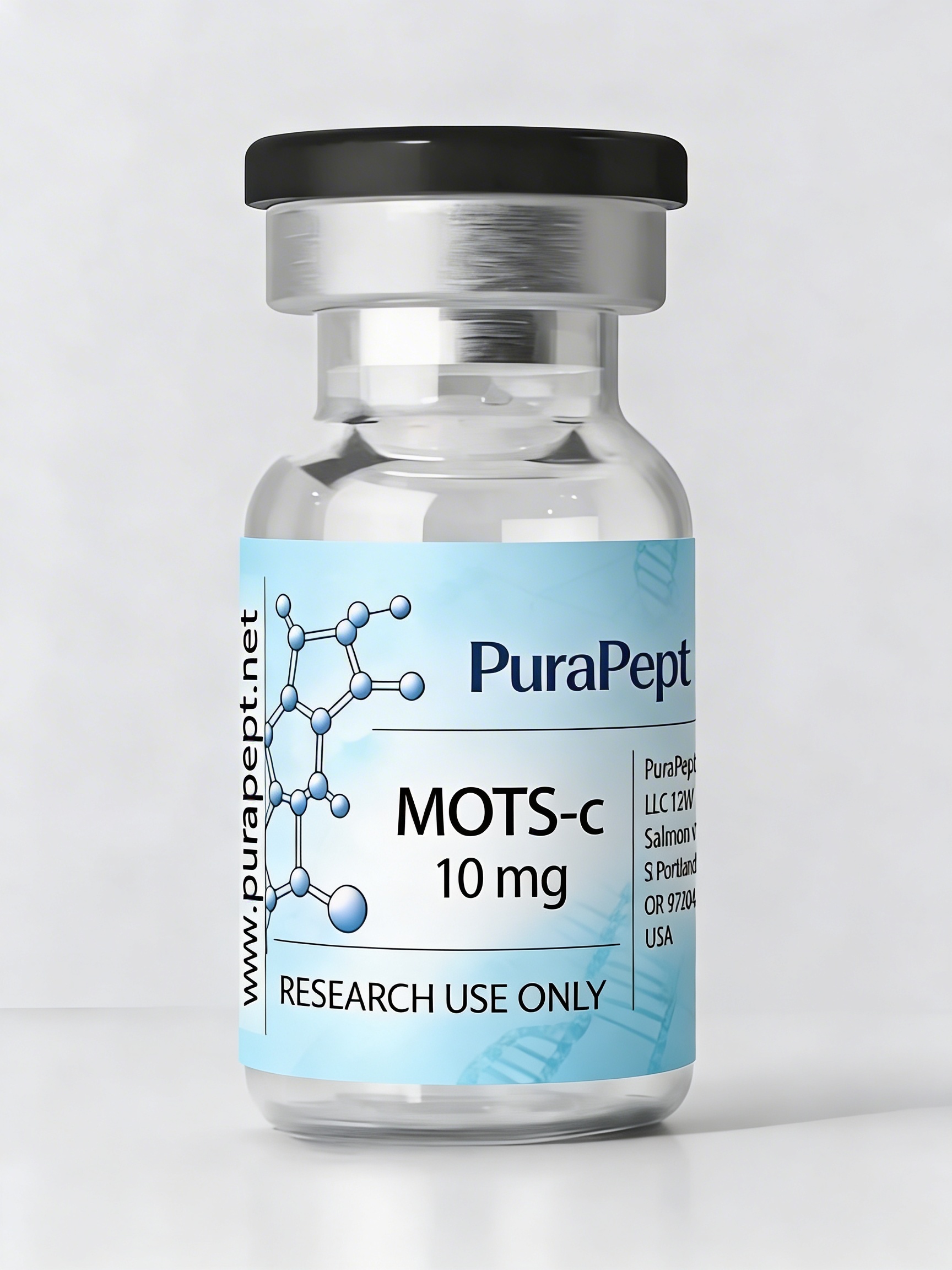
MOTS-c was found as a short open reading frame in mitochondrial DNA in 2015, and it has been measured in human blood in cancer cohorts. None of those human studies administered it. The peptide here is MOTS-c in the 50 mg and 10 mg presentations.
8 November 2026 · 3 min read
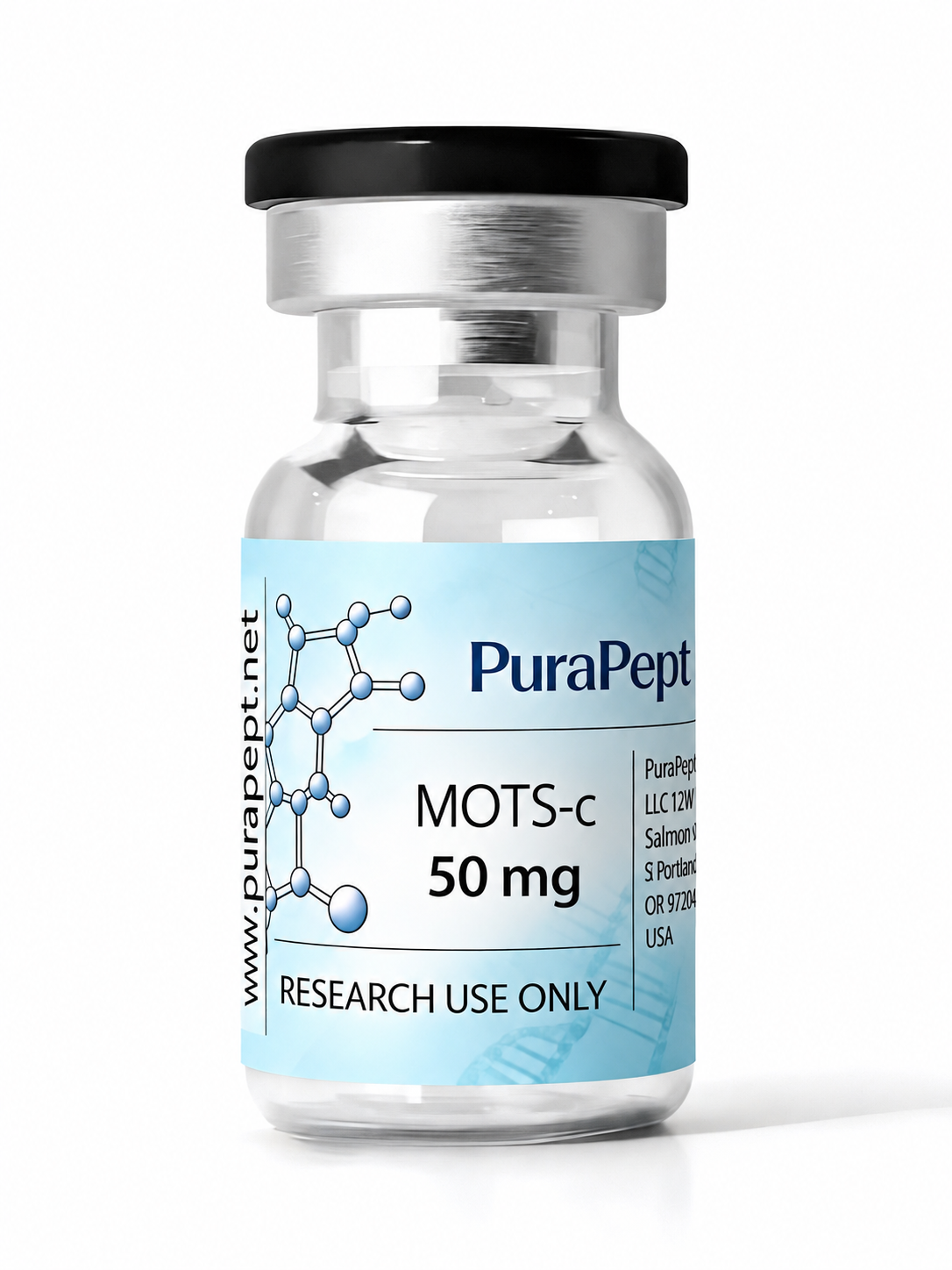 MOT-c 50 mg
MOTS-c is the shortest peptide in this catalogue and one of the best-known, because it was found in the same way that humanin was: as a short open reading frame in mitochondrial DNA. This page covers the 50 mg and 10 mg presentations and asks the only question that matters for a research compound: has anyone given it to a person and measured something.
The founding paper, and its species
The 2015 Cell Metabolism paper reported a short open reading frame within the mitochondrial 12S rRNA encoding a 16-amino-acid peptide named MOTS-c, which “regulates insulin sensitivity and metabolic homeostasis”. Its primary target organ appears to be skeletal muscle, and its cellular actions inhibit the folate cycle and its tethered de novo purine biosynthesis, leading to AMPK activation. The treatment result: in mice, MOTS-c prevented age-dependent and high-fat-diet-induced insulin resistance, as well as diet-induced obesity.
The species is the point. This is a foundational finding from work in mice, and everything downstream inherits that.
The aging paper, also in mice
The 2021 Nature Communications paper extended the work to physical capacity and muscle homeostasis, reporting that mitochondrial-encoded MOTS-c can significantly enhance physical capacity in mice, with the title framing it as an “exercise-induced” regulator of age-dependent physical decline. The mechanism it describes — mitochondria coordinating physiological functions partly through peptides encoded in their own genome — is genuinely interesting biology.
Neither paper administered MOTS-c to a human being.
The human measurements that exist are of the peptide, not of administration
This is the part most pages get wrong. Human studies of MOTS-c measure how much of it circulates, not what happens when it is given.
The 2022 study in Aging from the Catalan Institute of Oncology measured circulating MOTS-c in paired baseline and post-treatment sera from HER2-positive breast cancer patients randomised to metformin combined with neoadjuvant chemotherapy and trastuzumab, or to the same regimen without metformin. MOTS-c was measured with a commercially available competitive ELISA.
Their result: the authors “failed to find any significant alteration of circulating MOTS-c” in response to 24 weeks of that regimen, with or without daily metformin, and the changes did not reach significance when comparing patients achieving pathological complete response. They suggest a mechanism for the metformin part — the inability of metformin to target skeletal muscle, the major tissue for MOTS-c production, might limit its effects on circulating MOTS-c — and call for further studies.
So: the human file on MOTS-c is a measurement of an endogenous peptide in a cancer cohort, plus a negative result about whether a drug moves its circulating level.
The 2026 class review
The 2026 scoping review in sports medicine covered the emergent peptides and found that 67 % of identified publications used preclinical animal models, human studies “limited to a handful of investigations, most lacking robust controls or rigorous study designs”, and human data heterogeneous, showing “modest improvements at best”. It also names documented risks including metabolic dysfunction such as insulin resistance.
For MOTS-c specifically the pattern is sharper than the class average, because MOTS-c’s whole story is metabolic: it is described as a “mitokine” and an “exercise-mimetic peptide”, and the human literature on the endogenous form is still establishing how to measure it.
What the data do not show
- No study cited here administered MOTS-c to a person and measured an outcome. The two foundational papers are mouse studies.
- The human evidence is a circulating-level measurement in cancer patients, with a null result about metformin changing it.
- No trial of MOTS-c measures glucose handling, insulin sensitivity, body composition or physical capacity in people.
- The class review of 2026 records no robust human efficacy evidence for these peptides and names insulin resistance among documented risks.
- Nothing on this page is a dose recommendation or a health claim. These are research materials sold as research materials; nothing here advises any person to take anything.
For the aging side of the same mitochondrial peptide family, see our page on SS-31 and the mitochondrial disease trials.
References.
- Lee C, Zeng J, Drew BG, et al. The mitochondrial-derived peptide MOTS-c promotes metabolic homeostasis and reduces obesity and insulin resistance. Cell Metab 2015;21(3):443-454 (PMID 25738459).
- Reynolds JC, Lai RW, Woodhead JST, et al. MOTS-c is an exercise-induced mitochondrial-encoded regulator of age-dependent physical decline and muscle homeostasis. Nat Commun 2021;12(1):470 (PMID 33473109).
- Cuyàs E, Verdura S, Martin-Castillo B, Menendez JA; METTEN study group. Circulating levels of MOTS-c in patients with breast cancer treated with metformin. Aging (Albany NY) 2022;15(4):892-897 (PMID 36490309).
- Tewari K, Liu TP, Im C, et al. Peptide supplements and their therapeutic applications in sports medicine. Am J Sports Med 2026 (PMID 42578445).