Semaglutide and SELECT: the trial that changed the drug
17,604 adults with overweight or obesity, established cardiovascular disease and no diabetes, and a 20% relative reduction in cardiovascular death, myocardial infarction or stroke over a mean 39.8 months. The same trial's own numbers also carry the caveat: permanent discontinuation was twice as frequent on the drug as on placebo.
10 November 2026 · 4 min read
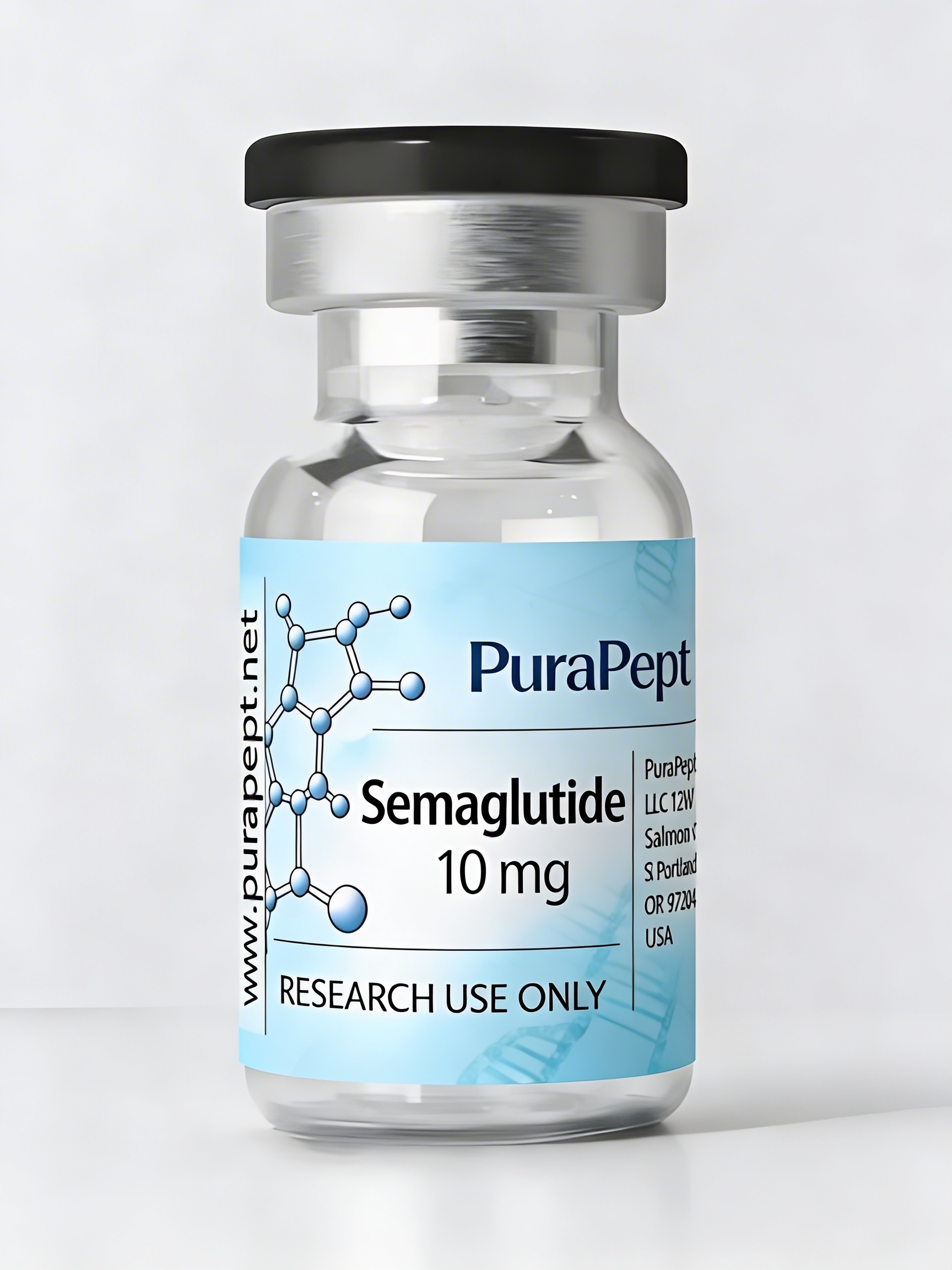 Semaglutide 10 mg
 sits in a category that is usually described by what it takes away from people — weight. SELECT is the trial that shows the drug’s original approved identity is cardiovascular, and it was run in a population with no diabetes at all. This page is about that trial, and about the number in it that is quoted least.
What SELECT actually enrolled
The design is the part that makes the result interpretable. This was a multicentre, double-blind, randomised, placebo-controlled, event-driven superiority trial — it was not stopped on an interim look, it ran until enough events had accumulated. It enrolled people aged 45 or older who had preexisting cardiovascular disease and a body-mass index of 27 or greater, and who had no history of diabetes. They were randomised 1:1 to once-weekly subcutaneous semaglutide or placebo.
The companion baseline paper describes the enrolled population: 17,605 participants (72.5 % male), average age 61.6 (8.9) years, BMI 33.34 (5.04) kg/m². The most common prior cardiovascular event was myocardial infarction (76.3 % of participants), followed by stroke (23.3 %) and peripheral artery disease (8.6 %). 24.3 % carried a heart failure diagnosis, and 66 % had an HbA1c in the prediabetes range.
Two-thirds of the population had already had a heart attack, and roughly a quarter had heart failure. Whatever this trial shows, it is a statement about a high-risk secondary-prevention population — not about the general population, and not about people without cardiovascular disease.
A small discrepancy is worth recording rather than smoothing over. The baseline paper states 17,605 participants; the results paper states 17,604 patients enrolled, split 8,803 and 8,801. The two papers describe the same trial and the difference is one patient. It is the kind of detail that is normally hidden, and it is the kind of detail that makes the rest of the record easier to trust.
The result, and the number nobody quotes
Mean (±SD) duration of exposure was 34.2 ± 13.7 months and mean follow-up 39.8 ± 9.4 months. The primary composite — cardiovascular death, non-fatal myocardial infarction, or non-fatal stroke — occurred in 569 of 8,803 patients (6.5 %) on semaglutide and 701 of 8,801 (8.0 %) on placebo. Hazard ratio 0.80 (95 % CI 0.72 to 0.90), P < 0.001.
That is a 20 % relative reduction in the composite, and it is the trial’s headline.
The number that is quoted least sits two sentences later in the same abstract. Adverse events leading to permanent discontinuation of the trial product occurred in 1,461 patients (16.6 %) on semaglutide and 718 (8.2 %) on placebo, P < 0.001. Twice the rate, in a trial whose headline result is a benefit.
Both numbers are in the same paragraph, from the same trial, on the same page. An honest summary of SELECT has to carry them together: in a high-risk population with established cardiovascular disease, the drug reduced cardiovascular events over roughly three years, and about one person in six stopped taking it permanently. Whether those two facts sit in a favourable balance for any given individual is a clinical judgement made with a doctor, not a claim on a product page.
What the effect was not
A 2018 review of anti-hyperglycaemic therapy and heart failure outcomes draws the boundary that most summaries of SELECT blur. It states that the GLP-1 agonists liraglutide and semaglutide have been shown to reduce major cardiovascular events, but did not affect rates of hospitalization for HF — while noting that SGLT2 inhibitors such as empagliflozin and canagliflozin have been shown to reduce the incidence of heart failure and cardiovascular mortality, with or without a history of heart failure.
That is a class finding, not a reading of SELECT’s heart failure subgroup, and the two should not be conflated. But it is the correct background: the GLP-1 evidence is strongest for atherosclerotic events, and the heart failure story in that class belongs to a different drug family entirely. SELECT’s own population, with 24.3 % carrying a heart failure diagnosis, is exactly where that distinction would show up.
What this record does not show
Not a weight trial. SELECT’s primary endpoint was cardiovascular. The trial is reported here for the endpoint it was designed around, and this page does not summarise the secondary weight outcomes.
Not a result for people without cardiovascular disease. Every participant had a prior myocardial infarction, stroke or peripheral artery disease, or another qualifying condition. That is the population the result describes.
Not a tolerability finding in the other direction. The 16.6 % permanent discontinuation figure is what it is; it is not evidence that the drug is unsafe, and neither is the hazard ratio evidence that it is safe for everyone.
Not a statement about the preparation supplied here. A trial outcome for a licensed product at a licensed dose is a fact about the molecule. It says nothing about the contents of any particular vial, which is a separate question answered by batch documentation.
What we supply
Semaglutide 10 mg, as supplied by the manufacturer, tracked, from inside the EU. Batch documentation for any product that carries it is explained in the COA guide linked from the product page.
The reason this trial is on a research page rather than a marketing page is that it is unusually complete about both the benefit and the cost. A 20 % relative reduction and a doubled discontinuation rate, in the same abstract, is what a well-run trial looks like. Research use only. This page summarises published cardiovascular outcome trials for research reference. It is not medical advice and not a suggestion for human use. Nothing we supply is for human or veterinary use.
References.
- Lincoff AM, Brown-Frandsen K, Colhoun HM, Deanfield J, Emerson SS, Esbjerg S, et al. Semaglutide and cardiovascular outcomes in obesity without diabetes. N Engl J Med 2023;389(24):2221-2232 (PMID 37952131).
- Lingvay I, Brown-Frandsen K, Colhoun HM, Deanfield J, Emerson SS, Esbjerg S, et al. Semaglutide for cardiovascular event reduction in people with overweight or obesity: SELECT study baseline characteristics. Obesity (Silver Spring) 2023;31(1):111-122 (PMID 36502289).
- Asleh R, Sheikh-Ahmad M, Briasoulis A, Kushwaha SS. The influence of anti-hyperglycemic drug therapy on cardiovascular and heart failure outcomes in patients with type 2 diabetes mellitus. Heart Fail Rev 2018;23(3):445-459 (PMID 29270818).