Thymulin: mostly a laboratory marker
Thymulin shows up in the literature more often as the thing being *measured* than as the thing being given. The one human pilot on this page used it as an endpoint for zinc-fortified milk in very old people, and a randomised HIV study shows what does move thymic output.
15 October 2026 · 5 min read
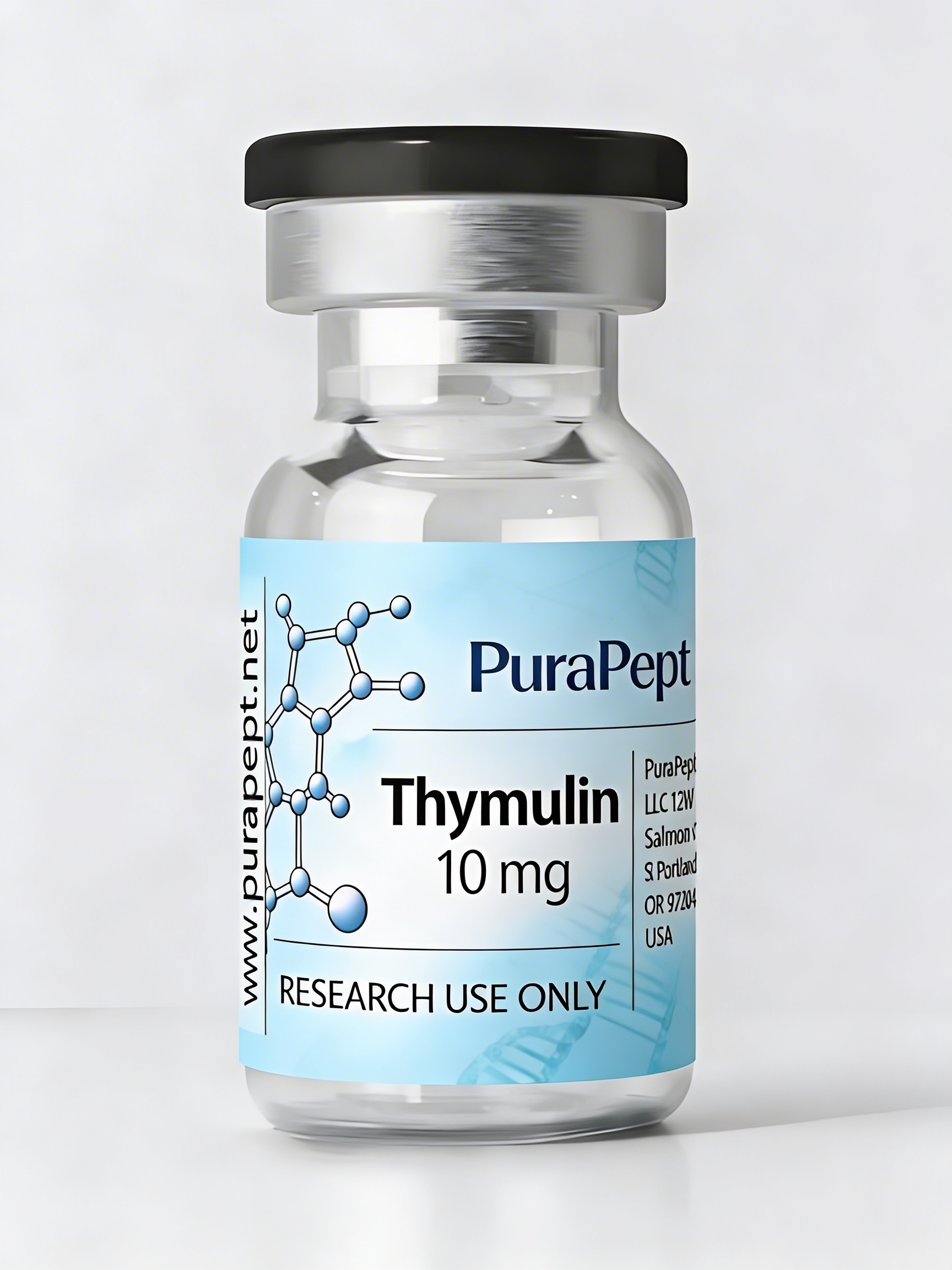 Thymulin 10 mg
There is a peculiarity in the thymic-peptide literature that you only notice by reading it carefully, and it is the reason this page exists. Thymulin appears in the indexed human literature far more often as the readout than as the intervention. It is a zinc-dependent thymic hormone used as a bioassay marker of thymic function. That makes it scientifically interesting and, at the same time, unusually easy to overstate. This page separates the two.
What thymulin is, in the endocrine picture
A 1992 review in the International Journal of Immunopharmacology describes thymic endocrinology as a network rather than a line. Extrathymic influences include pituitary-derived prolactin, indirectly ACTH via hydrocortisone from the adrenal, TSH via thyroid hormones, and LH and RH via sex steroids from the gonads and adrenal. Within the thymus, thymic epithelial cells respond to IL-1 with proliferation and secretion of IL-6 and GM-CSF, and they secrete thymic hormones — the paper’s specific example is the zinc-thymulin complex — under stimulation with IL-1 and other hormonal influences.
The review’s own summary is the part that matters: thymosin α1, thymulin and thymopoietin have been reported to circulate and act on both prothymocytes and mature T cells in the periphery, maintaining their commitment to the T-cell system. And these endocrine influences decline with age, associated with “thymic menopause” and cellular immune senescence contributing to disease in the aged.
That is a description of a system under age-related decline. It is not a claim that replacing one circulating hormone reverses it.
The one human pilot, and what it was actually testing
A 2014 study in Age, in very old people, is the only human study on this page where thymulin appears with a number attached. It was a randomised crossover pilot in healthy subjects aged 80 and over, comparing two months of zinc-fortified drinking skim milk against standard non-fortified milk. The endpoints were biochemical parameters, zinc status, inflammatory and immune response, and — the key one here — thymic hormone activity as a marker of T cell-mediated immunity.
The results were directionally positive: the fortified milk looked like a good omen for increasing cell-mediated immunity in very old age, represented by thymulin activity and release of IL-12p70 and IFN-γ. At clinical level, 70% of subjects had no hospitalisation over a year of follow-up, compared with very old control subjects outside the crossover design.
Read that carefully. The intervention was fortified milk. The measured variable was thymulin activity. Nobody on this page gave thymulin to a person and reported an outcome. The paper is evidence about zinc, with a thymulin readout — and the 70% no-hospitalisation figure is from a comparison with subjects who were not in the crossover at all, which is a weak comparator even by the standards of a pilot study.
What does move thymic output in a human
There is a good contrast study, and it is randomised. A 2008 paper in the Journal of Clinical Investigation examined growth hormone in HIV-1-infected adults, framing the background as growth hormone being an underappreciated but important regulator of T cell development that can reverse age-related declines in thymopoiesis in rodents.
The human randomised results: growth hormone treatment was associated with increased thymic mass, and enhanced thymic output as measured both by the frequency of T cell receptor rearrangement excision circles in circulating T cells and by the numbers of circulating naïve and total CD4+ T cells. The authors conclude that thymic involution can be pharmacologically reversed in humans, and that immune-based therapies could be used to enhance thymopoiesis in immunodeficient individuals.
That is a real, prospective, randomised human demonstration that the thymus responds pharmacologically — and it is a demonstration about growth hormone, not about thymulin. It is included on this page precisely to show what a positive result in this area looks like, and to show that the compound producing it is not the compound on the shelf.
The state of the whole class
A 2020 review in Expert Opinion on Biological Therapy is candid about why the evidence is hard to read. The known thymic hormones — thymulin, thymopoietin, thymosin-α, thymosin-β and thymic humoral factor γ2 — exhibit different spectra of activities. The data are large in volume but “rather fragmented, resulting in a lack of understanding of the role played by thymic hormones in immune homeostasis”. The review splits the evidence into influence on immune cells, and interconnection with neuroendocrine systems, and then adds a third proposed mechanism: that intranuclear precursors of these peptides are cleaved under stress conditions to form immunologically active peptides that send “distress signals” to the immune system.
That last part is a hypothesis the authors propose, and the page says so — it is a model, not a finding.
The 2026 narrative review in JBJS Reviews reaches the same place from the sports-medicine side, grading itself Level V. It places thymic regenerative peptides alongside the growth hormone axis secretagogues as compounds that “remain investigational, with uncertain safety profiles, product quality concerns, and widespread antidoping restrictions”, and concludes that injectable peptides for sports medicine remain largely experimental.
What the data do not show
They do not show a human trial of thymulin. Not one. Of the five papers on this page, thymulin is the measured variable in one, a component of a system description in two, a member of a class in two, and the administered agent in none. That is the finding of this page, stated plainly.
They do not show a clinical outcome from thymulin replacement. The one human paper with a thymulin number tested a fortified dairy drink, had no placebo-controlled clinical outcome, and used non-participating controls for its hospitalisation comparison.
They do not show that the age-related decline described in the 1992 review is hormone-limited rather than structural. The randomised growth hormone study shows the thymus is pharmacologically responsive in adults; it does not follow that any single thymic peptide reproduces that, and no paper on this page tests that.
They do not show what a vial of thymulin 10 mg does to any of the above. A zinc-dependent hormone used as a serum bioassay marker of thymic output is not the same object as a lyophilised research preparation, and the literature on this page makes no claim connecting the two.
Where this sits on the shelf
The compound as supplied by the manufacturer: Thymulin 10 mg
What we supply
The thymulin preparation above, as supplied by the manufacturer, tracked, from inside the EU.
Research use only. This page summarises published studies for research reference. It is not medical advice, not a protocol, and not a suggestion for human use. Nothing we supply is for human or veterinary use.
References.
- Costarelli L, Giacconi R, et al. Effects of zinc-fortified drinking skim milk (as functional food) on cytokine release and thymic hormone activity in very old persons: a pilot study. Age (Dordr) 2014;36(3):9656.
- Napolitano LA, Schmidt D, et al. Growth hormone enhances thymic function in HIV-1-infected adults. J Clin Invest 2008;118(3):1085-1098.
- Lunin S, Khrenov M, et al. Precursors of thymic peptides as stress sensors. Expert Opin Biol Ther 2020;20(12):1461-1475.
- Hadden JW. Thymic endocrinology. Int J Immunopharmacol 1992;14(3):345-352.
- Villegas Meza AD, Nocek M, et al. Injectable Peptides in Sports Medicine: A Structured Narrative Review of Evidence, Safety, and Antidoping Implications. JBJS Rev 2026;14(5):e26.00027.