BPC-157 in humans: the whole corpus, counted
Three pilot studies: twelve women with bladder pain, sixteen knee patients surveyed by phone, and two people having an infusion. The rest is rat.
5 October 2026 · 7 min read
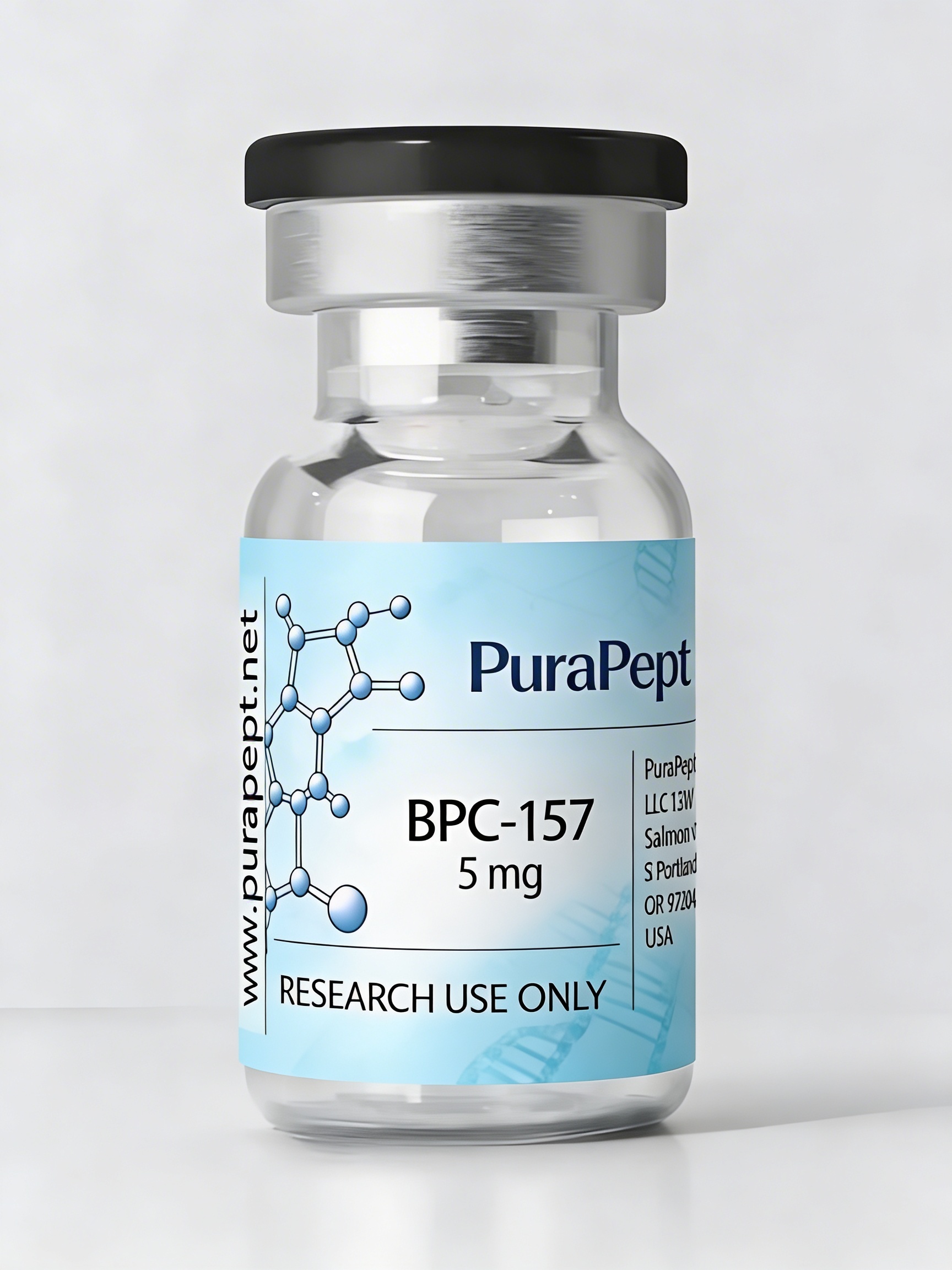
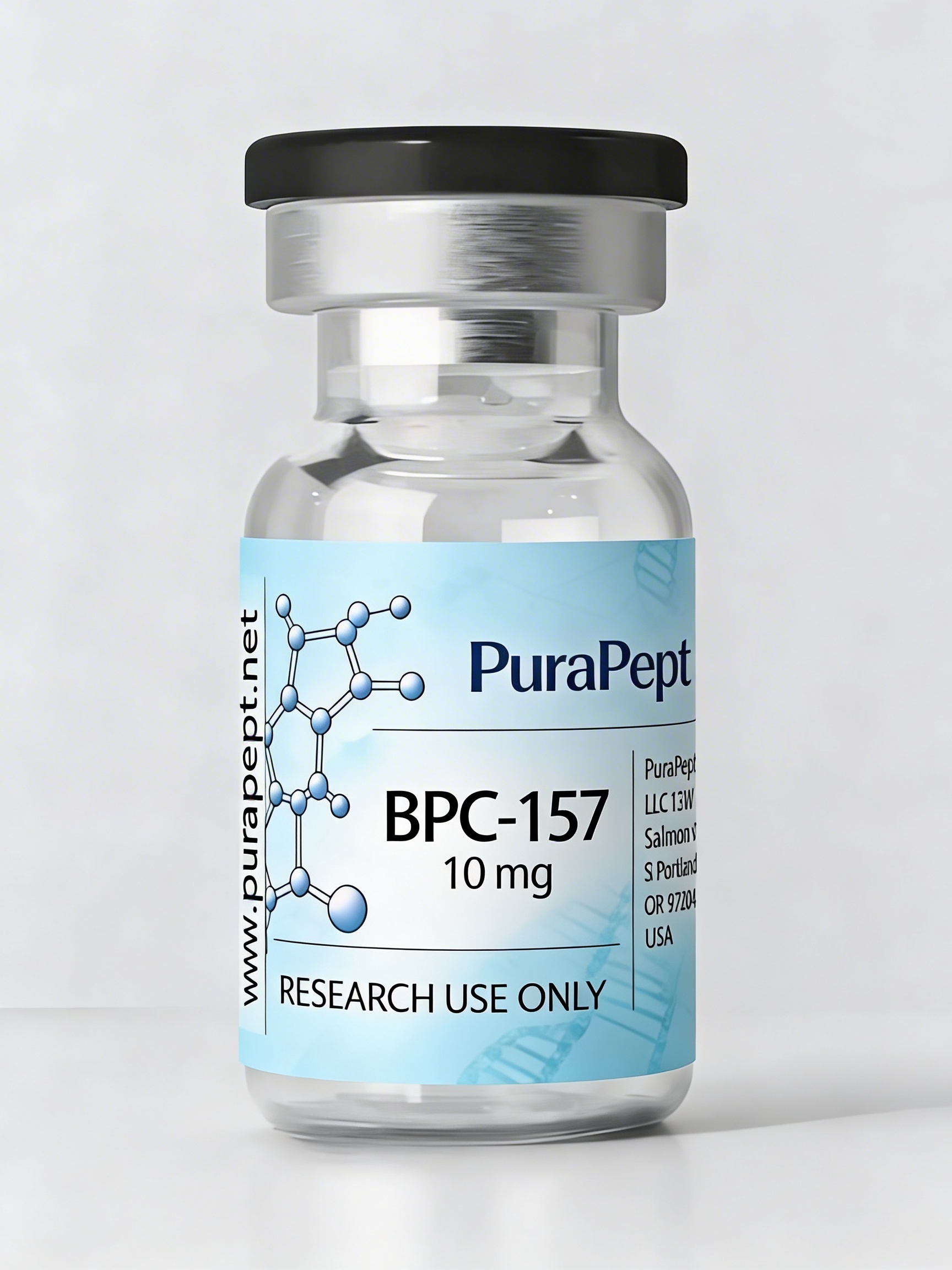 BPC-157 10 mg
Every BPC-157 conversation eventually claims a body count. The honest count is small enough to print in one sentence, and printing it changes the conversation. A 2026 systematic review searched PubMed, Cochrane and Embase from database inception to 3 June 2024, identified 544 articles, and after removing duplicates included 36 studies: 35 preclinical, 1 clinical. That one clinical study is a retrospective knee series with twelve patients in it. Add the two later studies and the entire human corpus in this field is thirty people across three papers.
The three human studies, one at a time
Start with the knee, because it is the one usually cited. It is a retrospective chart review covering 2019 to 2020 at a private clinic. Seventeen patients were in the records; sixteen were contacted by phone to follow up and one was unreachable. Of those sixteen, twelve had received only BPC-157 as an intraarticular injection, and eleven of those twelve, 91.6%, reported significant improvement, with one, 8.3%, reporting none. Four had received BPC-157 combined with TB-500, of whom 75% reported significant improvement. Overall, 14 of 16, 87.5%, had relief of knee pain.
Now read the instrument the authors themselves describe. No specific tools were used to measure improvement in function, quality of life, stiffness or activities of daily living. The three questions asked by telephone were how bad the pain was, how long the relief lasted and how much the injection helped. Nobody was scanned afterwards. There was no control group and no blinding, and the follow-up was retrospective, meaning most of those injections had happened six months to a year before the survey.
That is 16 patients, a phone call, and a number nobody verified, and it is still the largest human dataset in the field, which tells you something about the field.
The bladder study is the best instrumented of the three
The second study is smaller and better built in one specific way: it used a named questionnaire. Twelve women between 39 and 76 years, mean age 58.3, ten White, one Asian and one Latina, all of whom had failed to respond to pentosan polysulfate. Under cystoscopy they received injections totalling 10 mg placed around the area of bladder inflammation, in a single procedure. The Global Response Assessment was completed by every participant.
Ten of twelve reported complete resolution of symptoms and rated their success at 100%. The other two rated 80%, most symptoms resolved with about 20% lingering. Nobody dropped out and no adverse events were reported. All twelve scored 5 out of 5 on the Global Response Assessment.
Four design facts sit next to that result. It is a single arm with no comparator and no sham procedure. The endpoint is the patient’s own global rating, which is a real instrument and a subjective one. The recruited group had already failed the approved option, which is the population in which expectation and regression to the mean pull hardest in the same direction. And the authors call it the first report of intravesical injection in this indication: a pilot study, twelve people.
The third study is two people and an intravenous drip
A 2025 pilot study supplies the third human dataset, and it is the smallest. It ran at a private clinic in Florida under institutional review board approval, with two participants: a 58-year-old Asian man and a 68-year-old Caucasian woman, each of whom the paper says had received intravenous BPC-157 before the trial. On day 1 each was given 10 mg in 250 cc of normal saline over one hour, and on day 2, 20 mg the same way. Blood was drawn and vital signs recorded before and after each infusion and again on day 3.
The infusions produced no measurable effects on the tested biomarkers of the heart, liver, kidneys, thyroid or blood glucose, and no side effects were reported. The same group that published the knee and bladder studies wrote it, and its opening line is the honest summary of the field: few studies on humans have been published, and before this one, none on the intravenous use of BPC-157 in humans. It measured safety markers rather than drug levels in blood, even though a 2026 review calls this study intravenous safety and pharmacokinetics, so it is a two-person tolerance check and not a study of how the compound moves through the body. Both participants also arrived with prior exposure to the same route, which is the opposite of the naive-exposure record a regulator would ask for.
That review counts the corpus as three human pilot studies, intraarticular knee pain, interstitial cystitis and intravenous safety, and a separate 2026 review names the same three indications. The systematic review’s count of one clinical study is not a contradiction, and the date explains it: its search stopped on 3 June 2024, before this paper existed.
The same review’s conclusion is worth having in full: BPC-157 should be considered investigational and its use approached with caution until well-designed clinical trials are conducted. A primer written for orthopaedic physicians is blunter about the largest of the three, describing a single human case series reporting pain improvement after intra-articular knee injections while noting that significant methodological flaws and a lack of controls limit its applicability and reliability.
How much of the rest is rat
A 2026 scoping review of six popular peptides put the share at the level of the class: 67% of identified publications used preclinical animal models, most commonly rats. Human clinical studies were limited to a handful of investigations, most lacking robust controls or rigorous designs, with heterogeneous results that showed modest improvements at best for metabolic bone health and degenerative knee pain.
The tendon and ligament literature has the same shape and names its cause. The majority of studies have been performed on small rodent models, the efficacy of BPC-157 is yet to be confirmed in humans, and over two decades only a handful of research groups have studied the peptide in depth.
The pharmacokinetics need the same warning label. The frequently quoted half-life of under 30 minutes comes from a study in rats and beagle dogs: linear kinetics at every amount tested, intramuscular bioavailability of roughly 14% to 19% in rats and 45% to 51% in dogs, excretion through urine and bile, rapid breakdown into small peptide fragments and then into single amino acids. The systematic review prints that half-life without naming a species, which is why the primary paper is worth more than the summary.
The regulatory position follows the evidence. A 2025 literature and patent review notes the peptide has not been approved for use in standard medicine by the FDA or other global authorities due to the absence of sufficient and comprehensive clinical studies confirming its health benefits in humans. That describes the corpus above rather than opining on it.
Where this sits on the shelf
We carry BPC-157, and the smaller presentation of the same peptide beside it. For a comparison of what human connective-tissue data looks like when it does exist, copper peptide and dermal fibroblasts is the adjacent document on this desk.
What the data do not show
Not one randomised, blinded or placebo-controlled study of BPC-157 in people exists in any indication. Neither of the two patient studies used an objective functional instrument, and neither reported an imaging outcome, so nothing here speaks to tendon, ligament, cartilage or bone in a human being. There is no clinical safety dataset worth the name: the systematic review, whose search ended in June 2024, states it as plainly as a sentence can be stated, no clinical safety data were found, and the only human safety data since are blood draws and vital signs in two people with prior exposure. There is no route comparison and no amount-ranging work in people. The entire connective-tissue case rests on rodent models, which is a legitimate thing for a laboratory to generate and not a thing that transfers to a human tendon without a trial.
A reader who wants the useful version of this should hold two facts at once: the preclinical literature is large, consistent and genuinely interesting, and the human literature is thirty people in three uncontrolled papers. The first is why the compound is worth studying; the second is why nothing here should be read as a result in people.
What we supply
The BPC-157 preparation above, as supplied by the manufacturer, tracked, from inside the EU. Batch documentation for every product that carries any is explained in the COA guide linked from the product page.
Research use only. This page summarises published trials and evidence syntheses for research reference. It is not medical advice, not a protocol, and not a suggestion for human use. Nothing we supply is for human or veterinary use.
References.
- Vasireddi N, Hahamyan H, Salata MJ, et al. Emerging Use of BPC-157 in Orthopaedic Sports Medicine: A Systematic Review. HSS J 2025;21(4):485-495 (PMID 40756949).
- Lee E, Padgett B. Intra-Articular Injection of BPC 157 for Multiple Types of Knee Pain. Altern Ther Health Med 2021;27(4):8-13 (PMID 34324435).
- Lee E, Walker C, Ayadi B. Effect of BPC-157 on Symptoms in Patients with Interstitial Cystitis: A Pilot Study. Altern Ther Health Med 2024;30(10):12-17 (PMID 39325560).
- Lee E, Burgess K. Safety of Intravenous Infusion of BPC157 in Humans: A Pilot Study. Altern Ther Health Med 2025;31(5):20-24 (PMID 40131143).
- McGuire FP, Martinez R, Lenz A, et al. Regeneration or Risk? A Narrative Review of BPC-157 for Musculoskeletal Healing. Curr Rev Musculoskelet Med 2025;18(12):611-619 (PMID 40789979).
- Mayfield CK, Bolia IK, Feingold CL, et al. Injectable Peptide Therapy: A Primer for Orthopaedic and Sports Medicine Physicians. Am J Sports Med 2026;54(1):223-229 (PMID 41476424).
- Tewari K, Liu TP, Im C, et al. Peptide Supplements and Their Therapeutic Applications in Sports Medicine. Am J Sports Med 2026 (PMID 42578445).
- He L, Feng D, Guo H, et al. Pharmacokinetics, distribution, metabolism, and excretion of body-protective compound 157, a potential drug for treating various wounds, in rats and dogs. Front Pharmacol 2022;13:1026182 (PMID 36588717).
- Gwyer D, Wragg NM, Wilson SL. Gastric pentadecapeptide body protection compound BPC 157 and its role in accelerating musculoskeletal soft tissue healing. Cell Tissue Res 2019;377(2):153-159 (PMID 30915550).
- Józwiak M, Bauer M, Kamysz W, et al. Multifunctionality and Possible Medical Application of the BPC 157 Peptide-Literature and Patent Review. Pharmaceuticals (Basel) 2025;18(2):185 (PMID 40005999).
- Yuan C, Demers A, Silva-Ortiz V, et al. From Regeneration to Analgesia: The Role of BPC-157 in Tissue Repair and Pain Management. Int J Mol Sci 2026;27(6):2876 (PMID 41898733).