GHK-Cu and dermal fibroblasts: in vitro collagen findings
The most-cited GHK-Cu finding is nearly forty years old and comes from cells in dishes, not people. That does not make it worthless. It makes it specific, and worth reading precisely.
28 September 2026 · 2 min read
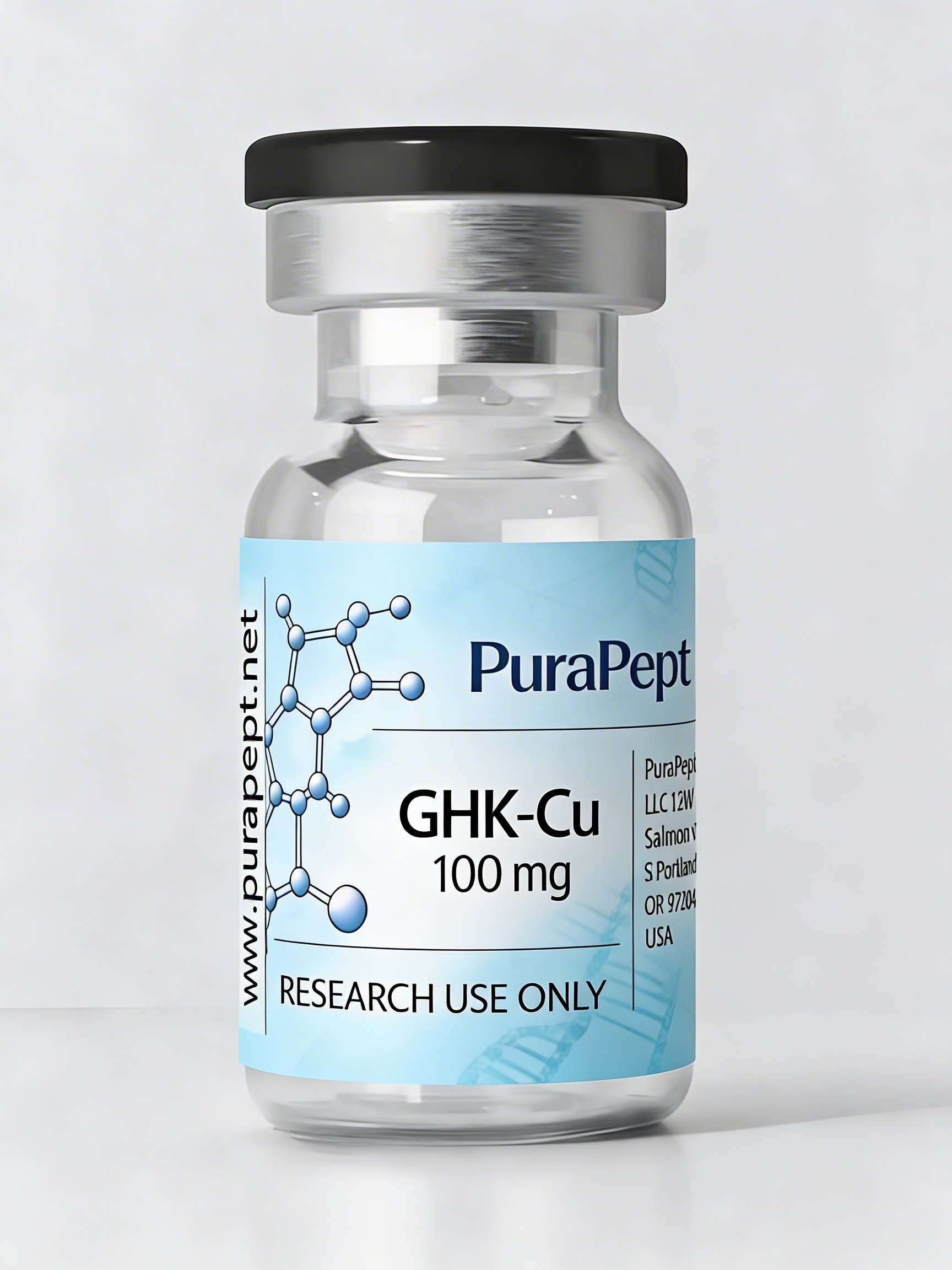 GHK-Cu 100 mg
GHK-Cu has a strange reputation. It is everywhere in cosmetic marketing and oddly thin in clinical literature. Strip away the marketing and the core is a real, old, narrow finding: a copper-bound tripeptide that makes fibroblasts in culture produce more collagen. Everything else is extrapolation. This page stays with the core.
The 1988 experiment
Maquart and colleagues worked with fibroblast cultures and a defined molecule: glycyl-L-histidyl-L-lysine bound to copper, GHK-Cu. Their reported result was direct: the complex stimulated collagen synthesis in the cultured cells. Fibroblasts are the cells that build and maintain the skin’s structural matrix, so a compound that changes their output in vitro is genuinely interesting to skin biology. That is the finding. It lives in a dish, in 1988, and it has held up as a cited result ever since.
What grew around it
Two decades later, Pickart’s 2008 review gathered GHK’s tissue-remodeling literature: collagen and glycosaminoglycan synthesis, wound-healing models, anti-inflammatory observations. Reviews like this are useful maps of a field. They are also not new evidence. A review collects; it does not test. Read it as an index of what had been reported by 2008, weighted toward the author’s own long involvement with the compound, which the paper does not hide.
What the dishes cannot tell you
Cell culture removes everything that makes skin hard to treat: the barrier, the immune system, blood supply, age, sun history. A compound that stimulates fibroblasts in medium may never reach fibroblasts through intact skin, may behave differently among living tissue signals, or may do nothing measurable at all. None of the papers cited here is a human efficacy trial, and this page will not fill that gap with adjectives. The honest summary of GHK-Cu in 2026: a plausible mechanism, a durable in vitro finding, and a clinical literature that has not caught up.
For researchers, one sourcing note: GHK-Cu appears both alone and inside multi-component blends such as KLOW. As with every blend, a mixture cannot attribute an effect to one ingredient. Match the preparation to the question before the work starts.
Research use only. This page describes published cell-culture and review literature. It is not skincare advice, not medical advice, and not a suggestion for human use. Nothing we supply is for human or veterinary use.