Semaglutide and lean mass: what was measured
The one muscle measurement in obesity sits on 55 people, 6 on placebo. Everything else is a range: 20% to 40% fat-free mass.
6 October 2026 · 7 min read
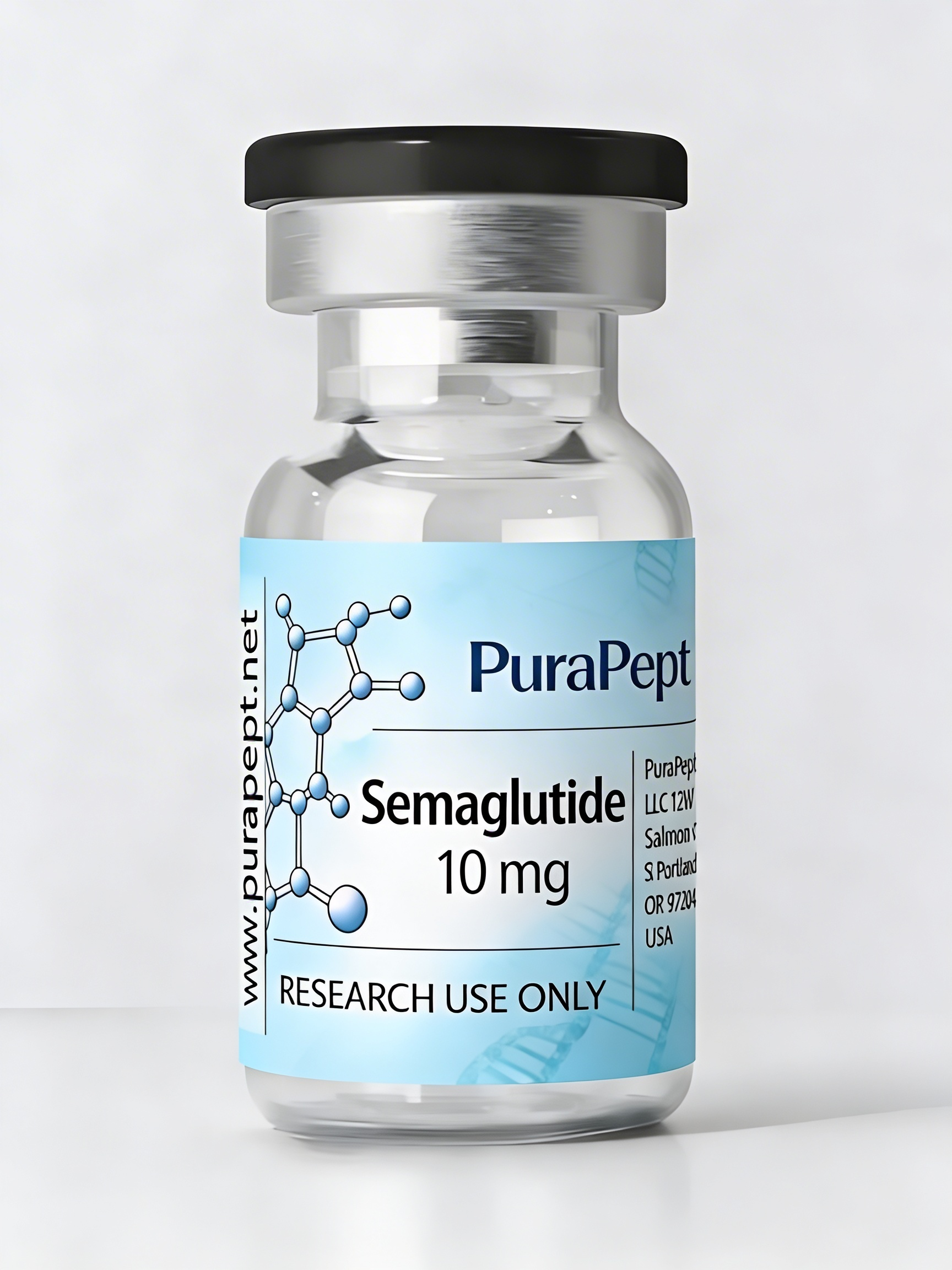 Semaglutide 10 mg
Weight is the number every trial reports. Lean mass is the number buyers ask about, and it is the one the record is thinnest on. This is an inventory of what was measured, in which population.
Start with the one measurement in people with obesity
No DXA or body-composition substudy of STEP 1, STEP 2 or STEP 3 is indexed, and STEP 1 reports body weight and cardiometabolic risk factors with no composition endpoint at all. The STEP programme does have one body-composition secondary analysis. It is not DXA, and it is the closest thing in this literature to a semaglutide muscle measurement in adults with obesity.
The phase 3b STEP UP trial randomised 1,407 adults to semaglutide 7.2 mg, semaglutide 2.4 mg or placebo for 72 weeks. Its prespecified secondary analysis measured MRI body composition and physical function, and of the 1,407 participants only 55 had a valid baseline scan: 49 in the pooled semaglutide group and 6 on placebo. That is the denominator everything here comes back to.
Against placebo, the pooled semaglutide group lost 11.1 L of adipose body tissue (95% CI -16.5 to -5.7; p<0.0001) and 1.5 L of visceral adipose tissue (95% CI -2.9 to -0.1; p=0.04). Lean body tissue fell by 1.7 L (95% CI -4.0 to 0.7; p=0.16) and thigh skeletal muscle volume by 1.1 L (95% CI -2.3 to 0.1; p=0.07). Both muscle endpoints cross zero. What did reach significance is the composition of the muscle rather than its quantity: thigh muscle fat infiltration fell by 0.92 percentage points (95% CI -1.41 to -0.42; p=0.001).
The direction fits everything else here. The precision does not: six people on placebo cannot carry a muscle-volume claim in either direction, and the authors ask for exactly that research.
The one randomised DXA dataset
It is SUSTAIN 8, and the design matters more than the conclusion. A subset of 178 adults with type 2 diabetes underwent whole-body DXA at screening and were randomised 1:1, 88 to semaglutide 1.0 mg and 90 to canagliflozin 300 mg once daily. Of the 178, 114 had end-of-treatment data at 52 weeks.
Total fat mass, baseline 33.2 kg, fell by 3.4 kg on semaglutide and 2.6 kg on canagliflozin (estimated treatment difference -0.79, 95% CI -2.10 to 0.51). Total lean mass, baseline 51.3 kg, fell by 2.3 kg and 1.5 kg, a difference of -0.78 (95% CI -1.61 to 0.04). The proportion of lean mass, baseline 59.4%, rose by 1.2 and 1.1 percentage points, a difference of 0.14 (95% CI -0.89 to 1.17). Visceral fat mass and the fat-to-lean ratio were comparable.
Absolute lean mass went down while the share of the body that is lean went up, because fat went down faster. Both facts are in the same abstract, and quoting only one is how this debate gets distorted in both directions. The authors state the limit themselves: no placebo arm, and “the specific impact of both treatments on body composition in the absence of a placebo arm is speculative at this stage.”
The pooled view, and what DXA measures
Two 2026 syntheses put an agent-level number on the question. A meta-analysis of 20 randomised controlled trials and 15,782 participants puts lean mass at 25% to 39% of total weight lost with incretin agonists: semaglutide 35.2% (95% CI 31.5-38.9), tirzepatide 25.4% (22.8-28.0), liraglutide 26.8% (23.1-30.5). Intensive lifestyle intervention lost 26.2% (24.1-28.3) as lean mass, p=0.42 against the drug comparison, and lifestyle plus resistance training was the most favourable at 17.5% (14.2-20.8). Heterogeneity was moderate, I-squared 68%.
A second systematic review, 35 randomised trials, median 78 participants and 26 weeks of treatment, could not pool at all. The median share of weight lost to muscle-based indices was 28.3% (IQR 15.9 to 39.9); among studies using bioelectrical impedance or DXA about 29% (IQR 16.6 to 43.1); among studies using CT or MRI 25.3% (IQR 16.7 to 27.2). Not one study in it reported an objective physical function outcome, the gap the STEP UP analysis met from the other direction.
A 2024 review reached the same territory, using diet and bariatric surgery as its reference points: the share of weight lost as fat-free mass on GLP-1RA-based agents sits between 20% and 40%, and across its 28 clinical trials was highly variable, with the majority above 25%. Most diets lose under 25% as fat-free mass, and bariatric surgery reduces it further. It is also unusually clear about why the number is mushy, having restricted itself to DXA, which it calls a crude surrogate for skeletal muscle, and notes that fat-free mass contains a variable amount of muscle, approximately 55%.
So a 20% to 40% range is not a measurement of muscle loss. It is a range on a composite containing bone, glycogen, water and organs, which is why the STEP UP analysis is the more useful dataset even though it is the smaller one: it measured a compartment, on an instrument that separates lean tissue from skeletal muscle, and still could not call the muscle number.
Bone: the total mineral question, and a direct disagreement
One dataset, 70 people with obesity and type 1 diabetes on a GLP-1 receptor agonist or a dual GIP/GLP-1 agent, DEXA at baseline and 12 months: body weight fell 6.33% (95% CI -7.92 to -4.73), total tissue fat 1.42%, fat mass 5.90% and lean mass 1.75% (95% CI -3.50 to -0.48), while total bone mineral content and density did not move, and lean mass loss tracked weight loss at R-squared 0.36. People losing more than 10% of body weight did best metabolically without compromising bone, although their lean mass loss was greater.
The larger dataset points the other way. A 2026 retrospective study matched 255 patients who had used semaglutide or tirzepatide for at least 6 months, 92% female, mean age 64, to 255 non-users with at least two DXA scans over the same period. After a median 17 months and a median 5% weight loss, both groups lost bone mineral density at the total hip and the femoral neck, by a similar magnitude. Within the drug group, weight loss was directly associated with bone loss at both sites (r = 0.32 and r = 0.17, both P below .01). Among patients without diabetes, greater total-hip bone loss was seen in the drug group, -1% against -0.6%, P = .04. Among patients with diabetes the two groups were similar.
A third study goes the other way again, and it is the smallest: oral semaglutide in 36 patients with type 2 diabetes and steatotic liver disease, HRpQCT at 52 weeks, tibial total volumetric density going from 317.4 to 331.6 mg HA/cm3, which is p = 0.06. With no control group and a headline at p = 0.06, the abstract’s closing claim that oral semaglutide improves volumetric density is stronger than 36 uncontrolled patients can carry.
The energy-deficit layer
A 2026 meta-analysis of 19 randomised trials across the SURMOUNT, STEP, SCALE and OASIS programmes put numbers on the mechanism. Daily energy intake declined by 24.00% to 39.20% across drug classes, with model-estimated daily deficits reaching 1200 kcal. Investigator-reported malnutrition occurred in only 0.12% of participants, while objective screening found low total lymphocyte counts below 910 per microliter in 2.90% of active-therapy participants, nearly double the 1.77% in placebo arms. The composition figure in that abstract names one drug, tirzepatide 15 mg, at 1.60 kg of fat-free mass, 2.80% of body weight, and no semaglutide figure appears there. Its own conclusion is a proposal, not a result: a stepped-care algorithm with baseline albumin and lymphocyte screening and monitoring at weeks 12, 24 and 52.
Where this sits on the shelf
The compounds on this page are semaglutide and tirzepatide. For a composition endpoint measured in a real trial rather than inferred from weight, tesamorelin in phase 3 reports composition directly.
What the data do not show
They do not show a skeletal muscle figure for semaglutide in adults with obesity backed by a placebo arm of usable size, and they do not settle bone: a single-arm 36-patient study reports volumetric density rising at p = 0.06 while a matched 255-pair DXA study reports more total-hip loss in users without diabetes. The pooled ranges, 20% to 40% and 25% to 39%, are ranges rather than measurements, because most of them come off DXA, which does not measure skeletal muscle mass directly.
The defensible summary is a range and a warning: the share of weight lost as fat-free mass on these agents runs 20% to 40%, is highly variable, and is measured mostly on an instrument that does not measure the tissue people are being asked about.
What we supply
The semaglutide and tirzepatide preparations above, as supplied by the manufacturer, tracked, from inside the EU.
Research use only. This page summarises published studies for research reference. It is not medical advice, not a protocol, and not a suggestion for human use. Nothing we supply is for human or veterinary use.
References.
- Hjelmesæth J, Bhat S, Garvey WT, et al. Effect of semaglutide on thigh skeletal muscle volume, fat infiltration and physical function in people with obesity: secondary analysis of STEP UP. Diabetes Obes Metab 2026.
- Eisa N, Barood O. Lean mass changes with incretin therapy versus lifestyle intervention: a systematic review and meta-analysis of randomised controlled trials. Diabetes Obes Metab 2026;28(6):4818-4827.
- Batsis JA, Gavras A, Gross DC, et al. Effect of incretin-based and nonpharmacologic weight loss on body composition: a systematic review. Ann Intern Med 2026;179(7):996-1013.
- McCrimmon RJ, Catarig AM, Frias JP, et al. Effects of once-weekly semaglutide vs once-daily canagliflozin on body composition in type 2 diabetes: a substudy of the SUSTAIN 8 randomised controlled clinical trial. Diabetologia 2020;63(3):473-485.
- Dubin RL, Heymsfield SB, Ravussin E, et al. Glucagon-like peptide-1 receptor agonist-based agents and weight loss composition: filling the gaps. Diabetes Obes Metab 2024;26(12):5503-5518.
- Das L, Bhadada SK, Arjunan D, et al. Effect of oral semaglutide on volumetric BMD and bone microarchitecture in overweight/obese individuals with type 2 diabetes. Calcif Tissue Int 2025;116(1):105.
- Liu Y, Walzer D, Schmitz S, et al. Skeletal effect of semaglutide and tirzepatide in patients with increased risk of fractures. J Clin Endocrinol Metab 2026;111(7):1959-1966.
- Al Ozairi E, Irshad M, Alkandri J, et al. Weight loss-dependent changes in body composition and bone health in people with obesity and type 1 diabetes treated with liraglutide, semaglutide, or tirzepatide. Diabetes Metab Res Rev 2026;42(6):e70213.
- Ampofo E, Apprey C, Amoako M, et al. A systematic review and meta-analysis of malnutrition and metabolic failure in high-potency incretin therapy. Obes Sci Pract 2026;12(5):e70188.