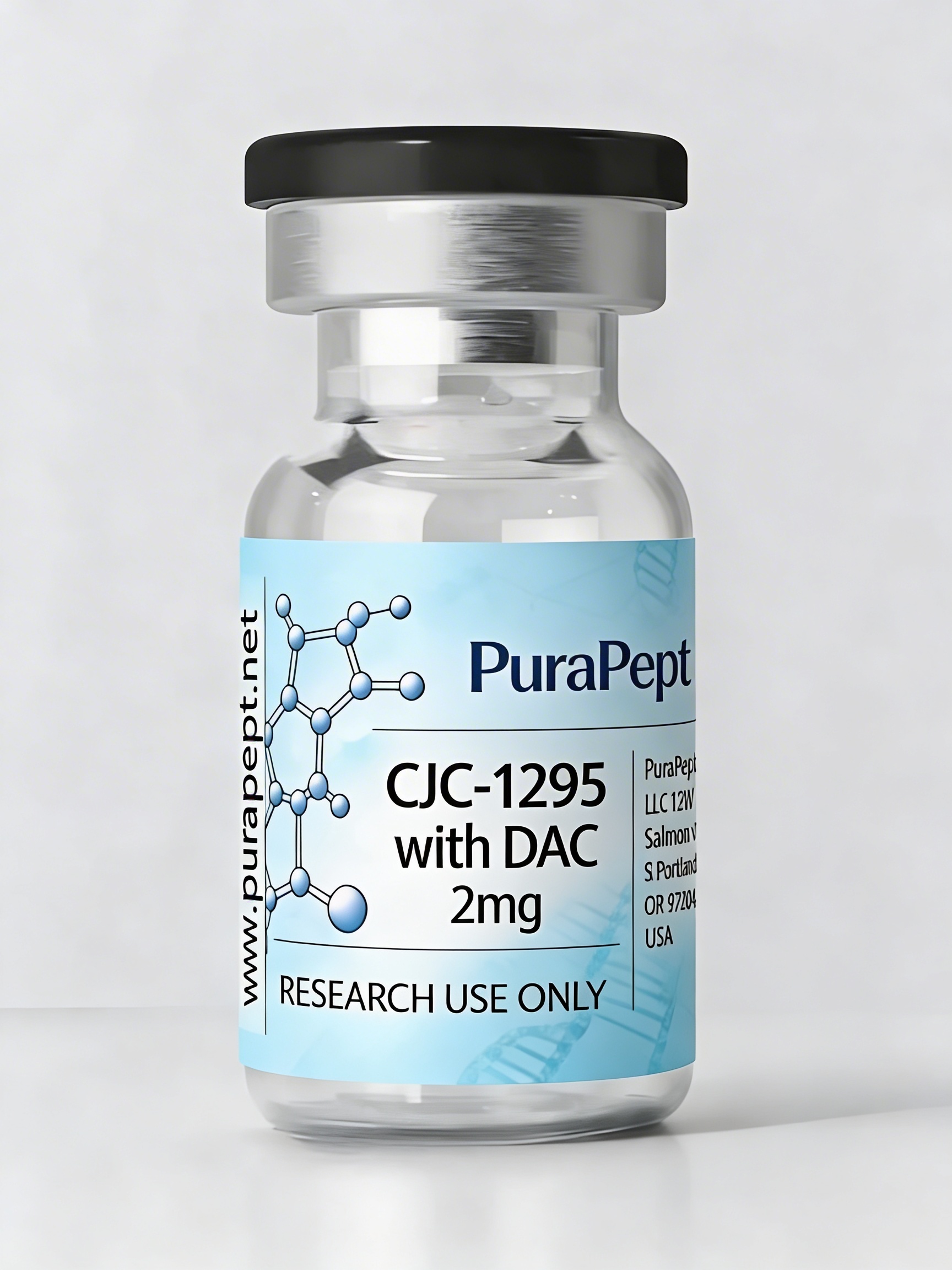
CJC-1295 with DAC plus ipamorelin: what each half's trials measured
Two growth-hormone secretagogues in one vial: one with randomised pharmacokinetic trials in healthy adults, one with a clean selectivity profile in animals and eight healthy volunteers, and no trial of the combination. The 2026 scoping review of this exact peptide class found 67% of the literature preclinical.
4 November 2026 · 4 min read
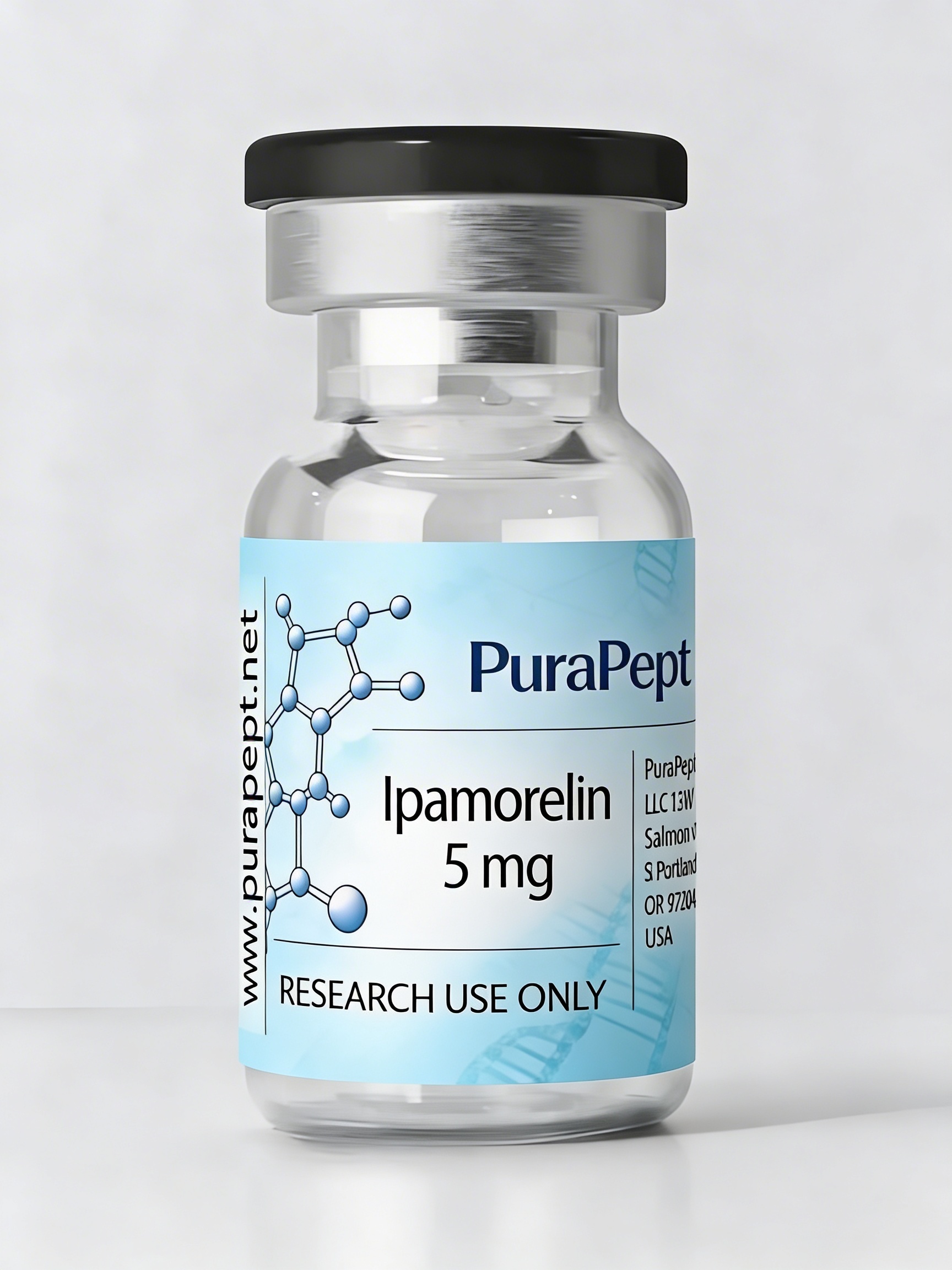
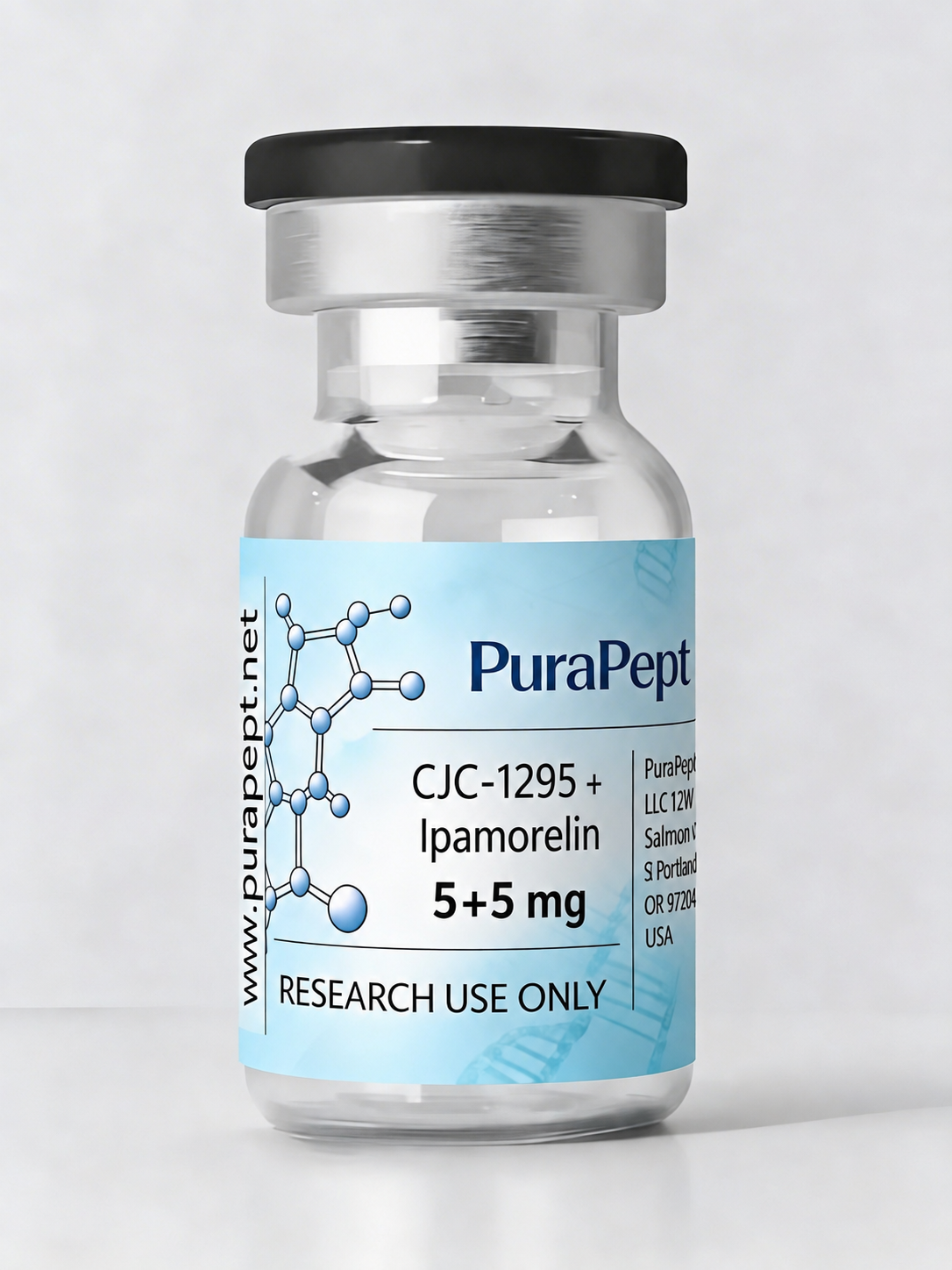 CJC-1295 with DAC 5 mg + Ipamorelin 5 mg
The CJC-1295 with DAC and ipamorelin combination puts two growth-hormone secretagogues in one vial — the long-acting GHRH analogue CJC-1295 with its DAC tail, and the GHRP-receptor agonist ipamorelin. Both halves are in this catalogue separately as CJC-1295 with DAC and ipamorelin. The honest way to write about the combination is to write about the two halves first, because that is where the entire evidence file sits.
What CJC-1295 with DAC has been measured doing in people
The 2006 study by Teichman and colleagues in the Journal of Clinical Endocrinology and Metabolism is the anchor: two randomised, placebo-controlled, double-blind ascending-dose trials of 28 and 49 days in healthy adults aged 21 to 61, with CJC-1295 or placebo given subcutaneously as single ascending doses in the first study and as two or three weekly or biweekly doses in the second. Its stated purpose was to examine the pharmacokinetic profile, the pharmacodynamic effects and safety, because therapeutic use of GHRH is “limited by its short duration of action”.
The paper is a hormone-axis study: what it measures is growth hormone and IGF-1 secretion over time after a dose. That is the honest description of the human evidence for this molecule — a hormonal biomarker response in healthy volunteers, over days to weeks, in the absence of any disease being treated.
What ipamorelin has been measured doing
Ipamorelin’s selectivity claim is the strongest thing in this file, and it comes from a pharmacology paper rather than a clinical outcome. Raun and colleagues, writing in the European Journal of Endocrinology in 1998, describe it as a pentapeptide, Aib-His-D-2-Nal-D-Phe-Lys-NH2, identified from a series lacking the central Ala-Trp dipeptide of GHRP-1. In rat pituitary cells its potency and efficacy were similar to GHRP-6 (EC50 1.3 ± 0.4 nmol/l, Emax 85 ± 5 %, against 2.2 ± 0.3 nmol/l and 100 %). Antagonist profiling showed it stimulates GH through a GHRP-like receptor. In pentobarbital-anaesthetised rats it released GH with ED50 80 ± 42 nmol/kg against GHRP-6 at 115 ± 36 nmol/kg; in conscious swine ED50 2.3 ± 0.03 nmol/kg against 3.9 ± 1.4 nmol/kg.
The selectivity numbers are the memorable part: none of the secretagogues tested affected FSH, LH, PRL or TSH, and both GHRP-6 and GHRP-2 raised ACTH and cortisol — while ipamorelin did not, “even at doses more than 200-fold higher than the ED50 for GH release”.
The human data on ipamorelin are a pharmacokinetic-pharmacodynamic study. Gobburu and colleagues in Pharmaceutical Research ran a dose-escalation design with five infusion rates, with eight healthy male subjects at each dose level, and report dose-proportional kinetics, a terminal half-life of 2 hours, clearance 0.078 L/h/kg, a volume of distribution at steady state of 0.22 L/kg, and a single episode of GH release peaking at 0.67 hours with an SC50 of 214 nmol/L. Their own closing note matters: inter-individual variability in the pharmacodynamic parameters was larger than in the pharmacokinetic ones.
Eight men per level. That is the human file for the second half of this vial.
What the class-level reviews say
Two 2026 reviews surveyed exactly this peptide class, and both are blunt about the translation from animals to people. The American Journal of Sports Medicine scoping review of BPC-157, TB-500, CJC-1295, MK-677, ipamorelin and GHK-Cu found that 67 % of identified publications used preclinical animal models, mostly rats, with “promising but variable effects” on tendon, muscle, bone and ligament healing in animals. Human clinical studies, it states, “were limited to a handful of investigations, most lacking robust controls or rigorous study designs”, and human data were heterogeneous, revealing “modest improvements at best”. It also records documented risks, noting that MK-677 was associated with significant risks including congestive heart failure.
The orthopaedics review in the same year, which lists ipamorelin and CJC-1295 together among the growth-hormone secretagogues that activate IGF-1 signalling, ends its section the same way: “Although preclinical studies are promising, there is a current lack of clinical trials.”
Two independent 2026 reviews of the same compounds, reaching the same sentence.
What the data do not show
- No trial of the combination exists. Neither half has been studied alongside the other in people.
- No trial of either half measured body composition, strength, recovery time or injury outcome in people. The human studies above measured GH and IGF-1 concentrations and plasma pharmacokinetics.
- The selectivity advantage of ipamorelin is an animal finding, and its human file is eight volunteers per dose level with PK/PD modelling.
- No body-composition endpoint, no lean-mass figure and no performance number on this page, because none appears in the sources.
- Nothing here is dosing, advice or a claim. The figures quoted are the regimens and doses those studies ran; these are research materials sold as research materials and nothing on this page recommends them to any person.
For what the GH axis looks like when it is studied with an endpoint rather than a hormone level, see our page on somatropin and the randomised GH replacement endpoints.
References.
- Teichman SL, Neale A, Lawrence B, Gagnon C, Castaigne JP, Frohman LA. Prolonged stimulation of growth hormone (GH) and insulin-like growth factor I secretion by CJC-1295, a long-acting analog of GH-releasing hormone, in healthy adults. J Clin Endocrinol Metab 2006;91(3):799-805 (PMID 16352683).
- Raun K, Hansen BS, Johansen NL, et al. Ipamorelin, the first selective growth hormone secretagogue. Eur J Endocrinol 1998;139(5):552-561 (PMID 9849822).
- Gobburu JV, Agersø H, Jusko WJ, Ynddal L. Pharmacokinetic-pharmacodynamic modeling of ipamorelin, a growth hormone releasing peptide, in human volunteers. Pharm Res 1999;16(9):1412-1416 (PMID 10496658).
- Tewari K, Liu TP, Im C, et al. Peptide supplements and their therapeutic applications in sports medicine. Am J Sports Med 2026 (PMID 42578445).
- Rahman OF, Lee SJ, Seeds WA. Therapeutic peptides in orthopaedics: applications, challenges, and future directions. J Am Acad Orthop Surg Glob Res Rev 2026;10(1):e25.00236 (PMID 41490200).