IGF-1 LR3 and insulin: what the diabetes trials measured
Recombinant IGF-I is structurally close to insulin and was developed to lower HbA1c — which is the most useful thing to know about it as a research compound. The trials show a real glucose-lowering effect and a real risk of hypoglycaemia, and nothing about lean mass.
7 November 2026 · 4 min read
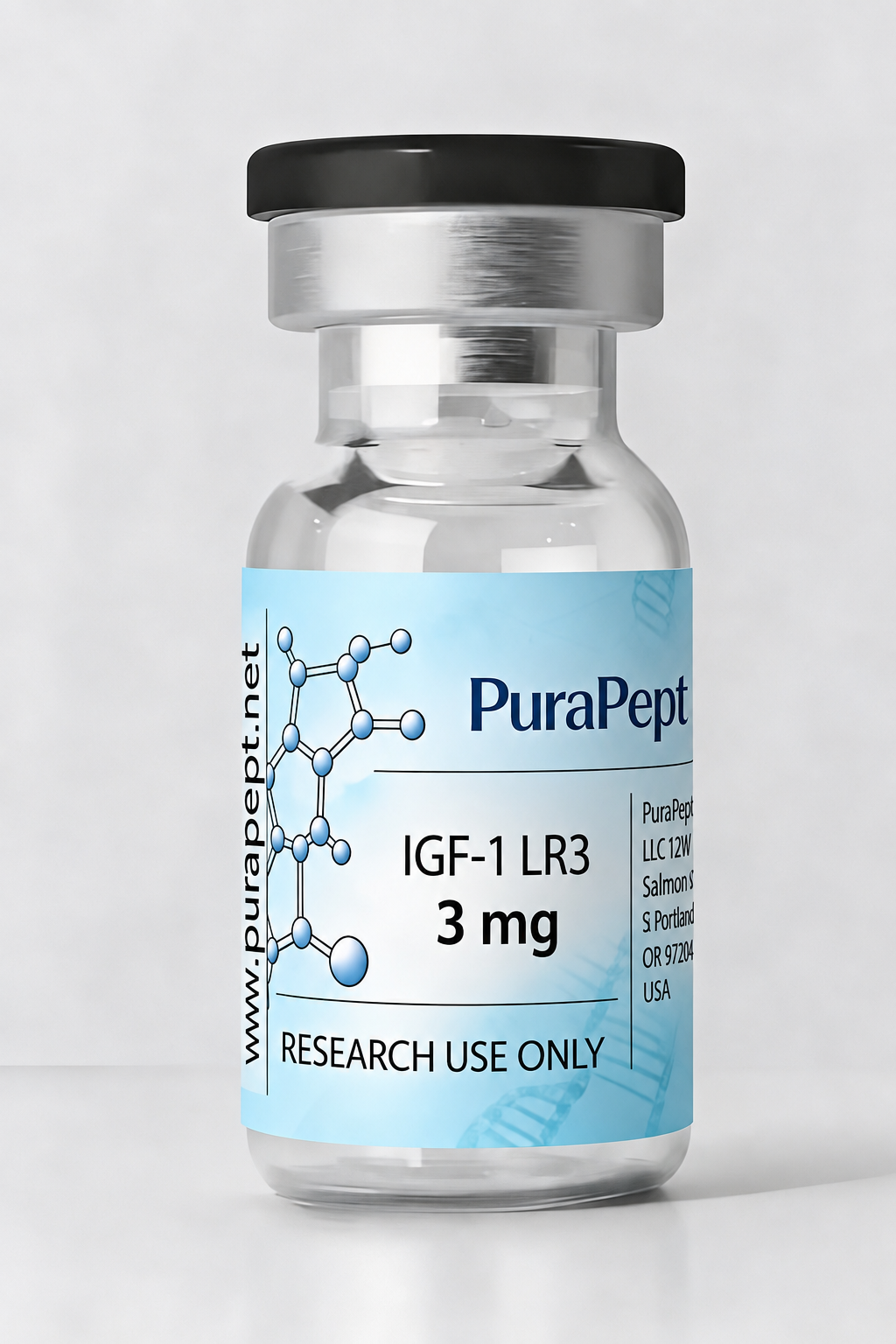 IGF-1 LR3 3 mg
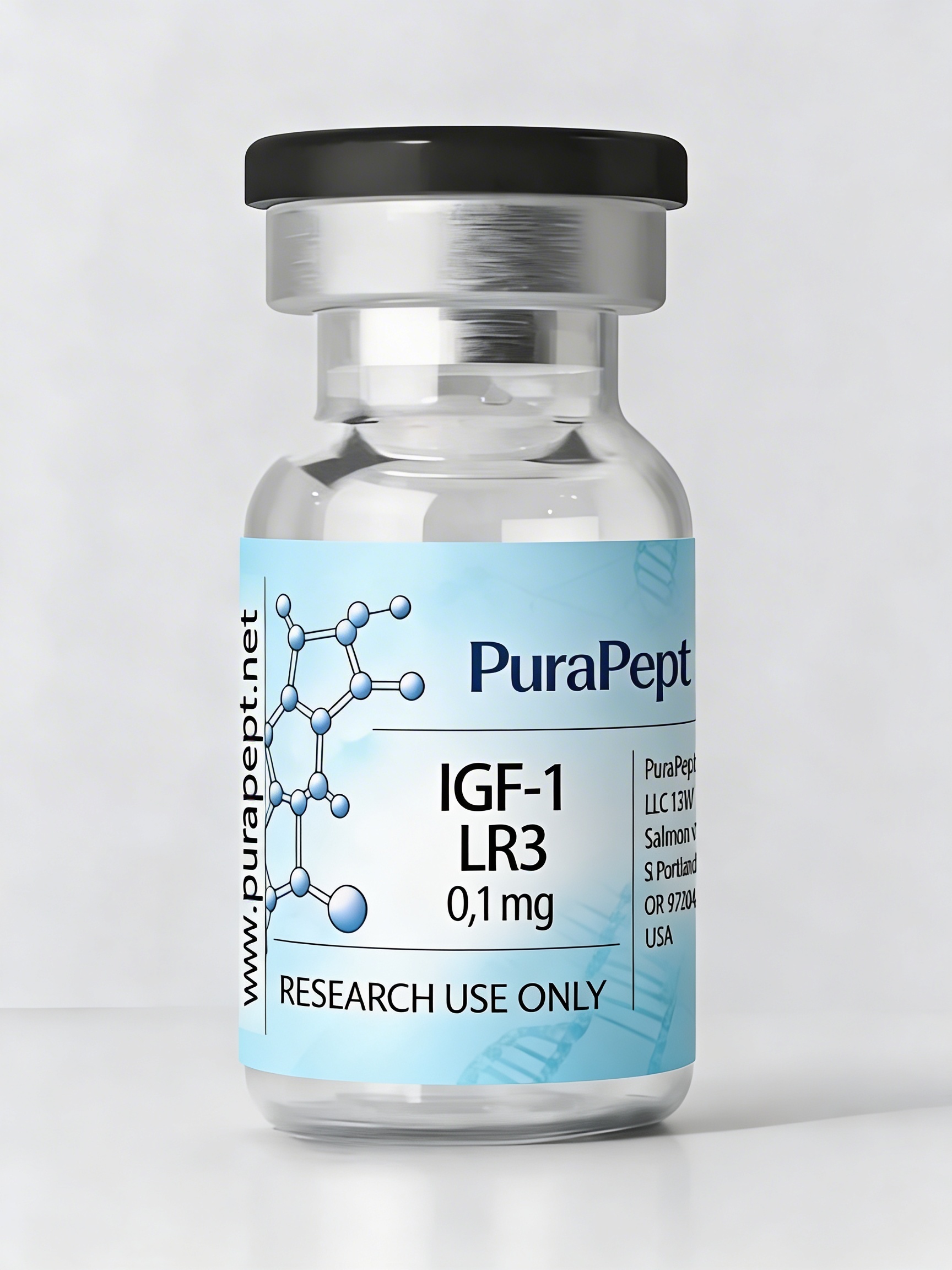
IGF-1 is the peptide at the bottom of the growth-hormone axis and it is also, structurally, an insulin-like molecule — a fact that determines how its human studies were designed and what those studies found. This page covers the IGF-1 LR3 3 mg and 0.1 mg presentations in this catalogue, and the literature behind them.
Why the trials were in diabetes
The 1997 review by Dunger and Acerini answers this in its first line of argument: the structure of IGF-I is similar to that of insulin, having 43 % sequence homology with human proinsulin, and both peptides can induce metabolic and mitogenic effects through their own specific receptors, which also share many structural and functional similarities.
Once the structural relationship is stated, the development programme that followed makes sense. The review reports that recombinant human IGF-I can reduce hyperglycaemia in patients with severe insulin resistance through direct effects mediated via the IGF-I receptor; that improvements in insulin sensitivity, and reductions in blood glucose and HbA1c values, have been seen in subjects with non-insulin-dependent diabetes; and that enhanced insulin sensitivity with low dose rhIGF-I has been observed in adolescents and young adults with insulin-dependent diabetes. In randomised, double-blind, placebo-controlled trials, rhIGF-I given as an adjunct to insulin therapy reduced HbA1c values.
The review’s own conclusion is the honest summary: “although the ideal dosage to obtain therapeutic efficacy without complications has yet to be determined, rhIGF-I may have an important role”.
The mechanism is not the same as a growth effect
The same review is careful about why the glucose effect happens: these effects “are closely related to reductions in growth hormone levels”, but there are also complex interactions with insulin at the post-receptor level and with IGFBP-1. IGF-I is therefore not simply a growth signal being dialled up — it is a metabolic signal that interacts with the entire axis it sits in.
That is the distinction the athletic marketing misses. The growth-hormone literature is about axis stimulation; the IGF-I clinical literature is about glycaemic control in patients with insulin resistance and diabetes, with a drug-development history that went through a binding-protein formulation.
The binding-protein formulation
The 2005 profile of mecasermin rinfabate describes the pharmaceutical logic. In the human body, IGF-I circulates bound to IGF-binding protein 3, which regulates delivery of IGF-I to target tissues, and particular proteases clip them apart in response to stress, releasing IGF-I as needed. For IGF-I deficiency, the review argues it is desirable to administer IGF-I bound to IGFBP-3 to maintain the normal equilibrium of these proteins in the blood, and the formulation mimics the natural circulating complex.
Its lead indication in development was severe growth disorders due to growth-hormone insensitivity syndrome — Laron syndrome — in which patients “do not produce adequate quantities of IGF because of a failure to respond to the growth hormone signal”, resulting in slower growth rate and short stature. Other potential indications named: major surgery, organ damage or failure, traumatic injury, cachexia and severe burn trauma, and osteoporosis.
That is the clinical world this molecule was developed for: defined deficiencies and catabolic states, under a regulated product, with a named binding partner.
What the class-level reviews say now
The 2026 scoping review of peptide supplements in sports medicine covered the growth-axis compounds and found that 67 % of identified publications used preclinical animal models, with human clinical studies “limited to a handful of investigations, most lacking robust controls or rigorous study designs”, and human data heterogeneous, showing “modest improvements at best” — with heterogeneity in dosing and route also recorded. It separately notes documented risks including insulin resistance among the metabolic dysfunctions associated with this class.
Note the shape of that last point. In a catalogue where IGF-1 is sold as a muscle peptide, the class review of 2026 names insulin resistance among the documented metabolic risks of these peptides. That is the same metabolic axis the 1997 review was treating with insulin.
What the data do not show
- No trial of IGF-1 LR3 in people for muscle, strength or body composition is cited here, because the human clinical literature is in growth disorders and glycaemic control.
- The glucose effect runs the other way from the marketing. The clinical rationale for rhIGF-I is to lower glucose and HbA1c in people with diabetes.
- The binding-protein formulation is part of the drug, not a detail. Recombinant IGF-I alone and IGF-I bound to IGFBP-3 are not interchangeable by assumption.
- The 2026 class review names insulin resistance among documented risks of this peptide class, alongside its modest human efficacy findings.
- Nothing on this page is a dose recommendation or a health claim. These are research materials sold as research materials; the figures quoted are what those studies administered.
For what a growth-axis claim looks like when it is tested with an endpoint rather than a hormone level, see our page on somatropin and the randomised GH replacement endpoints.
References.
- Dunger DB, Acerini CL. Does recombinant human insulin-like growth factor-1 have a role in the treatment of diabetes? Diabet Med 1997;14(9):723-731 (PMID 9300221).
- Mecasermin rinfabate: insulin-like growth factor-I/insulin-like growth factor binding protein-3. Drugs R D 2005;6(2):120-127 (PMID 15777106).
- Lee C, Zeng J, Kim YK, et al. The mitochondrial-derived peptide MOTS-c promotes metabolic homeostasis and reduces obesity and insulin resistance. Cell Metab 2015;21(3):442-450 (PMID 25738459).
- Tewari K, Liu TP, Im C, et al. Peptide supplements and their therapeutic applications in sports medicine. Am J Sports Med 2026 (PMID 42578445).