Retatrutide: what the phase 3 trials measured
A triple GIP/GLP-1/glucagon agonist that produced 24.2% weight loss at 48 weeks in phase 2 and a printed 40-week phase 3 HbA1c result in type 2 diabetes. Also the reason this page exists: the highest strength we list is 30 mg, and no published trial goes past 12 mg.
8 October 2026 · 6 min read
 Retatrutide 15 mg
Retatrutide is the most interesting compound on this shelf and also the one most likely to be misread. It is a triple receptor agonist, it has the largest published weight reduction for a single obesity drug, and it is still not an approved medicine anywhere. The numbers below come from three trials and a trial programme design paper, read in the sources’ own words.
What it acts on
Retatrutide activates three receptors at once: the glucose-dependent insulinotropic polypeptide receptor (GIP), the glucagon-like peptide-1 receptor and the glucagon receptor. The GIP and GLP-1 components are the incretin half — they are what makes appetite fall and glucose fall. The glucagon component is what separates it from the dual agonists: it raises energy expenditure, and in animal work it delays gastric emptying and reduces food intake.
A 2025 pipeline review in Expert Opinion on Investigational Drugs puts it in the same family as liraglutide, semaglutide and tirzepatide and makes the same point the trial data make: the adverse events are primarily gastrointestinal — nausea, vomiting, obstipation or diarrhoea — and they can often be mitigated by slow up-titration.
The phase 2 trial, 338 people, 48 weeks
The 2023 New England Journal of Medicine paper is the paper everyone means when they quote retatrutide. It was a phase 2, double-blind, randomised, placebo-controlled trial in adults with a BMI of 30 or higher, or 27 to under 30 with at least one weight-related condition. Three hundred and thirty-eight adults were enrolled, 51.8% of them men, and they were allocated in a 2:1:1:1:1:2:2 ratio to six once-weekly subcutaneous arms or placebo.
The headline is real and it is dose-dependent. Least-squares mean percentage change in body weight from baseline at 24 weeks was -7.2% on 1 mg, -12.9% on the combined 4-mg groups, -17.3% on the combined 8-mg groups and -17.5% on 12 mg, against -1.6% on placebo. At 48 weeks the same figures were -8.7%, -17.1%, -22.8% and -24.2%, against -2.1% on placebo.
The responder analysis is worth reading because it is a different shape of claim. At 48 weeks a weight reduction of 5% or more had occurred in 92%, 75% and 60% of the 4-mg participants (5%, 10%, 15% thresholds); in 100%, 91% and 75% of the 8-mg participants; and in 100%, 93% and 83% of the 12-mg participants. On placebo the same three thresholds read 27%, 9% and 2%.
Two safety details are in the same abstract and are the reason a page like this one exists. Gastrointestinal events were the most common adverse events, they were dose-related, mostly mild to moderate, and were partially mitigated by starting at 2 mg rather than 4 mg. Heart rate rose in a dose-dependent way, peaked at 24 weeks, and declined after that.
The phase 3 that has actually printed
The obesity phase 3 programme is called TRIUMPH, and as of the design paper published in Diabetes, Obesity and Metabolism it is four phase 3, multicentre, randomised, double-blind studies in over 5,800 participants: two weight-management basket trials with obstructive sleep apnoea and/or knee osteoarthritis protocols nested inside them, one weight-management trial in a population with cardiovascular disease, and one stand-alone osteoarthritis trial. The primary endpoint for weight management is percentage change in body weight; for sleep apnoea it is change in the Apnea-Hypopnea Index; for knee osteoarthritis it is the WOMAC pain subscale.
What has printed in full so far is the diabetes side. TRANSCEND-T2D-1, in The Lancet in 2026, is a 40-week, phase 3, randomised, double-blind, placebo-controlled trial at 48 sites in the USA, Mexico and India. Nine hundred and thirty people were screened and 537 randomised one-to-one-to-one-to-one to 4 mg, 9 mg, 12 mg or placebo. Mean age was 48.8 years, mean HbA1c 7.9%, mean body-mass index 35.8 kg/m², mean diabetes duration 2.5 years. Four hundred and ninety participants, 91%, completed the treatment period on study drug.
The primary endpoint moved. Mean change from baseline in HbA1c was -1.69% on 4 mg, -1.86% on 9 mg and -1.94% on 12 mg against -0.81% on placebo, giving estimated treatment differences of -0.88%, -1.04% and -1.12%, all p<0.0001. The key secondary endpoint was bodyweight, and it came in at -11.5%, -13.9% and -15.3% against -2.6% on placebo.
The safety read from that trial is the interesting part for anyone holding the pen. The most frequent adverse events were generally mild-to-moderate gastrointestinal events that subsided over time. Discontinuations because of adverse events were 2-5% on retatrutide and 0% on placebo. No severe hypoglycaemia was reported. Two deaths occurred during the study, both in the 4-mg group, and both were unrelated to the study drug.
Body composition, measured by DXA
A 2025 substudy in The Lancet Diabetes & Endocrinology asked the question people actually care about, which is whether the weight that comes off is fat. It was a phase 2 substudy in people with type 2 diabetes; 189 were enrolled into it and 103 completed both the baseline and the week-36 DXA scans, which is worth remembering before reading any percentage off it.
Percent reduction from baseline in total fat mass at 36 weeks was -4.9% on 0.5 mg, -15.2% on the pooled 4-mg groups, -26.1% on the pooled 8-mg groups, -23.2% on 12 mg, -2.6% on dulaglutide 1.5 mg and -4.5% on placebo. Against placebo, the least-squares mean differences were -0.4 percentage points at 0.5 mg, which was not significant at p=0.83, then -10.7 at 4 mg (p=0.0013), -21.6 at 8 mg (p<0.0001) and -18.7 at 12 mg (p<0.0001).
The sentence the authors chose is the one to remember: the proportion of lean mass loss to weight loss was similar to other obesity treatments. That is reassurance, not a claim that you keep your muscle.
What the data do not show
They do not show an approval. Retatrutide is under clinical development; nothing on this page is a licence for anyone to take it, and the material we list is a research preparation, not a pharmaceutical product with a label, a pack insert or a batch-release specification.
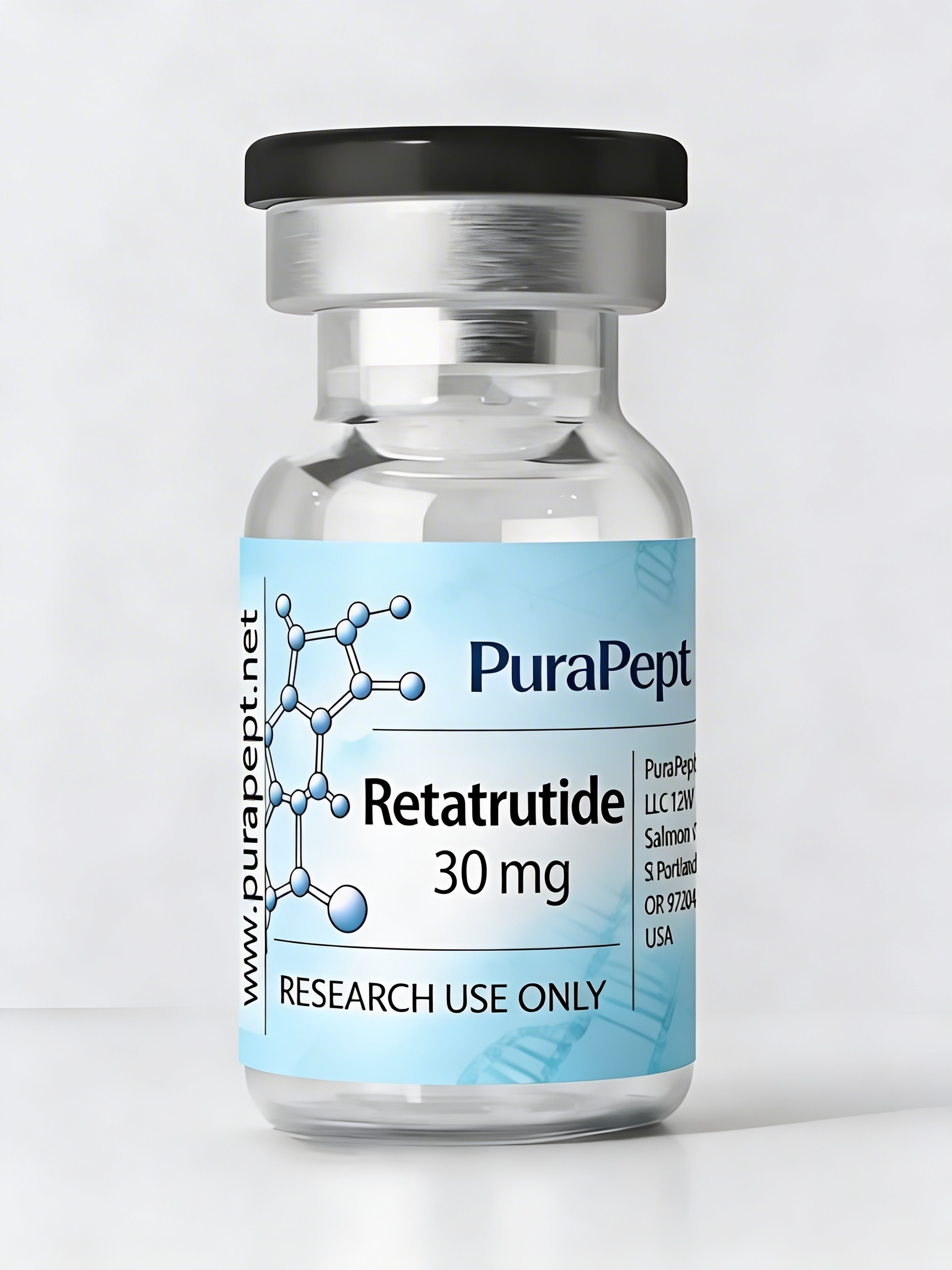
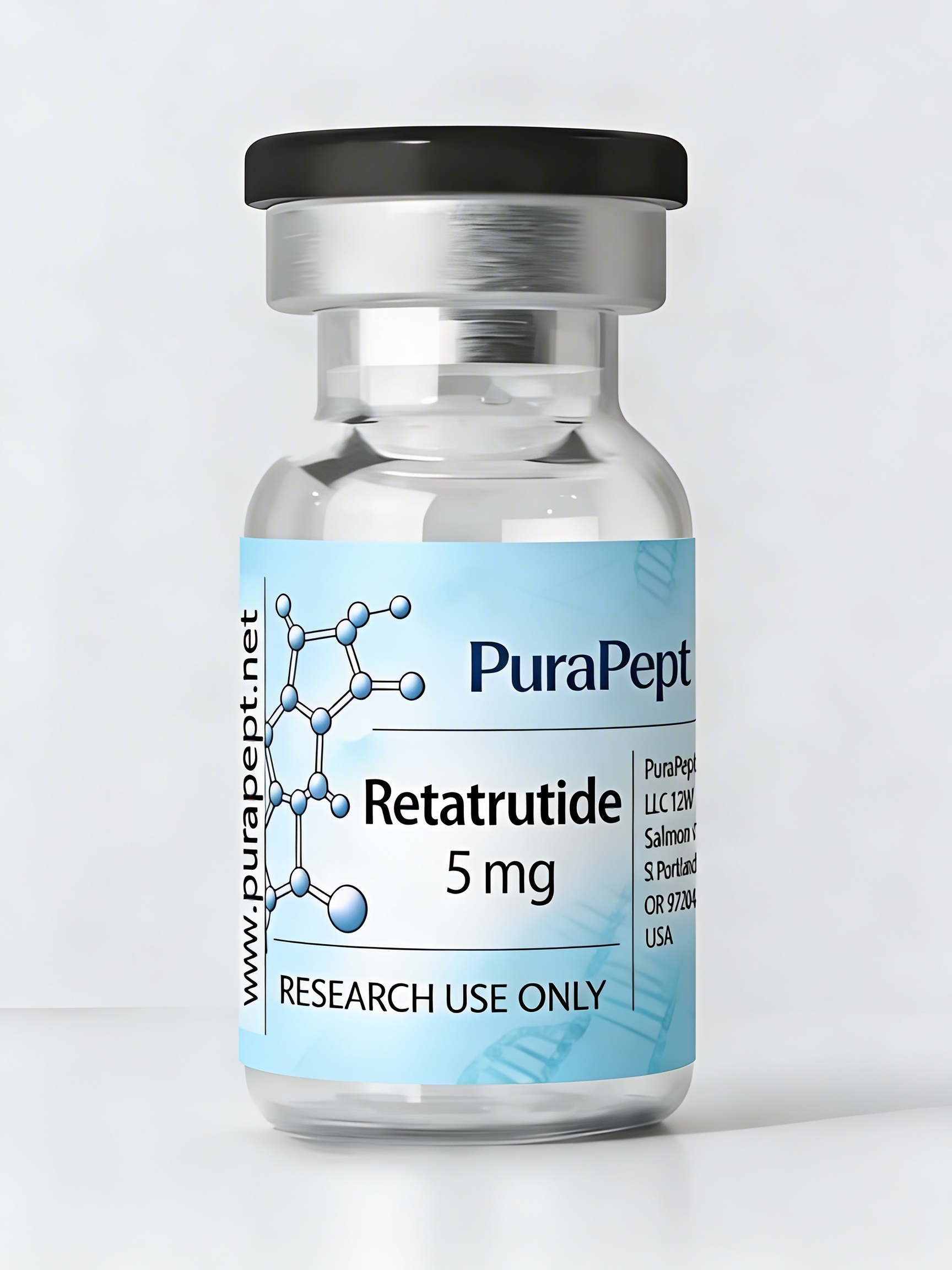
They do not show a 30 mg result. The strengths on this shelf are 5 mg, 15 mg and 30 mg. The highest strength printed in any abstract cited above is 12 mg, and that was the top arm of a phase 2 trial. A 30 mg figure has no human efficacy data behind it in this page, and a page that implied otherwise would be borrowing a number from nothing.
They do not show the obesity phase 3 numbers. TRIUMPH is designed, funded and enrolling; the results are not in print here. The 24.2% figure that circulates is a 48-week phase 2 weight loss in adults with obesity, and the -15.3% is a 40-week diabetes-trial bodyweight change in adults with type 2 diabetes who were already on diet and exercise alone. Neither is a head-to-head against semaglutide or tirzepatide.
They do not show what the weight does after the last injection. The phase 2 trial ran 48 weeks and the diabetes trial 40 weeks. The review literature is explicit that maintenance of weight loss is the outstanding question and that pharmacological treatment may need to be lifelong.
They do not show cardiovascular outcomes, obstructive sleep apnoea results or knee osteoarthritis results. Those are the endpoints TRIUMPH was built to answer, and none of them has an answer yet. A 2025 review flagged the quality of weight loss beyond BMI reduction as a question that still warrants investigation.
Where this sits on the shelf
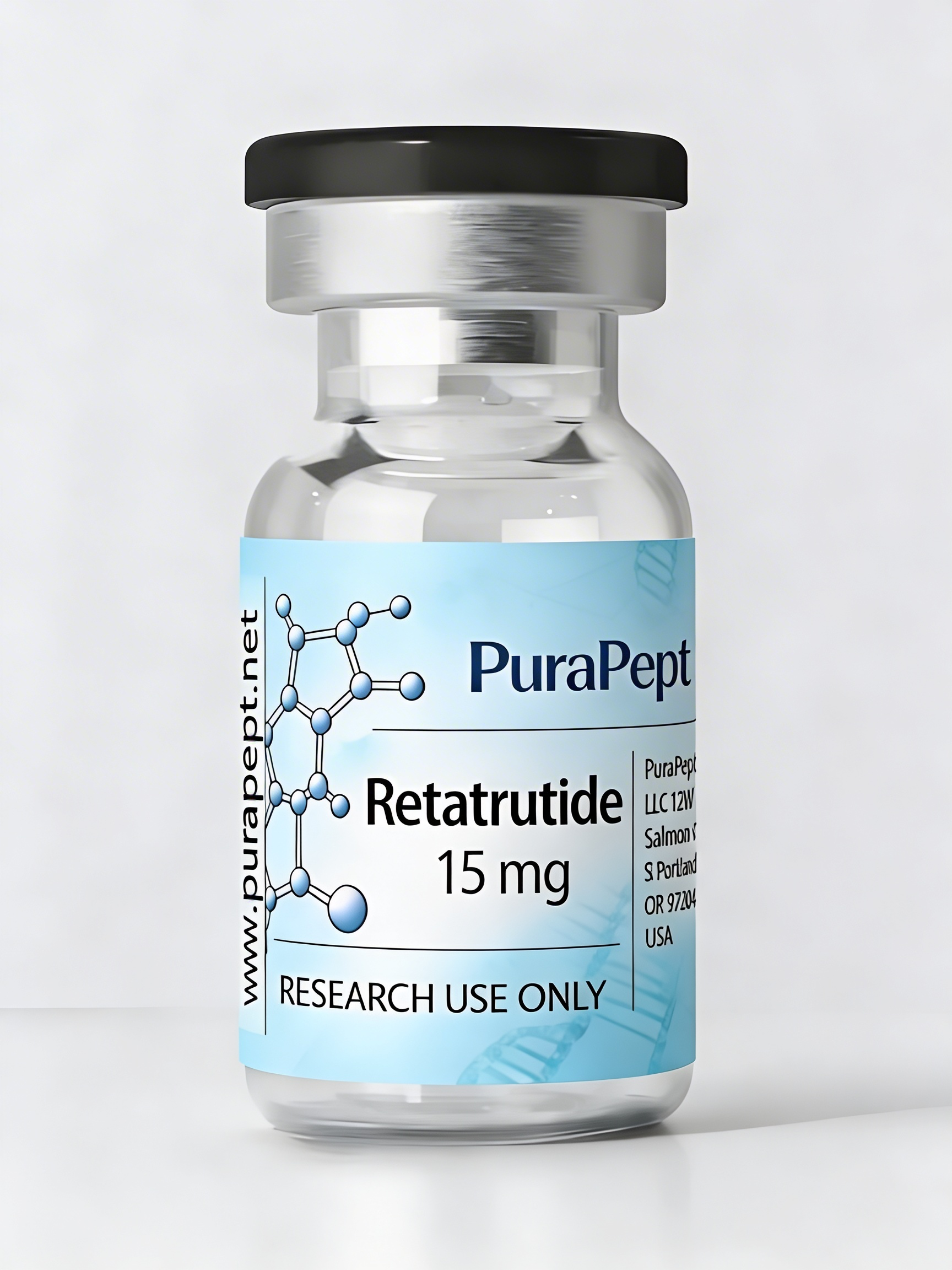
The compound as supplied by the manufacturer: Retatrutide 5 mg · Retatrutide 15 mg · Retatrutide 30 mg
What we supply
The retatrutide preparations above, as supplied by the manufacturer, tracked, from inside the EU.
Research use only. This page summarises published studies for research reference. It is not medical advice, not a protocol, and not a suggestion for human use. Nothing we supply is for human or veterinary use.
References.
- Jastreboff AM, Kaplan LM, Frías JP, et al. Triple-Hormone-Receptor Agonist Retatrutide for Obesity - A Phase 2 Trial. N Engl J Med 2023;389(6):514-526.
- Bajaj HS, Welch MM, Shah PP, et al. Efficacy and safety of retatrutide, a GIP, GLP-1, and glucagon receptor agonist, in people with type 2 diabetes and inadequate glycaemic control with diet and exercise (TRANSCEND-T2D-1): a double-blind, randomised, phase 3 trial. Lancet 2026;407(10546):2402-2413.
- Giblin K, Kaplan LM, Somers VK, et al. Retatrutide for the treatment of obesity, obstructive sleep apnea and knee osteoarthritis: Rationale and design of the TRIUMPH registrational clinical trials. Diabetes Obes Metab 2026;28(1):83-93.
- Coskun T, Wu Q, Schloot NC, et al. Effects of retatrutide on body composition in people with type 2 diabetes: a substudy of a phase 2, double-blind, parallel-group, placebo-controlled, randomised trial. Lancet Diabetes Endocrinol 2025;13(8):674-684.
- Madsbad S, Holst JJ. The promise of glucagon-like peptide 1 receptor agonists (GLP-1RA) for the treatment of obesity: a look at phase 2 and 3 pipelines. Expert Opin Investig Drugs 2025;34(3):197-215.
- Katsi V, Koutsopoulos G, et al. Retatrutide - A Game Changer in Obesity Pharmacotherapy. Biomolecules 2025;15(6):796.