Third-party testing: what the phrase actually proves
The phrase 'third-party lab tested' is a marketing phrase, not a regulated term. Here is what it has to mean to be worth anything, how to get a sample tested yourself, and the four questions that separate a real report from a sticker.
30 September 2026 · 5 min read
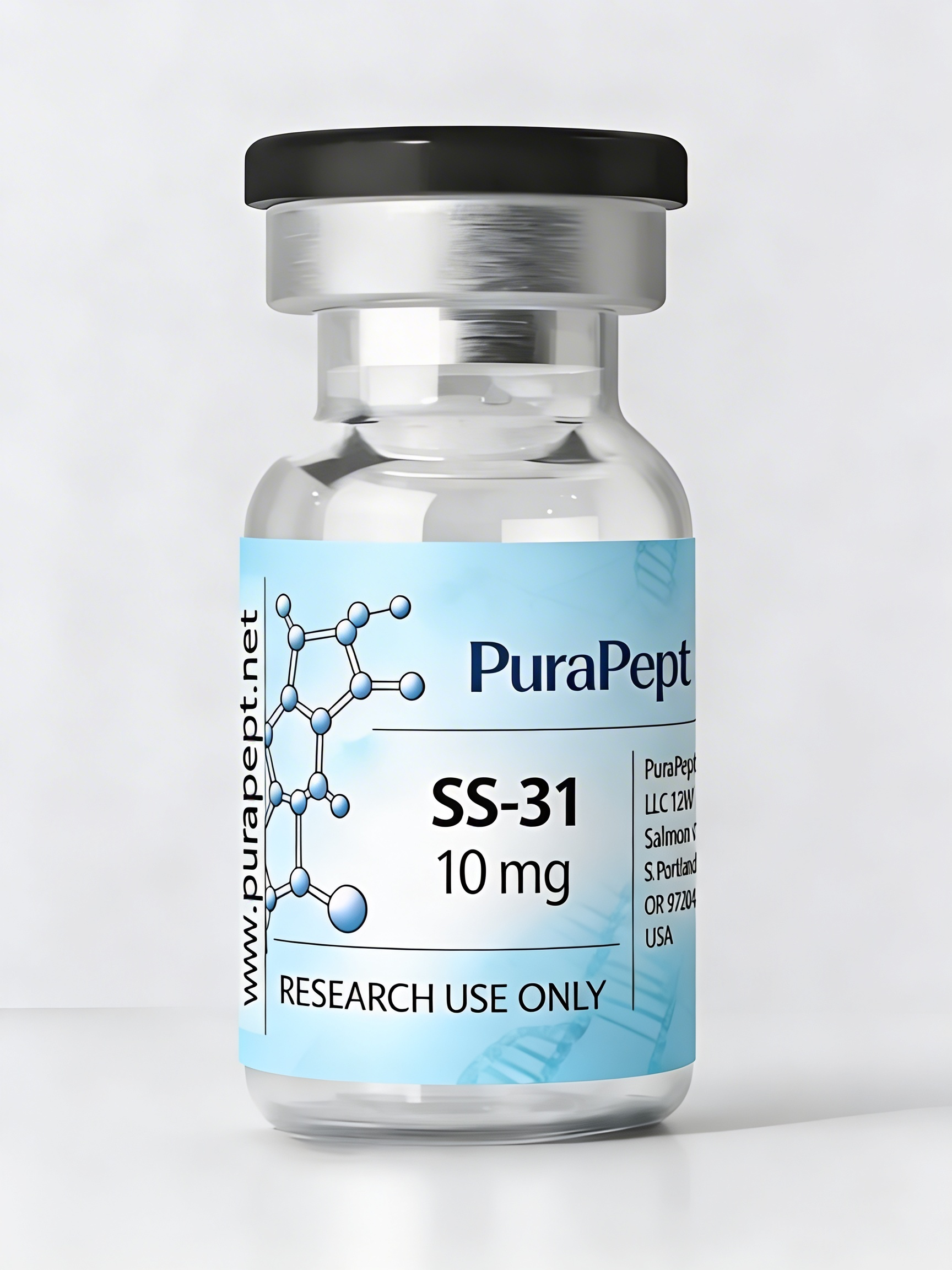 SS-31 10 mg
There is no legal definition of “third-party tested” anywhere. It is a phrase that sits on a label and means, at minimum, that somebody who is not the seller looked at something. Everything else people assume it covers — purity, identity, potency, sterility, endotoxin — is optional, and the phrase on its own tells you none of it. This page is about the difference between a phrase and a report.
Start with the honest position on this store
The FAQ here answers the question before anyone has to ask it. If a lab report exists for a line, it is already on that vial’s page under Batch documentation with the lab, the batch, the measured values and the verification key, and it covers the batch printed on it, which may not be your vial. For the research peptides on this site, no third-party report is published for the line and none is invented: send the order number and the batch paperwork is requested upstream from the supplier.
So this page is not a claims page. It does not tell you our material is tested, because on this store the honest answer for the SS-31 10 mg line and the rest of the research peptide catalogue is that no report is published for it. What the page does is explain what a report would mean if you have one — from a supplier, from another vendor, or from your own testing.
The four questions that separate a report from a sticker
Who ran it, and is the lab identifiable? A real analytical report names the laboratory, the method, the instrument where that matters, and the analyst or signatory. “Tested in a laboratory” names nobody.
What was the method, and what is its detection limit? A purity figure without a method and a limit of detection is an assertion. The difference between “we saw nothing” and “we could not have seen anything below 0.1 %” is the entire content of the measurement.
What lot does it cover? A report covers the material it was run on. Every serious report in the peptide trade carries a batch number, because a report for a different batch of the same compound is not a report about your vial. The store’s own FAQ makes this point about its published reports, and it applies to any report you are shown.
Was it released, or was it verified? Raw material release testing is performed by the manufacturer on its own material. Verification testing is what an independent laboratory does to check a material someone else produced. Both are legitimate and they answer different questions.
What the analytical methods actually establish
Each of these is a separate, separately validated procedure. That is the practical reason a panel of them costs more than one of them, and the practical reason a single “purity” figure on a label tells you so little.
Identity and sequence. Liquid chromatography with high-resolution mass spectrometry can determine amino acid composition, confirm peptide sequence, and quantify impurities even when they are co-eluting, all within a single experiment, as Zeng and colleagues demonstrated on calcitonin, bivalirudin and exenatide. It is worth knowing where even this method’s floor is. Dobrowolski, Urbaniak and Pietrucha’s work on peptide mapping notes that residue-level confirmation of amino acid sequences requires MS/MS fragmentation, which produces large volumes of data processed by specialised software, and that in regulated environments validated commercial tools carry built-in scoring systems whose limitations can affect sequence assignment accuracy — they present representative examples of incorrect peptide assignments generated by commercial software, including misidentifications arising from isobaric and near-isobaric dipeptides and software-induced artefacts such as artificial succinylation appearing to compensate for sequence mismatches. Their conclusion is that expert manual review of the MS/MS data is necessary even with validated commercial platforms. A sequence read out by a machine is a result, but it is a human-reviewed result.
Purity. Reversed-phase HPLC with UV detection gives the trace most purity percentages come from, with the caveats the method literature sets out: for small peptides, UV and gravimetric quantification need care, and every method should be validated. The store’s companion page, how peptide purity is measured, covers the methods in full.
The counterion. The salt is invisible to peptide analysis and needs its own method. The European Pharmacopoeia’s laboratory department built a generic approach for it — mixed-mode chromatography with charged aerosol detection separating 25 commonly used counterions, validated per ICH Q2(R1), demonstrated on reference standards including somatostatin, and also usable to control inorganic ions as impurities (Ilko et al.).
Residual solvents. Solvents left over from synthesis are not desirable substances in the final product, their acceptable limits are published in pharmacopoeias and ICH guidelines, and their determination is its own discipline. Grodowska and Parczewski’s review covers the procedures in use and concludes that gas chromatography-based procedures are described as the most appropriate because of the lowest detection limits, ease of sample preparation and specificity.
Endotoxin. The limulus amebocyte lysate test remains the workhorse of endotoxin quality control. Tamura, Reich and Nagaoka describe LAL as a remarkably sophisticated sensing system derived from horseshoe crab blood cells, allowing extremely sensitive detection of bacterial and fungal cell-wall components, and note that LAL tests have contributed substantially to pharmaceutical quality control as successful alternatives to the rabbit pyrogen test.
Testing your own sample
If what you need is evidence about the material in your hand rather than about the compound in general, the route is straightforward and it is yours to take: send material to a laboratory and ask for a defined panel in writing before anything is opened. The sequence that follows the literature is a reasonable starting specification — identity by LC-HRMS, purity by reverse-phase HPLC-UV with stated response factors and limit of detection, counterion identification, residual solvents by gas chromatography. Add endotoxin and water content if the application needs them. Then read the report the way the certificate page describes: which method, on which instrument, at which wavelength, whether identity was established by mass or only by retention time, whether response factors were measured or assumed, and whether the lot number on the sheet is the lot number on the vial.
One thing to hold onto: the sample’s own history between the vial and the instrument is part of the uncertainty. Peptides in solution are the form the storage literature treats as chemically fragile, and a report describes what the laboratory received. Nobody’s chromatogram can reconstruct the vial.
What the data do not show
None of the above says anything about this store’s material, and no part of it should be read as a claim. A test establishes properties of a material, not efficacy of a compound: a pure, identity-confirmed peptide in a sealed vial is still a research reagent with a research-grade evidence base, and no analytical result upgrades that. Nor does a report on one lot extend to another, or a report on one supplier extend to a different manufacturer. And for the compounds sold here, the honest inventory is unchanged by anything on this page: no batch report is published, none is invented, and the paperwork for a batch you actually received can be requested with your order number.
Research use only. This page describes published analytical methods for research reference. It is not a quality claim about any supplied product, not medical advice, and not a suggestion for human use. Nothing we supply is for human or veterinary use.
References.
- Zeng K, Geerlof-Vidavisky I, Gucinski A, Jiang X, Boyne MT 2nd. Liquid chromatography-high resolution mass spectrometry for peptide drug quality control. AAPS J 2015;17(3):643-651. PubMed record (PMID 25716148).
- Ilko D, Nap CJ, Holzgrabe U, Almeling S. Validation and application of an HPLC-CAD-TOF/MS method for identification and quantification of pharmaceutical counterions. Pharmeur Bio Sci Notes 2014;2014:81-91. PubMed record (PMID 25655245).
- Tamura H, Reich J, Nagaoka I. Outstanding contributions of LAL technology to pharmaceutical and medical science: review of methods, progress, challenges, and future perspectives. Biomedicines 2021;9(5):536. PubMed record (PMID 34064994).
- Grodowska K, Parczewski A. Analytical methods for residual solvents determination in pharmaceutical products. Acta Pol Pharm 2010;67(1):13-26. PubMed record (PMID 20210075).
- Dobrowolski M, Urbaniak M, Pietrucha T. Peptide mapping for sequence confirmation of therapeutic proteins and recombinant vaccine antigens by high-resolution mass spectrometry: software limitations, pitfalls, and lessons learned. Int J Mol Sci 2025;26(20):9962. PubMed record (PMID 41155256).