Tirzepatide and the 20 % line: what 72 weeks separated
SURMOUNT-1 randomised 2,539 adults to three weekly strengths or placebo for 72 weeks. The lowest and highest differ by six percentage points of mean weight change — and by 18 points on the proportion losing a fifth of body weight. The trial also reports the discontinuation rate for each arm, and that is where the strengths diverge most.
11 November 2026 · 6 min read
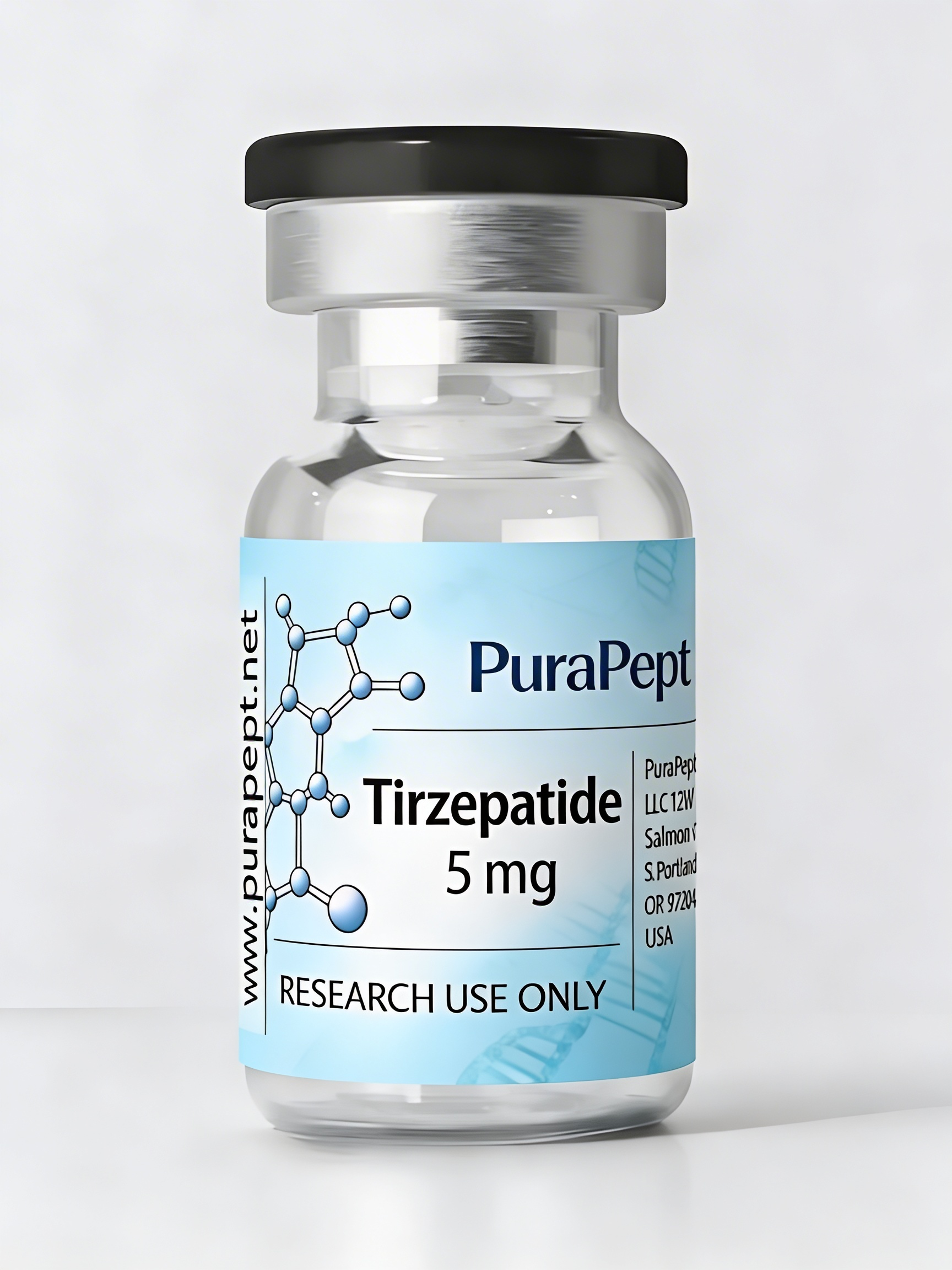
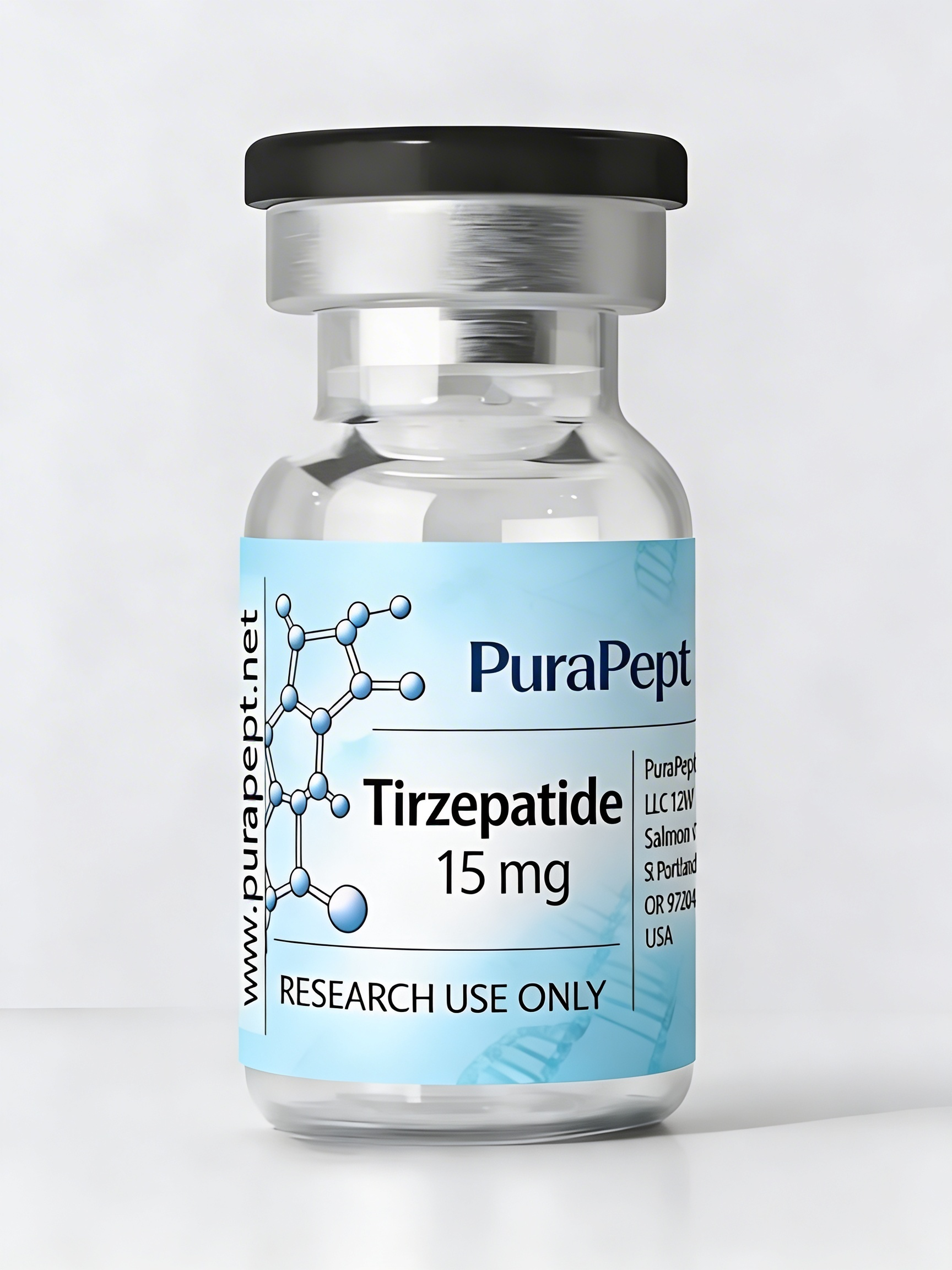 Tirzepatide 15 mg
 and Tirzepatide 5 mg are the same molecule at two ends of a range that was randomised as a range, and the 72-week trial below is the reason the range exists. What it actually shows is that the strengths separate far more sharply on one specific threshold than on the headline number — and that the tolerability numbers, not the weight numbers, are where they diverge most.
The 72-week trial, and how to read its two coprimary endpoints
SURMOUNT-1 was a phase 3, double-blind, randomised, controlled trial in 2,539 adults with a body-mass index of 30 or more, or 27 or more with at least one weight-related complication, excluding diabetes. Participants were assigned 1:1:1:1 to three once-weekly subcutaneous strengths of tirzepatide or placebo for 72 weeks, including a 20-week dose-escalation period. At baseline the mean body weight was 104.8 kg, mean BMI 38.0, and 94.5 % had a BMI of 30 or higher. The analysis was a treatment-regimen estimand, which assesses effects regardless of treatment discontinuation in the intention-to-treat population.
That last clause matters for everything below, and it is the single most misread feature of this trial. These are the numbers if everybody kept taking the drug.
The two coprimary endpoints were the percentage change in body weight from baseline, and the proportion of participants with a reduction of 5 % or more.
| lowest | middle | highest | placebo | |
|---|---|---|---|---|
| Mean weight change at week 72 | −15.0 % (95 % CI −15.9 to −14.2) | −19.5 % (−20.4 to −18.5) | −20.9 % (−21.8 to −19.9) | −3.1 % (−4.3 to −1.9) |
| Participants losing ≥ 5 % | 85 % (82 to 89) | 89 % (86 to 92) | 91 % (88 to 94) | 35 % (30 to 39) |
| Participants losing ≥ 20 % | — | 50 % (46 to 54) | 57 % (53 to 61) | 3 % (1 to 5) |
All comparisons with placebo P < 0.001.
The headline compresses the range. The ≥ 20 % endpoint does not. On mean weight change, the lowest and highest strengths are 5.9 percentage points apart. On the proportion losing a fifth of their starting body weight, the middle and highest strengths are 50 % and 57 % against 3 % on placebo — and the lowest strength is not reported in that comparison at all. If a person cares about whether they will reach a fifth of their starting weight, the mean change tells them almost nothing.
Tolerability moved in the opposite direction to nothing. Adverse events caused treatment discontinuation were 4.3 %, 7.1 %, 6.2 % and 2.6 % across the three strengths and placebo respectively. The middle strength had the highest discontinuation rate of the three, not the highest. The most common adverse events were gastrointestinal, most mild to moderate, occurring primarily during the escalation period.
The same range, tested in diabetes
Everything above excluded diabetes, which is worth separating out because the molecule’s original identity is a glucose-lowering one. SURPASS-1 was a 40-week, double-blind, randomised, placebo-controlled trial at 52 centres across India, Japan, Mexico and the USA, in adults whose type 2 diabetes was inadequately controlled by diet and exercise alone and who were naive to injectable diabetes therapy. 478 participants were randomised 1:1:1:1 (121 / 121 / 121 / 115); 66 (14 %) discontinued the study drug.
Glycated haemoglobin fell from baseline by 1.87 %, 1.89 % and 2.07 % across the three strengths against +0.04 % on placebo, giving estimated treatment differences of −1.91 %, −1.93 % and −2.11 %, all p < 0.0001. The proportion reaching an HbA1c below 7.0 % was 87–92 % against 20 %; below 6.5 %, 81–86 % against 10 %; and below 5.7 % — effectively normal glycaemia — 31–52 % against 1 %. Bodyweight loss was dose-dependent, ranging from 7.0 to 9.5 kg. The most frequent adverse events were mild to moderate and transient gastrointestinal events: nausea 12–18 % against 6 %, diarrhoea 12–14 % against 8 %, vomiting 2–6 % against 2 %.
The pattern in the glucose data is the same one as the weight data: the lowest and middle strengths are nearly identical, and the top strength pulls away. That is a property of the receptor pharmacology, and it is the reason a range exists.
What three years added
The 2025 analysis extends the same trial to 176 weeks in the subset of 1,032 participants who had both obesity and prediabetes, followed by a 17-week off-treatment period. At 176 weeks, mean percent change in body weight was −12.3 %, −18.7 % and −19.7 % for the three strengths, against −1.3 % for placebo, all P < 0.001. Diagnosis of type 2 diabetes occurred in 1.3 % of tirzepatide participants against 13.3 % on placebo, hazard ratio 0.07 (95 % CI 0.0 to 0.1), P < 0.001 — and after the off-treatment period, 2.4 % against 13.7 %, hazard ratio 0.12 (0.1 to 0.2).
That last figure deserves emphasis rather than a footnote. The separation from placebo persisted through seventeen weeks with no drug at all. Whatever the drug does to diabetes risk here, a large part of it is not an effect that stops the moment the last dose does.
What stopping actually does
SURMOUNT-4 is the trial that answers the question every weight trial raises and none settles. It was a randomised withdrawal design: a 36-week open-label lead-in on the maximum tolerated strength, then 670 participants (mean age 48, 473 (71 %) women, mean weight 107.3 kg) randomised 1:1 to continue tirzepatide (335) or switch to placebo (335) for 52 weeks. Completers of the lead-in had lost a mean of 20.9 % of their starting weight.
From week 36 to week 88:
- Continued tirzepatide: −5.5 %. Placebo: +14.0 %. Difference −19.4 % (95 % CI −21.2 to −17.7 %), P < .001.
- Maintained at least 80 % of the lead-in loss: 300 participants (89.5 %) on tirzepatide against 16.6 % on placebo, P < .001.
- Overall weight change from week 0 to week 88: 25.3 % on tirzepatide, 9.9 % on placebo.
The people who stopped did not hold the result. They gave back more than they had kept. The trial’s own conclusion is that withdrawing tirzepatide led to substantial regain of lost weight, whereas continued treatment maintained and augmented the initial reduction.
What this record does not show
Not a population result. Every trial on this page excluded diabetes, and SURMOUNT-1 was run in people with a mean BMI of 38.
Not an adherence-free promise. The 72-week figures use a treatment-regimen estimand that counts people who discontinued. The discontinuation rates are in the same table precisely so they are not lost.
Not a claim about a specific strength for a specific person. The trial randomised a range and reported a range. Choosing within it is a clinical decision.
Not a durability result. Three-year data come from the prediabetes subset of 1,032, not from the full cohort.
What we supply
Tirzepatide 15 mg and Tirzepatide 5 mg, as supplied by the manufacturer, tracked, from inside the EU. Batch documentation for any product that carries it is explained in the COA guide linked from the product page.
The reason this page leads with a table rather than a single figure is that the single figure is the one that hides the range. Research use only. This page summarises published phase 3 obesity trials for research reference. It is not medical advice and not a suggestion for human use. Nothing we supply is for human or veterinary use.
References.
- Jastreboff AM, Aronne LJ, Ahmad NN, Wharton S, Connery L, Alves B, et al. Tirzepatide once weekly for the treatment of obesity. N Engl J Med 2022;387(3):205-216 (PMID 35658024).
- Jastreboff AM, le Roux CW, Stefanski A, Aronne LJ, Halpern B, Wharton S, et al. Tirzepatide for obesity treatment and diabetes prevention. N Engl J Med 2025;392(10):958-971 (PMID 39536238).
- Aronne LJ, Sattar N, Horn DB, Bays HE, Wharton S, Lin WY, et al. Continued treatment with tirzepatide for maintenance of weight reduction in adults with obesity: the SURMOUNT-4 randomized clinical trial. JAMA 2024;331(1):38-48 (PMID 38078870).
- Rosenstock J, Wysham C, Frías JP, Kaneko S, Lee CJ, Fernández Landó L, et al. Efficacy and safety of a novel dual GIP and GLP-1 receptor agonist tirzepatide in patients with type 2 diabetes (SURPASS-1): a double-blind, randomised, phase 3 trial. Lancet 2021;398(10295):143-155 (PMID 34186022).